


Insomnia Severity Index (ISI-Sleep): Sleep Assessment
The Insomnia Severity Index is a short patient survey that measures sleep difficulty. It helps clinicians evaluate insomnia symptoms and track treatment progress over time.

Insomnia Severity Index (ISI-Sleep)
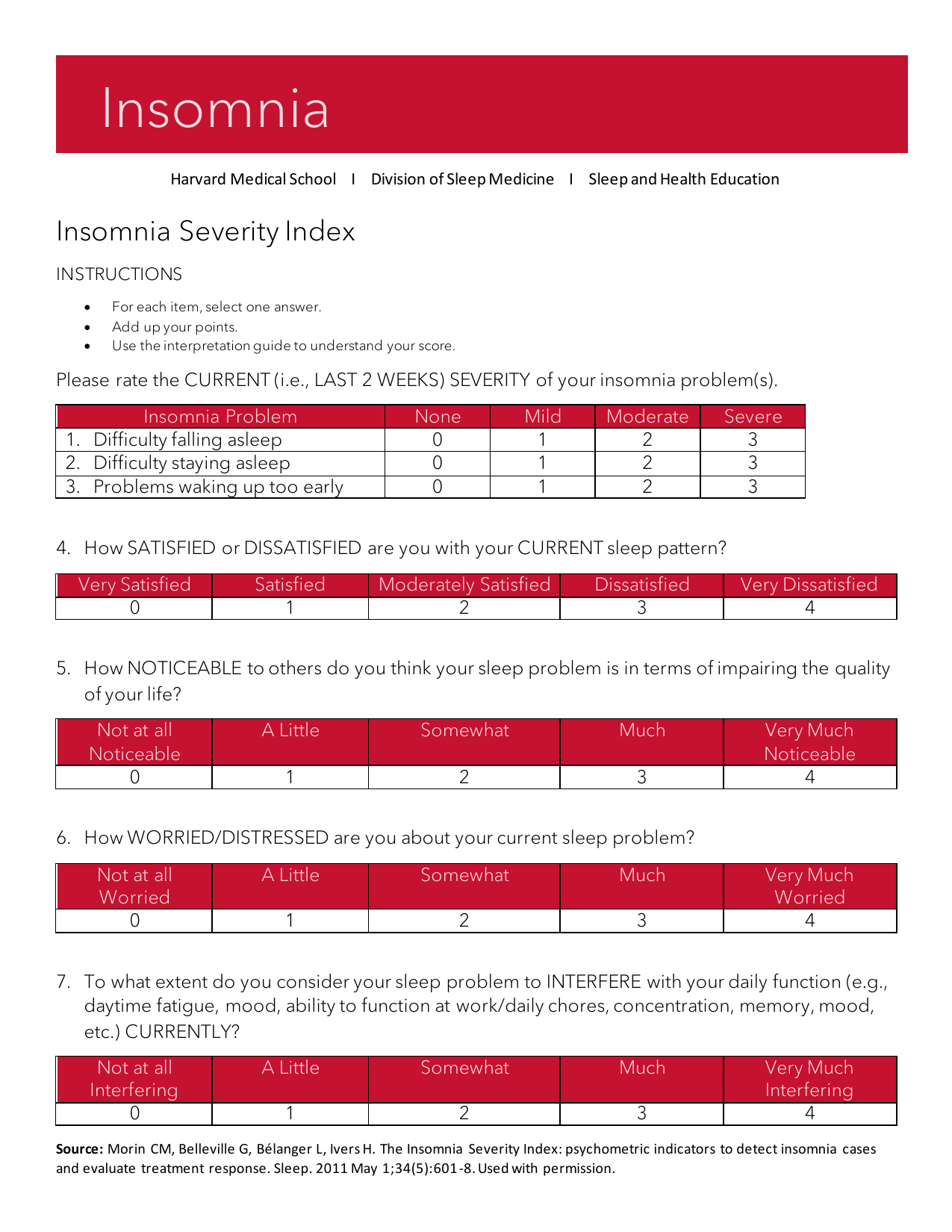
The Insomnia Severity Index (ISI) is a brief screening tool used to assess the nature and impact of sleeping difficulties. Clinicians rely on this seven-item questionnaire to measure insomnia intensity and track treatment progress. It's a trusted method for evaluating sleep quality in clinical settings.
Category
Disease
Source
What is Insomnia Severity Index (ISI-Sleep)

The Insomnia Severity Index (ISI-Sleep) is a reliable tool for checking sleep issues. It helps clinicians measure the nature of insomnia symptoms. This seven-item questionnaire looks at subjective symptoms of sleep difficulties. It focuses on the severity of sleep onset and staying asleep through the night. Patients rate their current sleep patterns using a five-point Likert scale ranging from none to very severe. The items cover satisfaction with sleep, interference with daily functioning, noticeability of impairment to others, and distress about sleep issues. It is quick to complete in under five minutes and works well for screening or tracking treatment progress. Clinicians use the total score to spot clinical insomnia or subthreshold conditions. It is a practical choice for busy clinics needing a clear picture of patient sleep health for future care.
The Insomnia Severity Index can be scored using one main approach that sums ratings from seven items. You rate each question on a scale of 0 to 4, then add them up for a total between 0 and 28. Scores from 0 to 7 mean you likely have no significant sleep issues, while 8 to 14 suggests subthreshold insomnia. Hitting 15 to 21 points to moderate clinical insomnia, and a score of 22 to 28 indicates severe clinical insomnia. It is a really handy way for local clinicians to track sleep health changes over time.
Advantages

Enables precise identification of patient health status.
.svg)
Measures healthcare intervention results systematically.
.svg)
Streamlines research data gathering process.
.svg)
Strengthens evidence through systematic measurement approaches.
.png)

Related Instruments

Digital counterpart
Digital biomarkers that measure the same thing with sensors rather than a questionnaire.
Collect Insomnia Severity Index data with WeGuide, the all in one patient engagement platform
.jpg)

Support Your patient in no time - all under your own brand
Our platform combines the knowledge of 100+ digital health solutions built, letting you easily build your patient engagement app for research or clinical use. Collect PROMs, support patients on waiting lists, or gather vital signs data. This is how:
Learn More.png)
Program Builder
.png)
.png)
Whitelabelling
.svg)
.svg)
.png)
Turn on components, dependent on your usecase
.svg)
.png)
Support The Full Journey
.png)
.png)
%20(1).png)
.png)
It’s your turn
Every WeGuide project, saves researchers and clinicians - 9 months and $450,000 - creating impactful digital health solutions.
