

ObvioHealth alternatives for 2026
ObvioHealth started as a virtual CRO and now licenses ObvioGo as enterprise software, often alongside its clinical services. If you want software on its own, priced for a sponsor or research team rather than an outsourced CRO engagement, WeGuide gives you eCOA, eConsent, wearables, and a whitelabel participant app, TGA registered and ISO 27001.
No pressure, no hard sell. A 30-minute walkthrough with a research colleague who's built platforms like yours.


Where WeGuide differs
Whitelabel mobile apps under your brand
Technology without a bundled CRO engagement
Broader use case coverage beyond DCT
Used by leading research and medical institutes.


Why research teams look for an ObvioHealth alternative

The short version
ObvioHealth is strong in its lane. The smartphone-first BYOD model, the consumer health category experience, and the ObvioGo app are all genuine strengths. Teams look elsewhere for three reasons, and they're worth naming honestly.
Why teams look elsewhere
The services plus technology bundle isn't always what sponsors want. ObvioHealth launched as a virtual research organisation and now licenses ObvioGo as enterprise software, with clinical services such as its virtual site still part of the offer. For sponsors that already have their own CRO relationships, or teams that want to own study operations in-house, a bundled model adds cost and complexity that isn't always useful. WeGuide is a pure technology platform with no CRO services component, so sponsors and CROs keep ownership of how the study is run.
Nutraceutical and consumer health specialisation isn't a match for every study. ObvioHealth's case study portfolio leans heavily toward OTC, consumer health, and nutraceutical trials. That focus is genuinely useful if you're running those categories. For traditional Phase II/III clinical trials, paediatric studies, rare disease registries, population health cohorts, or employee wellbeing programmes, the specialisation becomes a constraint rather than an advantage.
The ObvioGo app carries ObvioHealth's brand. Participants download an ObvioGo app for ObvioHealth studies. For sponsor-branded patient engagement programmes, academic research, or registries where the participant relationship belongs to the research organisation and not the platform vendor, a whitelabel app under your own brand changes the participant experience significantly.
WeGuide takes a different approach. Pure technology, no CRO services attached, whitelabel apps under your brand, and use-case coverage that extends well beyond DCT into registries, wellbeing, and population health. The two models serve different studies, and on this page we'll tell you honestly which is which.
Key differences between WeGuide and ObvioHealth
For teams that have already evaluated ObvioHealth, here's what changes when you move to WeGuide.
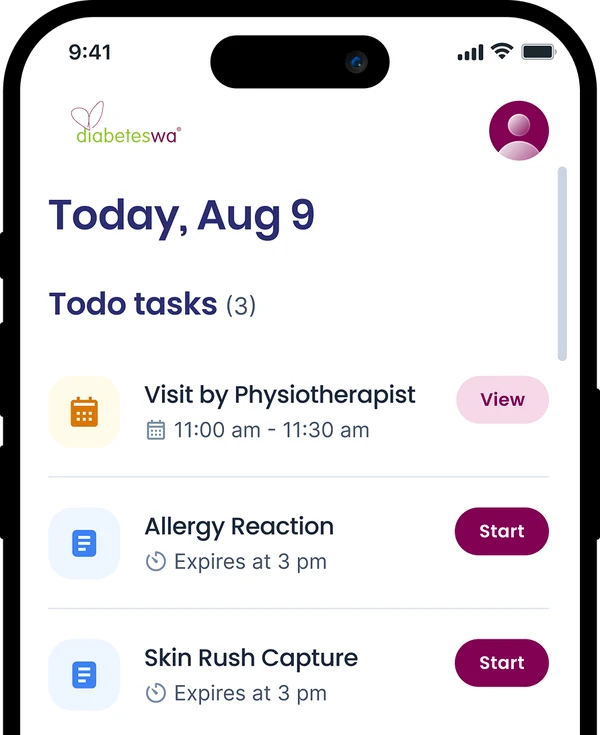
Whitelabel mobile apps under your brand
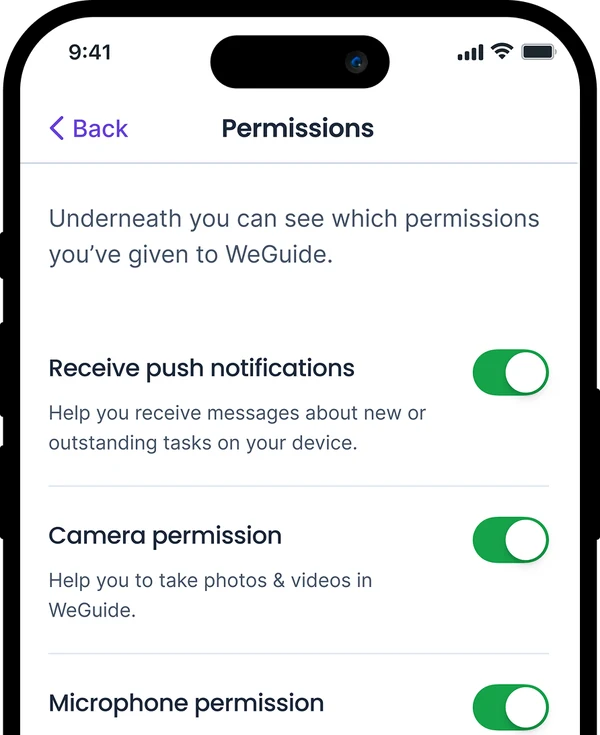
Technology without a bundled CRO engagement
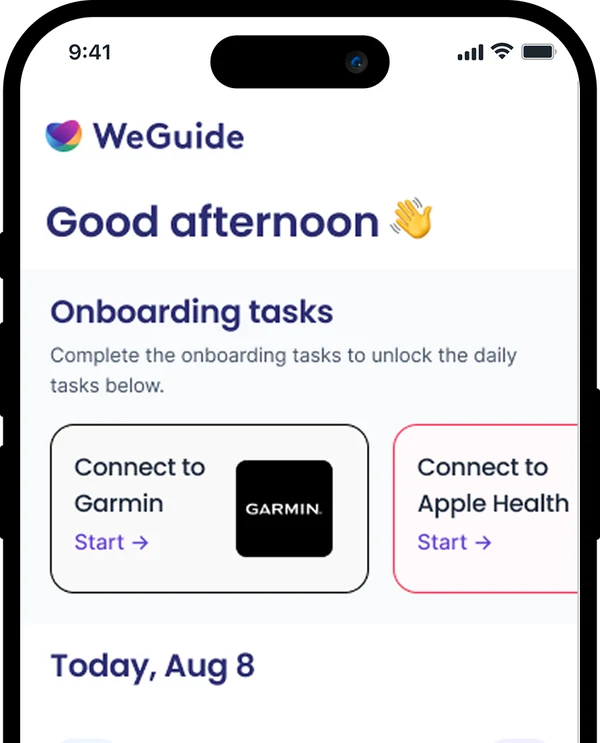
Broader use case coverage beyond DCT
Full comparison: WeGuide vs ObvioHealth
Top alternatives to ObvioHealth in 2026
Here's the shortlist of platforms most teams evaluate alongside ObvioHealth, whether they're looking for a pure technology platform, a broader use-case fit, or a different pricing model.




Where WeGuide goes further
For teams that want the participant side of a study in one platform, here's what changes when you move to WeGuide.

Broader use-case coverage
ObvioHealth is a DCT platform. WeGuide is used for clinical trials (the international BRACE Trial), patient registries (FSHD Global Registry), population health (GenV, about 124,000 Victorians), employee wellbeing, paediatric cardiac monitoring (Beat2Beat), and citizen science. If your programme spans more than traditional clinical trial territory, a platform built for that breadth matters.

Whitelabel mobile apps under your brand
WeGuide ships native iOS and Android apps fully branded under your organisation's name and identity. The app becomes the home of the study, the registry, or the wellbeing programme for the participant. ObvioGo carries ObvioHealth's brand. For sponsor-branded studies, academic research, or registries where the participant relationship belongs to the research organisation, that difference changes the entire participant experience.

Technology without a bundled CRO engagement
WeGuide is a pure technology platform. No services delivery, no virtual CRO component, no consulting hours folded into the quote. For sponsors and CROs that already own study operations or want to keep that ownership, the commercial model is cleaner and the scope is easier to control. If you want services, you bring your own CRO partner and WeGuide sits underneath it. Learn more about the Integration Engine →

Patient registry as a first-class use case
ObvioHealth doesn't offer a native patient registry platform. WeGuide does, and it's running the FSHD Global Registry as a longitudinal rare disease registry and GenV as a population health registry following roughly 124,000 Victorians (about 50,000 children from birth and 74,000 parents). Registry requirements (longitudinal data collection, family-level enrolment, multi-year engagement, consent re-capture) are genuinely different from DCT requirements, and a platform built for both looks different from one built for DCT only. See WeGuide's patient registry platform →

Employee wellbeing, population health, and citizen science
WeGuide is used for workplace health programmes, INHERIT's multilingual COVID-19 community research, and Beat2Beat's paediatric heart rhythm monitoring. These use cases all sit outside ObvioHealth's nutraceutical and consumer health focus. If your organisation is working across clinical research and broader health programmes, one platform covering both reduces vendor sprawl.

No-code programme builder for research teams
Research teams configure studies directly in WeGuide through a no-code programme builder. You don't need a dedicated implementation team or a services engagement. For academic research, mid-market CROs, and investigator-led studies, this removes the biggest hidden cost of platform adoption. See the Form Builder →

Validated instrument library
WeGuide's Form Builder ships with a library of validated instruments covering ePRO, eCOA, quality of life, mental health, symptom tracking, and condition-specific measures. Studies can configure instruments in the Form Builder without rebuilding them. See the instruments library →

Australian data residency and TGA registration
WeGuide is TGA registered as Class I medical device software with Australian data residency as a first-class offering. For APAC sponsors, Australian academic research, and studies where data sovereignty matters, this is a regulatory and operational advantage.

Integrated eConsent, telehealth, and analytics in the core licence
eConsent with version control and re-consent workflows, built-in telehealth for virtual site visits, and integrated analytics all come with WeGuide in the core licence. Nothing is an add-on module. See WeGuide's eConsent module →
Built for regulated research
Every WeGuide study runs on our managed infrastructure. Your IT team doesn't patch servers, manage backups, or run disaster recovery drills.

TGA Registered

ISO 27001

Data Hosted in Australia

GDPR Compliant
Biometric Security

256-bit AES Encryption
Where ObvioHealth genuinely excels
Nutraceutical, OTC, and consumer health category experience. ObvioHealth has run hundreds of studies in nutraceutical and consumer health categories. That case study portfolio is a genuine asset for sponsors working in those areas. Regulatory context, study design experience, and recruitment know-how specific to nutraceutical trials are harder to replicate than any platform feature.
Smartphone-first BYOD model. ObvioGo was built for smartphone delivery from day one, which shows in the participant experience. The BYOD architecture, participant onboarding flow, and everyday usability are solid. WeGuide is also BYOD-first, so this is common ground rather than a differentiator.
Clinical services alongside the platform. If you want a partner who will design, run, and deliver a study alongside providing the technology, ObvioHealth can do that. WeGuide cannot. We're a platform, not a CRO, and for sponsors who want services delivery bundled with the technology, ObvioHealth is a genuinely different offer.
Content-led SEO and category thought leadership. ObvioHealth ranks #1 in Google for "hybrid clinical trials", "remote monitoring in clinical trials", and "virtual clinical trials". The educational content on their resources hub is well-written and category-relevant. If you're researching DCT concepts, their articles are worth reading.
ObvioGo platform maturity for ePRO and remote monitoring. The ObvioGo app is mature, well-designed, and battle-tested across real studies. Nothing about ObvioHealth's technology is a weakness. What changes between platforms is fit to use case, not technical competence.
If your study sits inside ObvioHealth's nutraceutical or consumer health wheelhouse and you want clinical services bundled with the platform, they're a strong choice and we'll say so upfront.
WeGuide and existing CRO partners
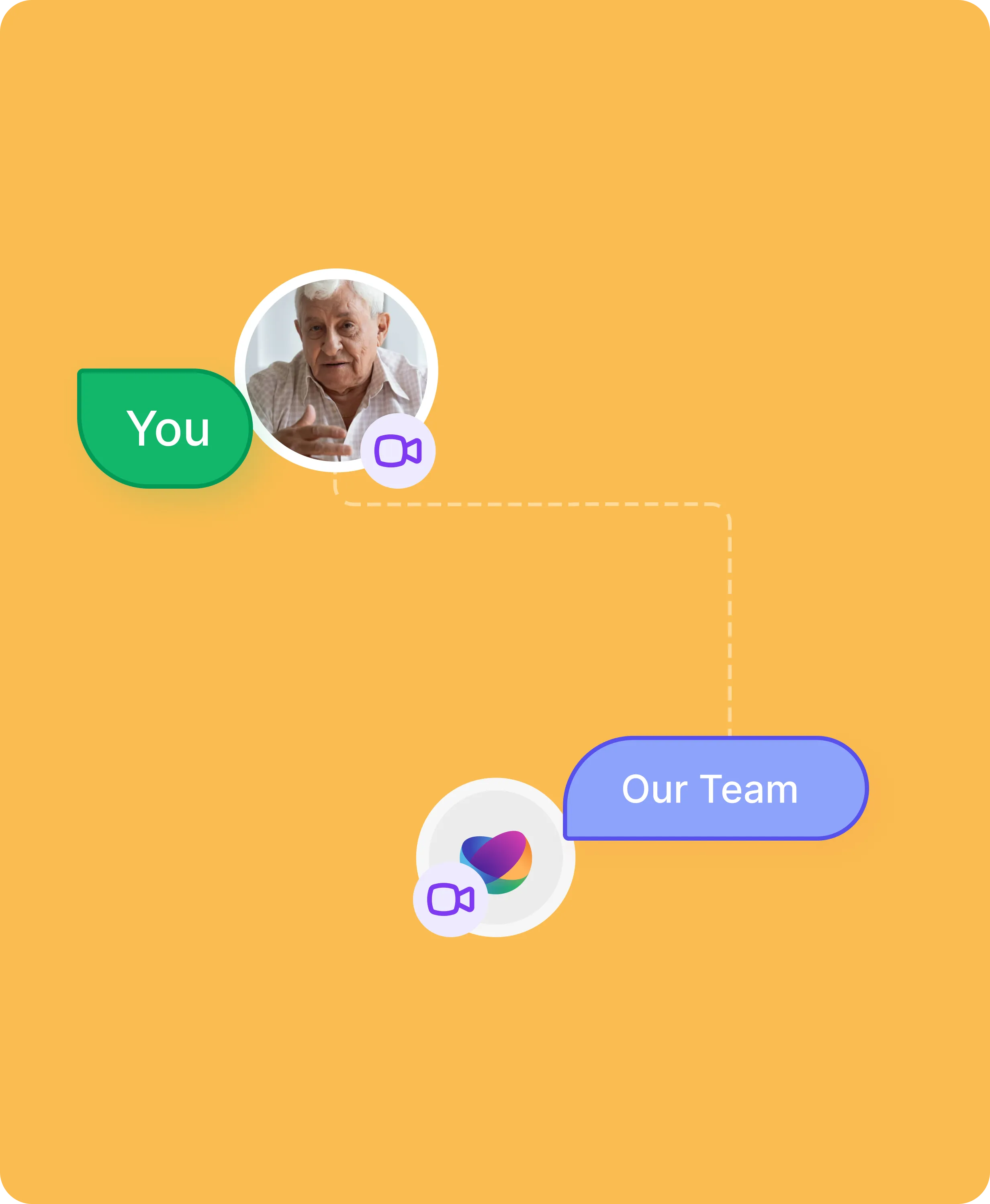
WeGuide is a technology platform. If you already have a CRO relationship and want to add a participant-facing platform under your sponsor brand, WeGuide runs alongside your CRO's operational delivery. The platform sits where the participant does: on their phone, under your brand, collecting the data your study needs. Your CRO keeps running the study. Many of our sponsor customers work this way.
How the switch works
For teams that are evaluating ObvioHealth, or already running an ObvioHealth study and considering a platform change, here's how onboarding typically plays out with WeGuide.
Discovery Call
A 30-minute conversation with one of our research delivery team. We look at your protocol, your use case, and whether WeGuide is actually the right fit. If your study needs a clinical services engagement, we'll tell you WeGuide isn't that and point you back toward ObvioHealth.
Study Configuration
Our team works alongside yours to configure the study in WeGuide. Typical timeline: two to four weeks. Your research coordinators, not a services team, own the configuration.
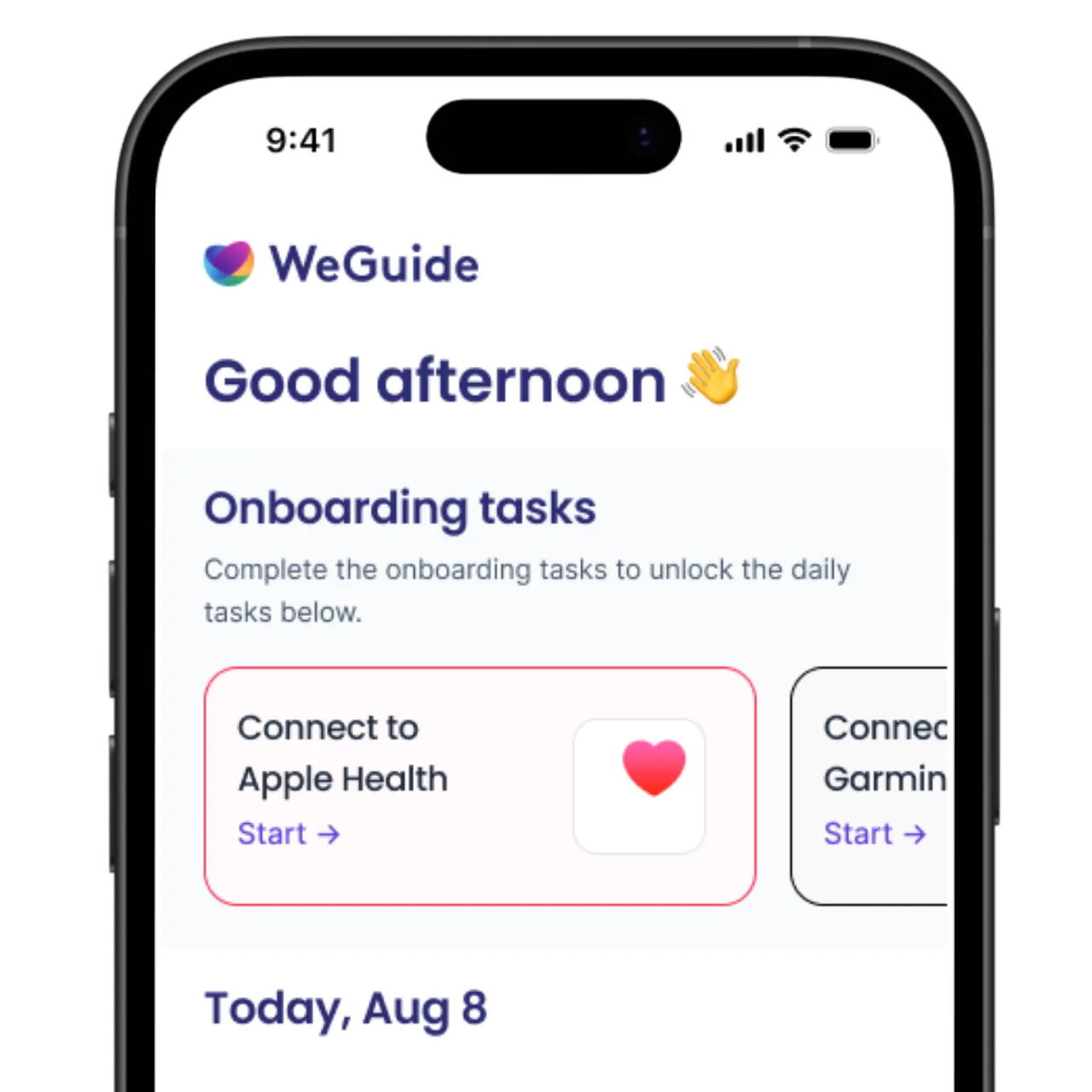
Participant Onboarding
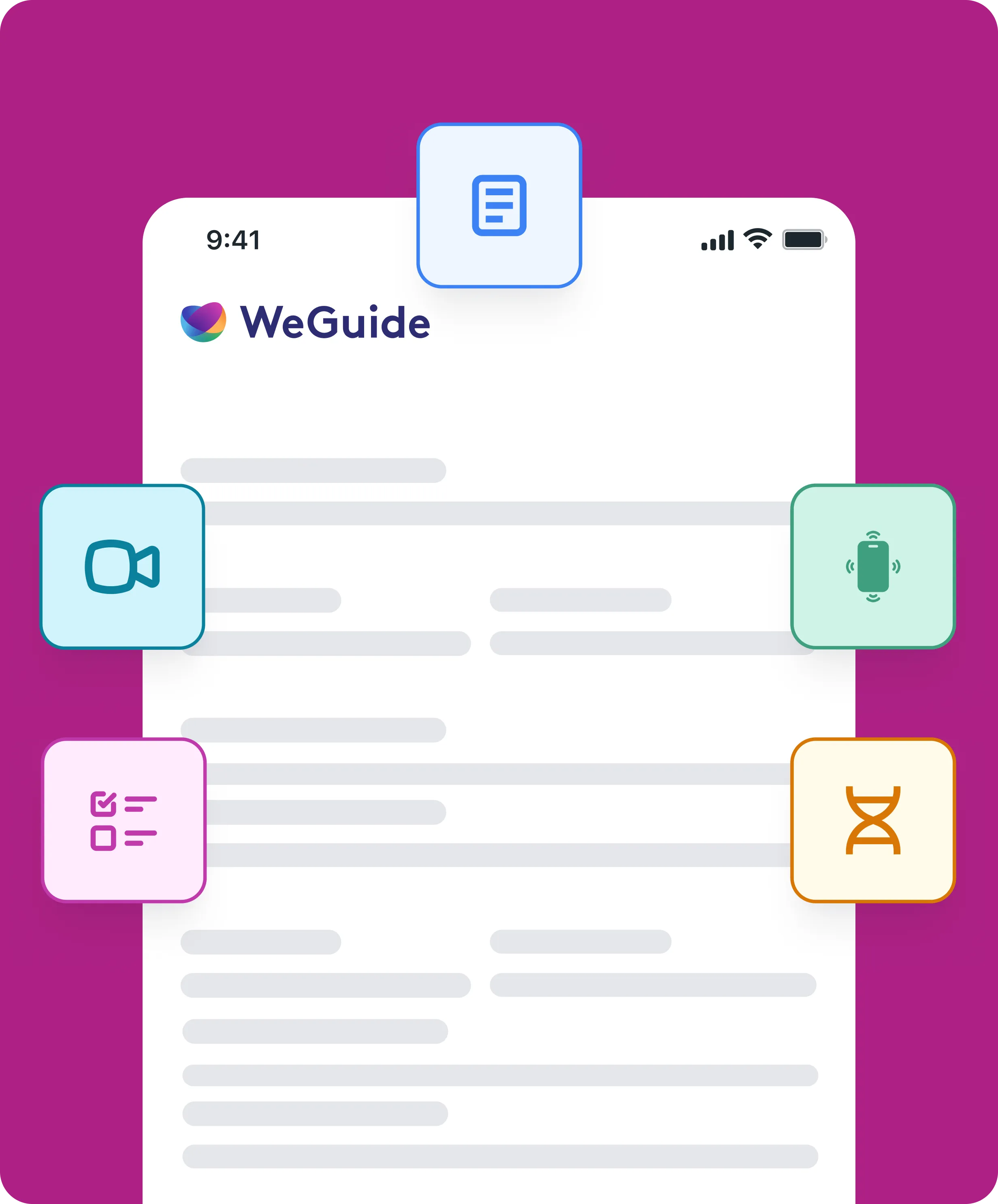
The whitelabel app goes live under your brand. Participants download the app, complete eConsent, and begin the study. eCOA instruments, engagement templates, wearable data collection, and telehealth visits are all live from day one.
Ongoing Support
You get a named research delivery contact, not a ticketing queue. We stay involved for the life of the study.
Case studies: research teams running engagement-led studies beyond DCT
BRACE Trial (Murdoch Children's Research Institute)
An international randomised controlled trial studying whether the BCG vaccine could reduce COVID-19 symptom severity in healthcare workers, run across several countries with thousands of participants. It was a hybrid trial, with in person vaccination and blood collection. The kind of clinical trial delivery that sits outside ObvioHealth's nutraceutical and consumer health focus.
GenV (Generation Victoria)
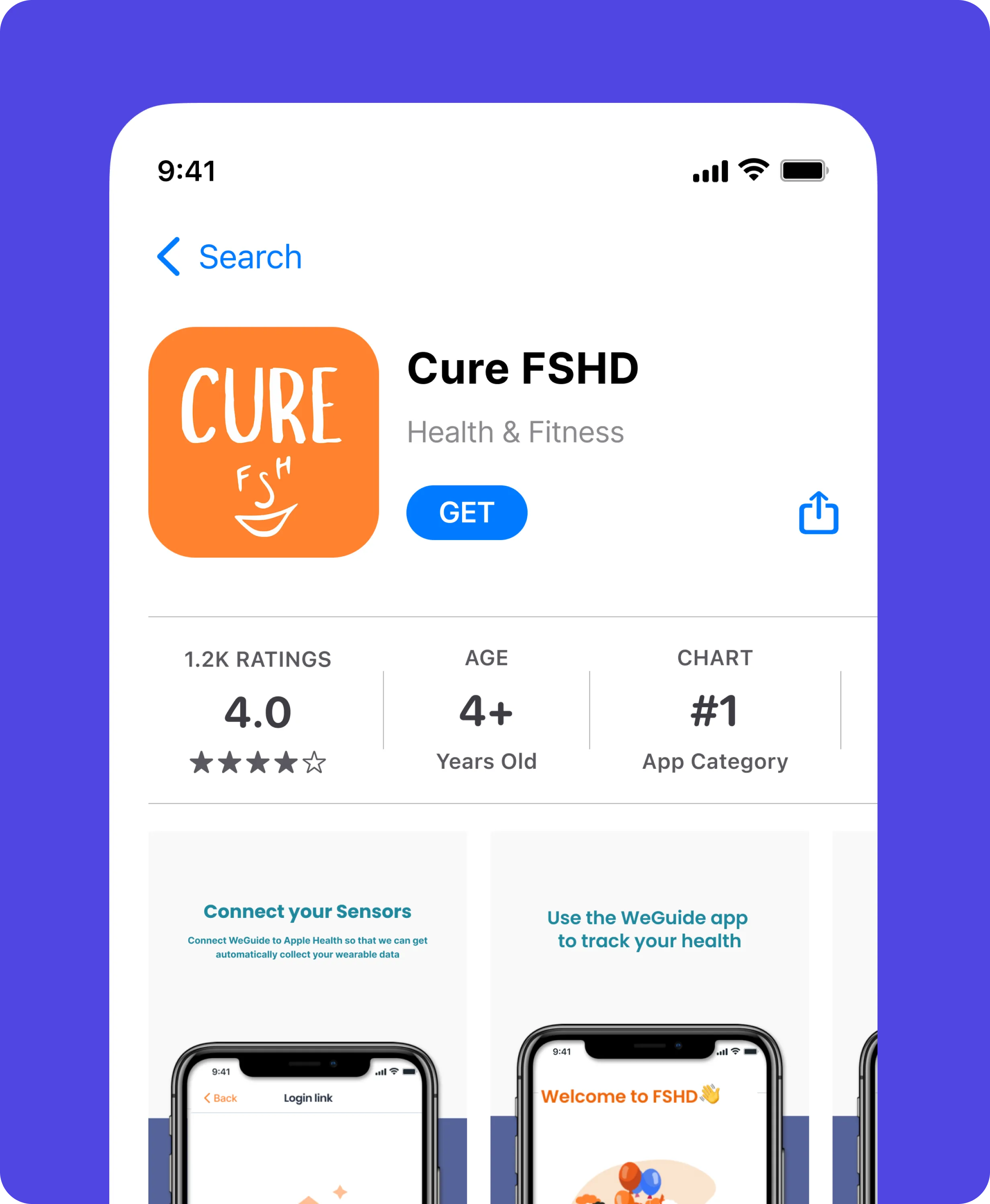
A population health registry following roughly 124,000 Victorians (about 50,000 children from birth and 74,000 parents). Longitudinal data collection, multi-year participant relationships, and a family-branded whitelabel app. Registry work that ObvioHealth doesn't offer.
FSHD Global
A rare disease patient registry for facioscapulohumeral muscular dystrophy, running globally with longitudinal participant engagement. Another registry use case outside ObvioHealth's scope.


Questions
Straight answers on how WeGuide compares to ObvioHealth, what migration looks like, and when ObvioHealth is the right call.
Contact usIs WeGuide a full replacement for ObvioHealth?
It depends on what you're buying. For nutraceutical and consumer health DCTs where ObvioHealth's category experience genuinely matters, and where you want clinical services delivered alongside the technology, ObvioHealth has specialisation that WeGuide doesn't replicate. For broader use cases, clinical trials outside those categories, patient registries, employee wellbeing, and population health, or for sponsors who want a pure technology platform without a bundled CRO engagement, WeGuide is the right choice. The clearest way to answer the question is a discovery call where we look at your study together.
Does WeGuide support nutraceutical and consumer health trials?
Yes, with ePRO, eConsent, wearables, telehealth, and a library of validated instruments. The platform covers the protocol requirements of nutraceutical and consumer health studies cleanly. What we don't have is ObvioHealth's specific nutraceutical case study portfolio, so if you're looking for a partner who has already run dozens of studies in your exact sub-category, that's worth weighing. For the underlying technology needs, WeGuide delivers.
Can WeGuide integrate with ObvioHealth's ObvioGo?
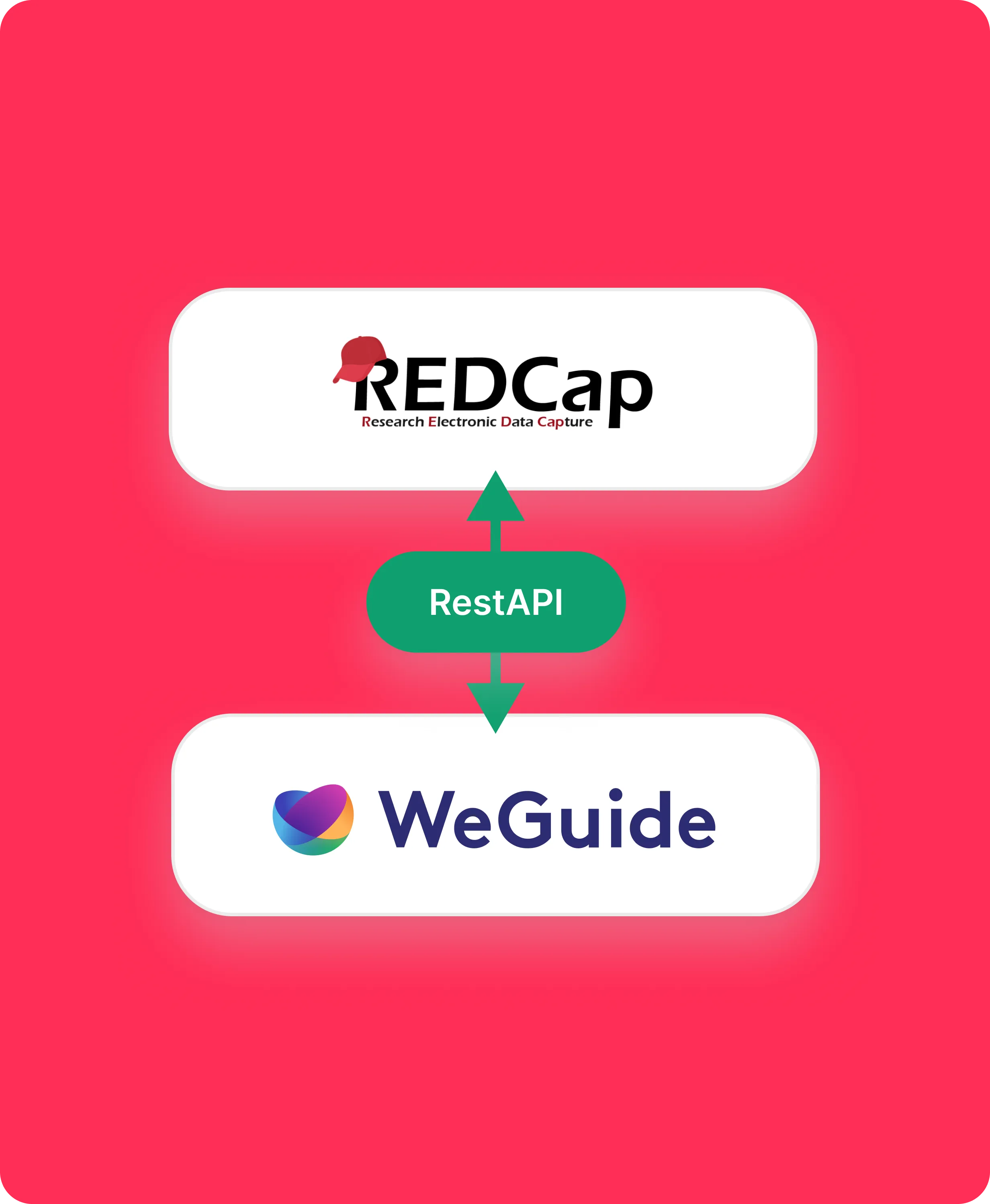
Yes, via the Integration Engine, typically through data export and API integration. For sponsors who want to move data out of ObvioGo or run both platforms side by side, integration is supported as part of standard configuration.
How does pricing compare?
ObvioHealth licenses ObvioGo as enterprise software and often pairs it with clinical services, so a quote can include services delivery alongside technology. WeGuide is technology only and project based, with every module included in the core licence. The commercial comparison isn't a straight platform-to-platform number because ObvioHealth is often selling a larger scope. For sponsors who already have CRO services covered elsewhere, the WeGuide commercial model is typically significantly more accessible.
Does WeGuide have smartphone first BYOD like ObvioHealth?
Yes. WeGuide is BYOD first, with participants using their own iOS and Android phones through a whitelabel app under your organisation's brand. Native Apple Health, Health Connect, Fitbit Air, and Garmin integration runs on the same devices. On device model, WeGuide and ObvioHealth are aligned. The differences sit in branding, use-case coverage, and the services versus technology only commercial model.
Can we migrate from ObvioHealth to WeGuide mid study?
Possible, and a few teams have done it. Data migration happens through the Integration Engine, typical transition timeline is four to six weeks for configuration plus data migration, and participant re onboarding to the new whitelabel app is the most sensitive piece. For mid-study transitions, we plan the migration carefully alongside your ethics committee and participant communications workflow.
More comparisons
Compare WeGuide with other platforms
Honest, side by side comparisons, grouped by the kind of platform you are weighing up.
EDC and data capture





eCOA and ePRO





Decentralised trials





Wearables and digital health






Enterprise eClinical





Experience sampling


Site and recruitment

Browse all 31 comparisons
Filter by platform category on the comparisons hub.
Open the hub
See how WeGuide fits your study.
A 30 minute walkthrough with a research colleague, focused on your protocol, your participants and the tools you already run.
