


Epworth Sleepiness Scale (ESS): Measuring Sleepiness
The Epworth Sleepiness Scale is a simple questionnaire that measures your chance of dozing off during the day. Doctors use this self-report tool to screen for sleep disorders like apnea.

Epworth Sleepiness Scale (ESS)
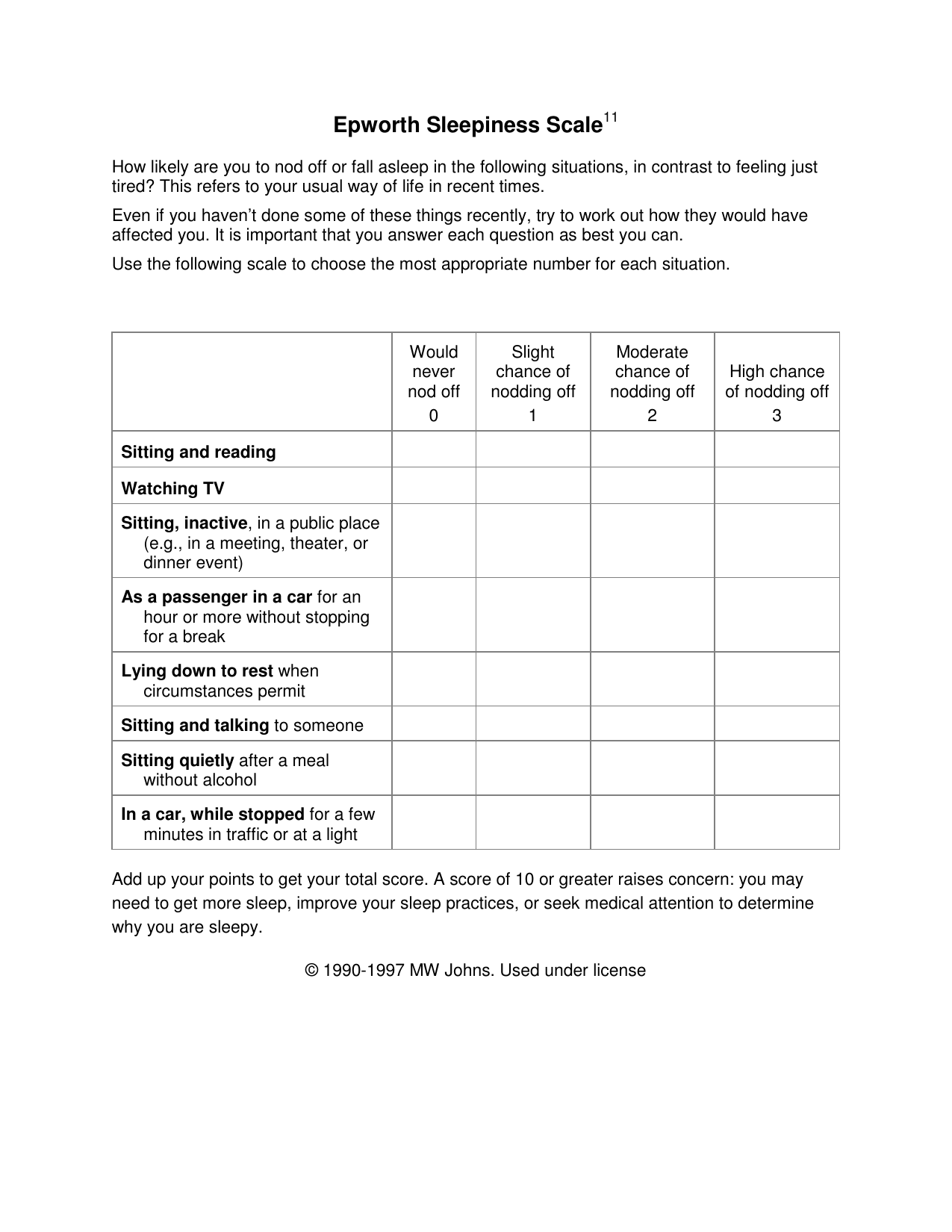
The Epworth Sleepiness Scale (ESS) is a self-administered questionnaire used to measure daytime sleepiness. Patients rate their chance of dozing in eight different situations, helping doctors screen for conditions like sleep apnoea. It's a simple yet effective way to assess sleep health in a clinical setting.
Category
Disease
Source
What is Epworth Sleepiness Scale (ESS)

The Epworth Sleepiness Scale (ESS) is a widely used questionnaire to measure excessive daytime sleepiness. It helps doctors screen for sleep disorders. This simple test asks about your likelihood of dozing off or falling asleep in eight specific situations that most people encounter in their daily routine. You rate each scenario on a scale from zero to three. A zero means you would never doze, while a three indicates a high chance of falling asleep. The total score goes from zero up to twenty four to indicate the overall severity of your sleepiness. Clinicians frequently use it to screen for common issues like obstructive sleep apnoea or narcolepsy. It is quick to complete and helps track progress after treatment starts. Because it relies on subjective reporting, doctors often pair it with other clinical tests to make sure they get a full diagnosis.
The Epworth Sleepiness Scale can be scored using one main approach: calculating a simple total sum. You rate eight daily situations, like watching TV or sitting in traffic, on a scale from 0 to 3. Here, 0 means you would never doze off and 3 suggests a high chance of nodding off. To get the final result, just add up the numbers for a total between 0 and 24. A score above 10 usually flags excessive daytime sleepiness, while anything under that sits in the normal range. It is a handy way for doctors to spot sleep disorders like apnea quickly.
Advantages

Enables precise identification of patient health status.
.svg)
Streamlines research data gathering process.
.svg)
Measures healthcare intervention results systematically.
.svg)
Meets international clinical assessment requirements.
.png)

Related Instruments

Digital counterpart
Digital biomarkers that measure the same thing with sensors rather than a questionnaire.
Collect Epworth Sleepiness Scale data with WeGuide, the all in one patient engagement platform
.jpg)

Support Your patient in no time - all under your own brand
Our platform combines the knowledge of 100+ digital health solutions built, letting you easily build your patient engagement app for research or clinical use. Collect PROMs, support patients on waiting lists, or gather vital signs data. This is how:
Learn More.png)
Program Builder
.png)
.png)
Whitelabelling
.svg)
.svg)
.png)
Turn on components, dependent on your usecase
.svg)
.png)
Support The Full Journey
.png)
.png)
%20(1).png)
.png)
It’s your turn
Every WeGuide project, saves researchers and clinicians - 9 months and $450,000 - creating impactful digital health solutions.
