

Sleep Assessment Instruments
Validated questionnaires for sleep quality, insomnia severity, daytime sleepiness, sleep apnoea risk, chronotype and restless legs syndrome.
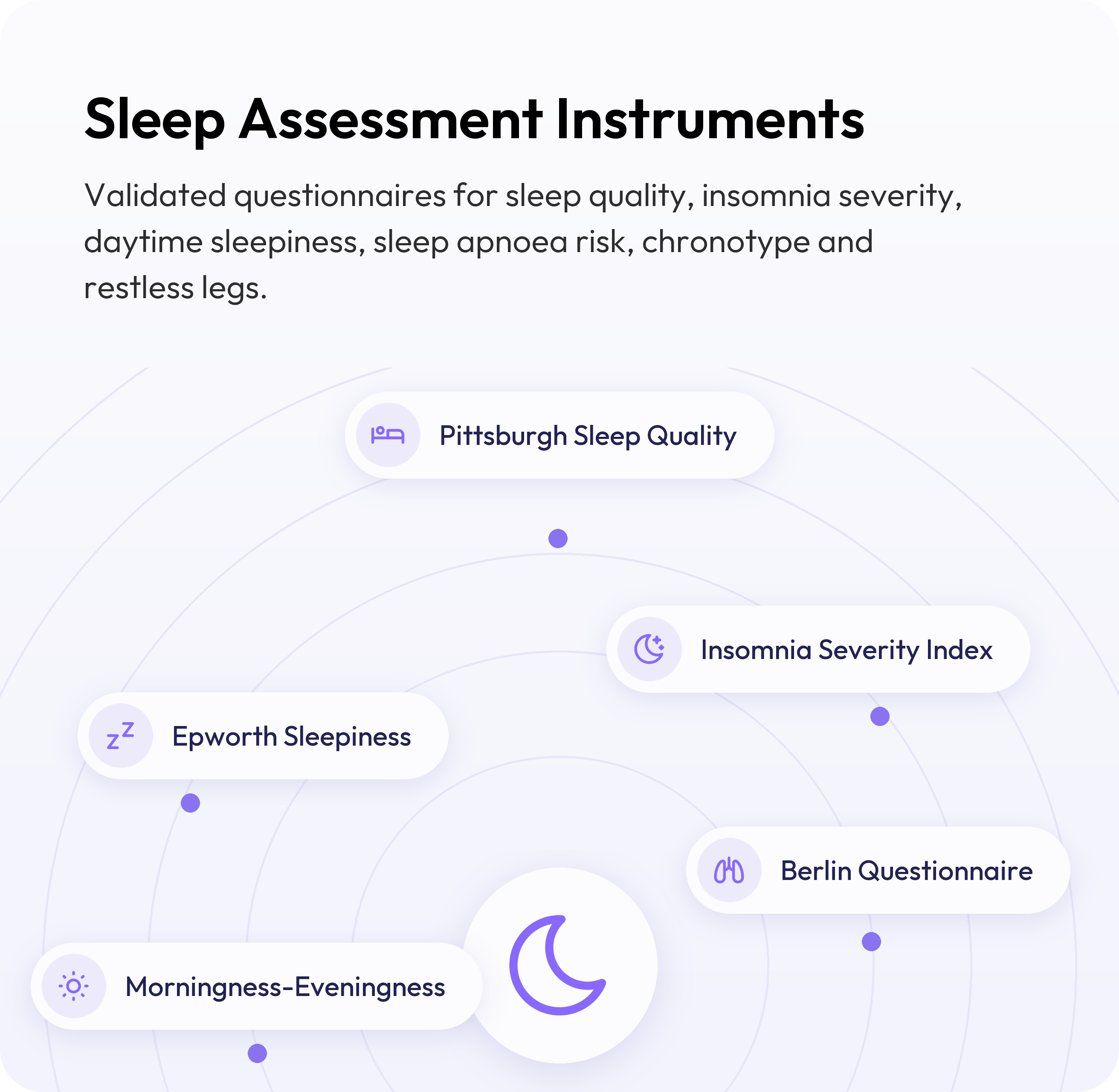
Sleep instruments divide by the question they answer, and choosing the wrong kind is the most common error in this area. Sleep quality and insomnia measures, such as the Pittsburgh Sleep Quality Index and the Insomnia Severity Index, ask how well a person has slept over the past weeks. Sleepiness measures ask how likely they are to fall asleep: the Epworth Sleepiness Scale as a general tendency, the Karolinska Sleepiness Scale as a rating of this moment. Screening tools for obstructive sleep apnoea, STOP-Bang and the Berlin Questionnaire, estimate who should be referred for a sleep study.
Two instruments measure something else again. The Morningness-Eveningness Questionnaire describes chronotype, the natural timing of a person's sleep and alertness, which is a preference rather than a problem. The International Restless Legs Syndrome Rating Scale grades the severity of a specific disorder in people who already have the diagnosis. Poor sleep, sleepiness and a late chronotype often travel together, but they are different constructs, and a study that wants one should not measure another and hope it stands in.
Sleep instruments in this library

How these instruments are used
In clinical care these instruments mostly triage: an insomnia score decides who gets cognitive behavioural therapy for insomnia, an apnoea screen decides who gets tested, and a sleepiness score informs driving advice. In research they are usually secondary outcomes, because poor sleep sits alongside pain, depression, fatigue and cognitive complaints in almost every chronic condition, and a treatment aimed at one often shifts the others.
Timing matters more here than in most areas. Recall windows differ: the Pittsburgh index asks about the past month, the Insomnia Severity Index about the past two weeks, the restless legs scale about the past week, and the Karolinska scale about the last few minutes. Mixing instruments with different windows in one schedule, or changing the window between visits, produces change that is partly an artefact. The momentary measures also have to be collected at consistent times of day, because sleepiness rises and falls with time awake and the body clock.
What to check before you choose one
Check whether you need a questionnaire or a recording. Questionnaires capture how sleep is experienced, which is what patients care about and what insomnia is defined by. They do not measure sleep architecture, and self-reported sleep duration differs from measured duration, often by an hour or more in people with insomnia. Where sleep timing, duration or efficiency is the outcome, actigraphy or a wearable measure alongside the questionnaire answers a different and complementary question.
Check that a screening tool fits your population. STOP-Bang and the Berlin Questionnaire were validated in specific settings, surgical and primary care respectively, and their accuracy changes with the prevalence and severity of sleep apnoea in the people being screened. A negative screen lowers the probability of sleep apnoea without excluding it.
Check licensing before building a study around an instrument. Several sleep measures are free to use, while others, including the restless legs rating scale, are copyrighted and need permission. Finally, check whether the instrument was validated in your language and age group: sleep timing and sleepiness norms shift across the lifespan, and cut-offs derived in young adults misclassify older people.
Common questions
What is the difference between sleepiness and fatigue?
Sleepiness is the tendency to fall asleep and is relieved by sleep. Fatigue is a lack of energy that sleep may not relieve. The Epworth and Karolinska scales measure sleepiness; fatigue needs its own instrument, and confusing the two is common in chronic illness research.
Can a questionnaire diagnose sleep apnoea?
No. STOP-Bang and the Berlin Questionnaire estimate risk and decide who should have a sleep study. Diagnosis requires polysomnography or home sleep apnoea testing, which measure breathing events directly.
Should I use the Epworth or the Karolinska Sleepiness Scale?
It depends on the question. The Epworth describes a general tendency to doze over recent weeks and suits a single assessment. The Karolinska rates sleepiness at the moment and suits repeated measurement through a shift, a drive or a treatment day.
Do questionnaires agree with wearable sleep data?
Only partly. Self-reported sleep duration and measured duration often differ, especially in insomnia, and the gap is informative rather than an error. Many studies collect both, because they describe different aspects of the same night.
