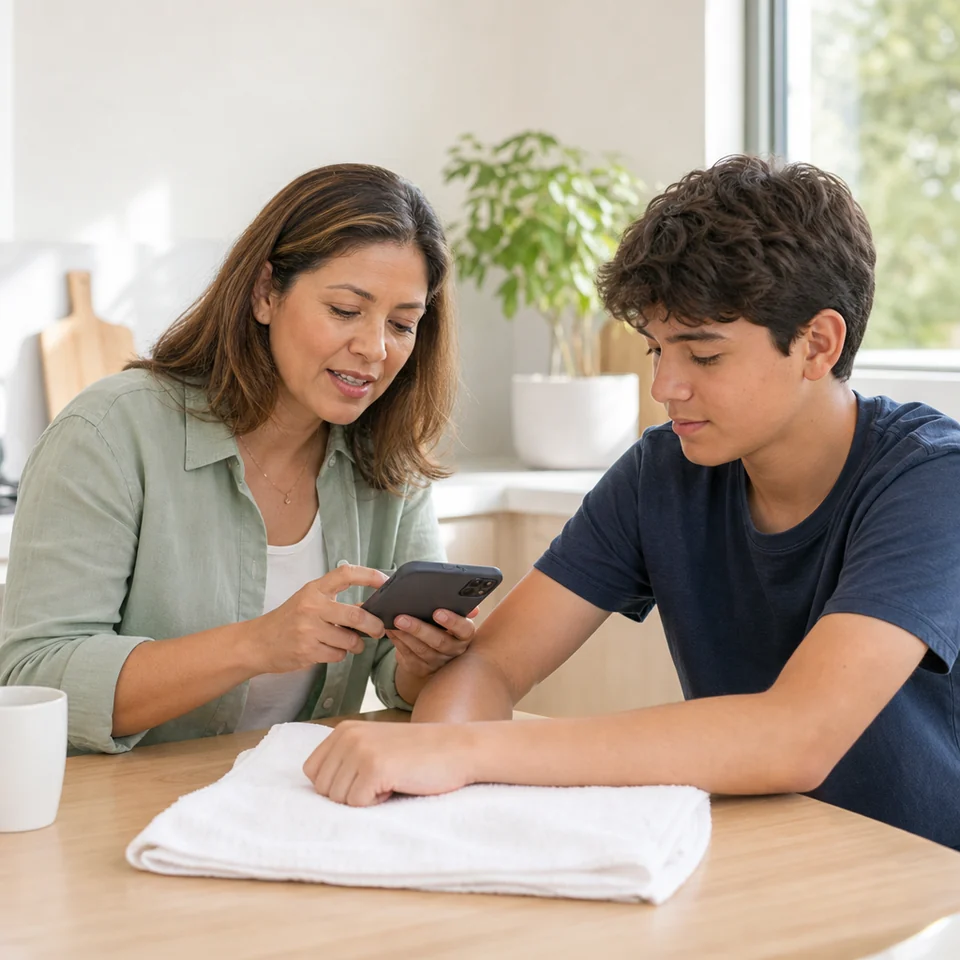
A guided first step
Share your skin history, symptoms and questions in a short form before your dermatology consult.
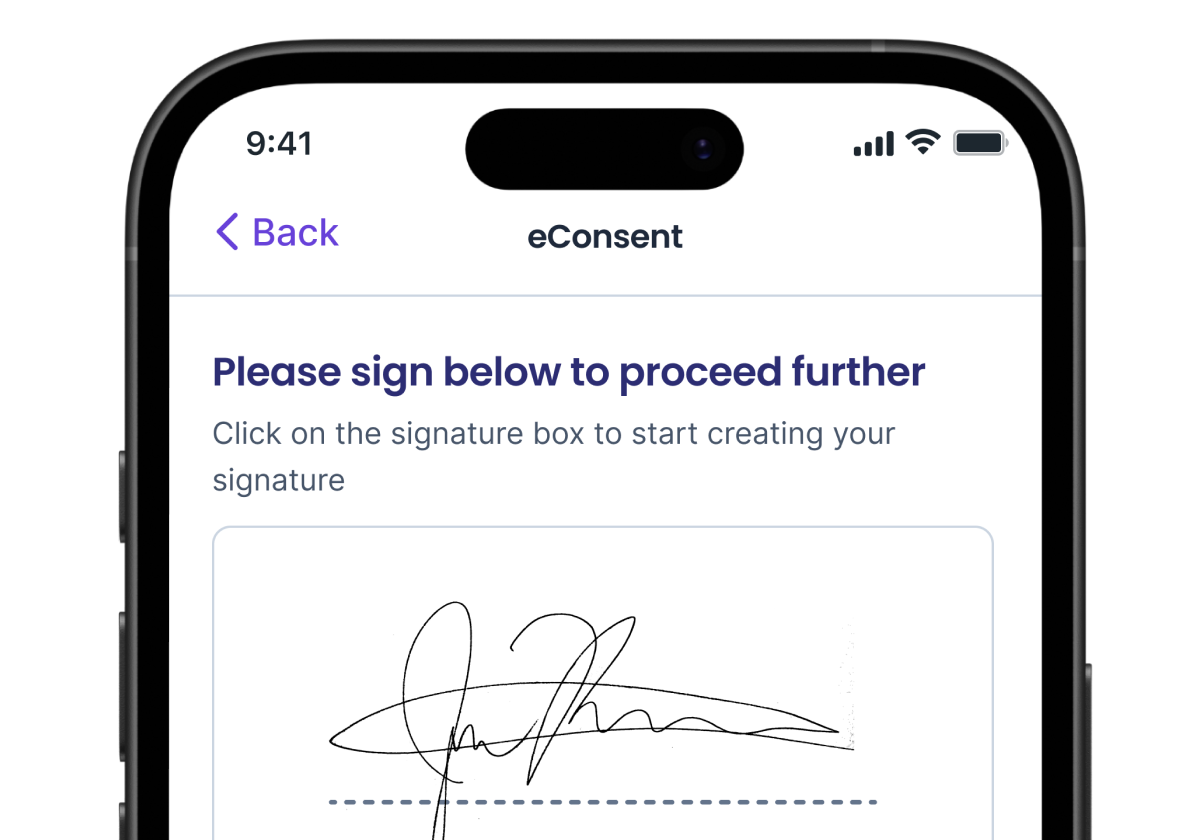


Bring skin photos, your history and follow-up with your dermatology team into one connected care pathway.
Share your skin history, add clear photos through simple forms and prepare for your consult, with your dermatologist assessing and deciding each next step.

 The WeGuide teledermatology journey
A rash can flare and settle, and a spot can look different in another light. Before a consult, photos, symptoms and history often sit in different places.
WeGuide keeps your history, your photos and the advice you receive together, so each consult can start from what you have shared and lead to a clear plan for your skin.
From your first photos to follow-up after your consult, keep the plan and what comes next within reach.
Share your skin history, symptoms and questions in a short form before your dermatology consult.
Simple guides on taking clear skin photos, plus your dermatologist's advice, in your language where offered.

Reminders for the follow-up photos, check-ins and appointments agreed with your dermatology team.
Keep messages, photos and your agreed plan in one place, with video consults where your service offers them.

Bring photos taken over time, and how your skin has felt, into a clearer conversation at follow-up.

Photos, history and follow-up each add something, so your dermatologist can assess your skin with the full picture in view.

Good light, a plain background and sharp focus help your dermatologist see the true colour and texture of your skin.
A wide view shows where it is, another shows nearby skin, and a sharp close-up shows detail.
Short guides cover lighting, focus and placing a ruler or coin beside the area, with no filters.

When it started, what makes it better or worse and what you have already tried all help your dermatologist read your photos.
Share when it began, past skin problems, medicines, allergies and relevant family history.
Where your team uses it, a questionnaire such as the DLQI asks how your skin affects your week.
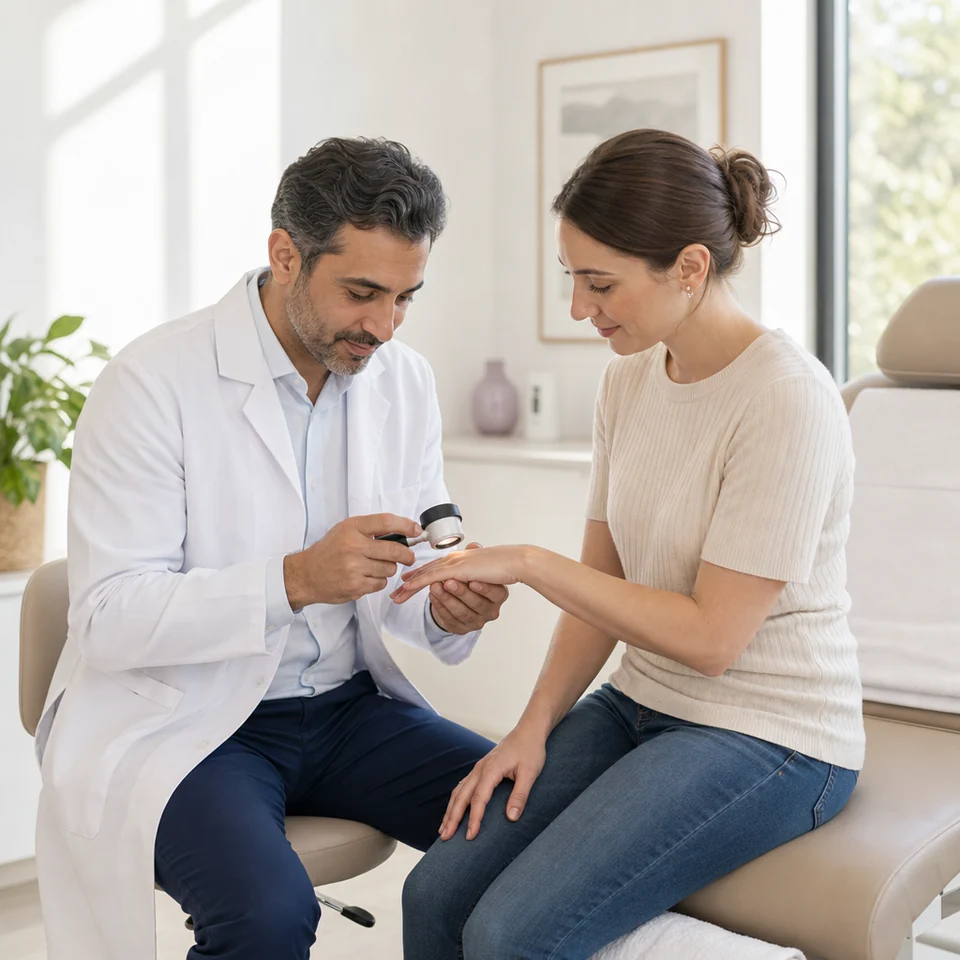
Your dermatologist or clinician reviews your photos and history, decides what they show and agrees the next step with you.
They decide whether photos are enough, or whether a video consult or a clinic visit is needed.
The plan and advice you agree stay in the app, ready to read again at home.

Repeating the same light, distance and view at agreed times lets your dermatologist judge how treatment is working.
Taking each photo in a similar place, light and distance makes them easier to compare.
Your dermatologist decides how often to take photos and when a review or visit is due.
01 / 04
Each step is connected, and your dermatologist makes every clinical decision along the way.
Guidance before you capture
Every assessment made by your dermatologist
Advice you can return to
Photos and check-ins between visits
For clinicians
Bring intake forms, guided patient photos, file uploads, telehealth where offered and follow-up into one digital journey. Keep each assessment grounded in your dermatology expertise, your service protocols and local guidance.

Answers about teledermatology, online consultations and using WeGuide in your dermatology service.
Sources
Teledermatology is dermatology care delivered at a distance. Photographs of the affected skin and information about the condition are shared securely with a dermatologist or skin specialist, who reviews them and can then give advice, arrange treatment or tests, or recommend a face-to-face appointment. It can use photos reviewed later, a live video consultation, or both.
Teledermatology services usually combine a clinical history with photographs of the skin. A typical set shows where the area is on the body, plus one or two close-up views. For a lump or growth, a dermatoscope that magnifies the skin may be used, and a widespread rash may need more photos. The specialist then gives a diagnosis or advice, or arranges a clinic visit, a biopsy or other tests.
The dermatologist reviews the history alongside well-lit, in-focus photos: a view showing where the area is, one with nearby unaffected skin and a close-up, often with a ruler or coin for size. Clinicians may add a questionnaire such as the Dermatology Life Quality Index (DLQI), which asks how skin affects daily life, and may record skin type with the Fitzpatrick scale, a classification of how skin reacts to sun.
Teledermatology works best for visible skin, hair and nail concerns, such as rashes, acne, eczema, psoriasis and spots a person would like a dermatologist to look at. It may not suit intimate areas, or skin that is hard to photograph because of body hair, tattoos or scars. Depending on the condition, the photo quality or the information provided, the dermatologist may ask to see someone in person.
Not always. Store-and-forward teledermatology sends photos and a written history for a dermatologist to review later, so no live appointment is needed. Live video teledermatology brings the patient and dermatologist together in real time, which allows immediate questions and answers. Services may use one approach, the other, or a combination, depending on the condition and the local service.
Virtual dermatology can support many steps, including history taking, photo review, advice, follow-up and ongoing care for long-term skin conditions. It cannot replace every visit. A spot that needs a closer examination, a biopsy or skin surgery, or photos that are not clear enough, will usually mean an in-person appointment. The dermatologist decides which steps are suitable for remote care.
WeGuide brings intake forms, in-app photo capture or upload, photo guidance, messaging and video consults where offered into a journey the dermatology team configures. The dermatologist assesses and decides. WeGuide is not for emergencies: a rapidly changing or bleeding lesion, or a sudden widespread rash, especially if you feel unwell, needs prompt in-person care from your clinician or local emergency services.
The dermatologist explains what they found and agrees a plan, which may include skin care, treatment, tests, a clinic visit or a follow-up date. They may ask for new photos over time to see how the skin is responding. WeGuide keeps the agreed plan and advice in the app to come back to, with reminders for follow-up photos and check-ins as configured by the care team.
Contact WeGuide to discuss your dermatology service, referral routes, patient population and existing workflow. Together, we can identify the intake forms, photo questions and guidance, patient education, telehealth setup, follow-up schedule and any integrations needed to support your team. Your clinical team defines the assessment protocol, the photos requested and all care decisions.
WeGuide pricing depends on the scope of your care pathway, configuration, integrations and support requirements, including optional modules such as telehealth or multi-language content. Contact our team to discuss your service and request a proposal. Consultation, dermatology and other clinical fees are determined separately by the care provider.
Request patient access
Not all dermatology services are using WeGuide yet. If yours isn't connected, share their practice details so we can discuss access to the teledermatology pathway with your care team.
Requesting access does not book an appointment. Your dermatologist decides which photos, consults and next steps are right for you.