


Fitzpatrick Skin Type Scale: Classifying Sun Response
The Fitzpatrick scale classifies skin into six types by how it responds to ultraviolet light. It describes sun reaction, not race or ethnicity.

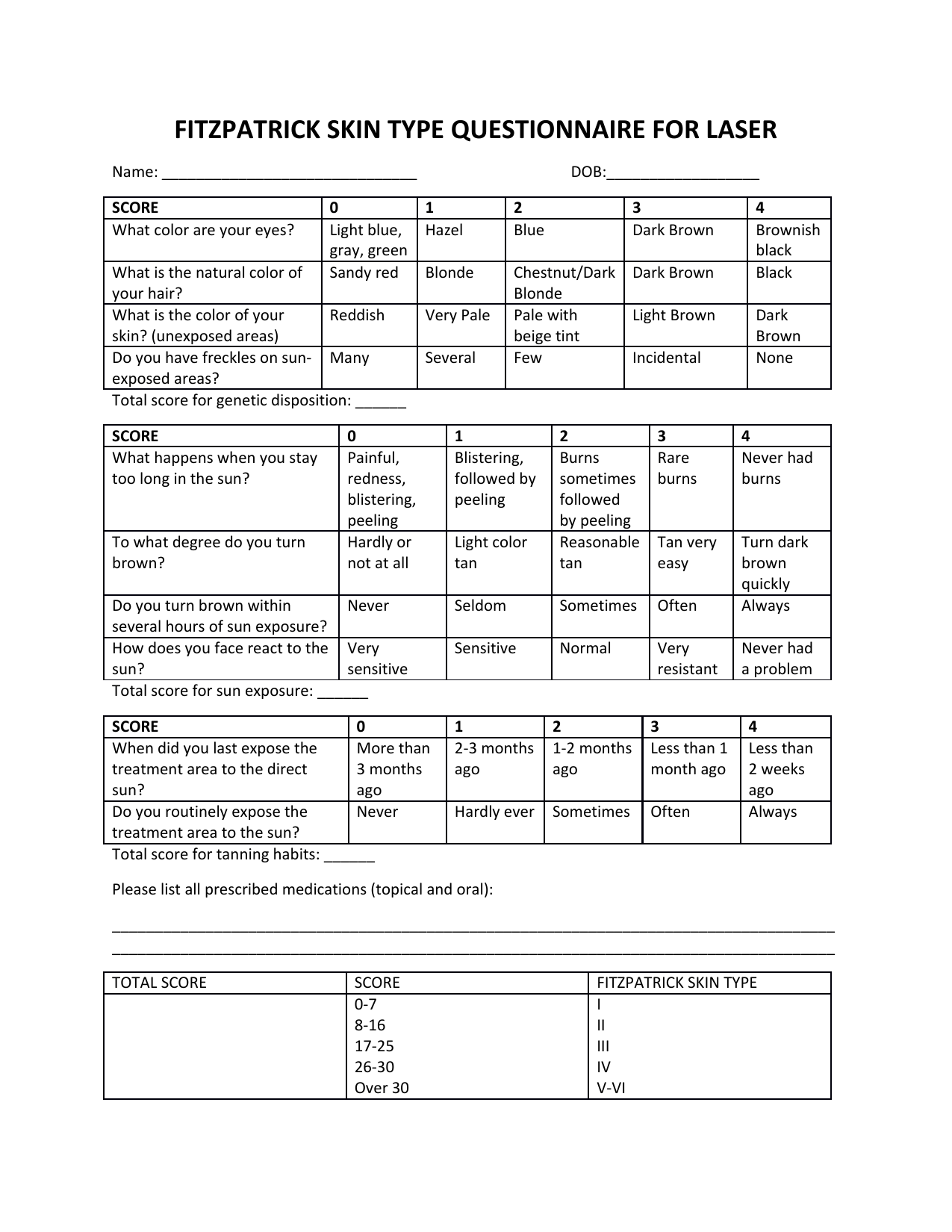
Fitzpatrick Skin Type Scale
The Fitzpatrick skin type scale sorts skin into six types based on how readily it burns and how readily it tans on first exposure to summer sun. It was developed to set starting doses for phototherapy and is now used widely in dermatology, laser treatment and photoprotection advice.
Category
Disease
Source
What is the Fitzpatrick Skin Type Scale

The scale runs from type I, which always burns and never tans, through type IV, which burns minimally and tans easily, to types V and VI, which rarely or never burn. Classification is based on the person's reported reaction to about thirty minutes of sun after the winter, not on an examiner's judgement of their appearance.
Thomas Fitzpatrick devised it in 1975 to choose an initial dose for ultraviolet phototherapy, and that origin explains both its structure and its limits. It is a functional classification of photosensitivity. Types V and VI were added later, and the scale has repeatedly been criticised for performing poorly in people with darker skin, where self-reported burning correlates weakly with measured pigmentation. Using it as a proxy for race or ethnicity is a misuse of the instrument, and using it to select laser parameters in darker skin without other assessment is a known source of harm.

The person is assigned a single type from I to VI based on their answers about burning and tanning. There is no total score. Where the classification will drive a treatment dose, it should be combined with an objective measure rather than used on its own, and the basis for the assignment should be recorded.
State plainly what the type is being used for. For photoprotection advice it is adequate. For phototherapy dosing it was validated, within the limits above. For anything that treats it as a demographic variable it is the wrong instrument, and a study reporting Fitzpatrick type in place of self-reported ethnicity is reporting something else.

Advantages

Develops personalised strategies based on assessment data.
.svg)
Allow for comparisons between different groups.
.svg)
Minimizes mistakes in clinical data collection.
.svg)
Promotes active participation in healthcare assessment.
.png)

Related Instruments

Digital counterpart
Digital biomarkers that measure the same thing with sensors rather than a questionnaire.
Collect Fitzpatrick skin type data with WeGuide, the all in one patient engagement platform
.jpg)

Support Your patient in no time - all under your own brand
Our platform combines the knowledge of 100+ digital health solutions built, letting you easily build your patient engagement app for research or clinical use. Collect PROMs, support patients on waiting lists, or gather vital signs data. This is how:
Learn More.png)
Program Builder
.png)
.png)
Whitelabelling
.svg)
.svg)
.png)
Turn on components, dependent on your usecase
.svg)
.png)
Support The Full Journey
.png)
.png)
%20(1).png)
.png)
It’s your turn
Every WeGuide project, saves researchers and clinicians - 9 months and $450,000 - creating impactful digital health solutions.
