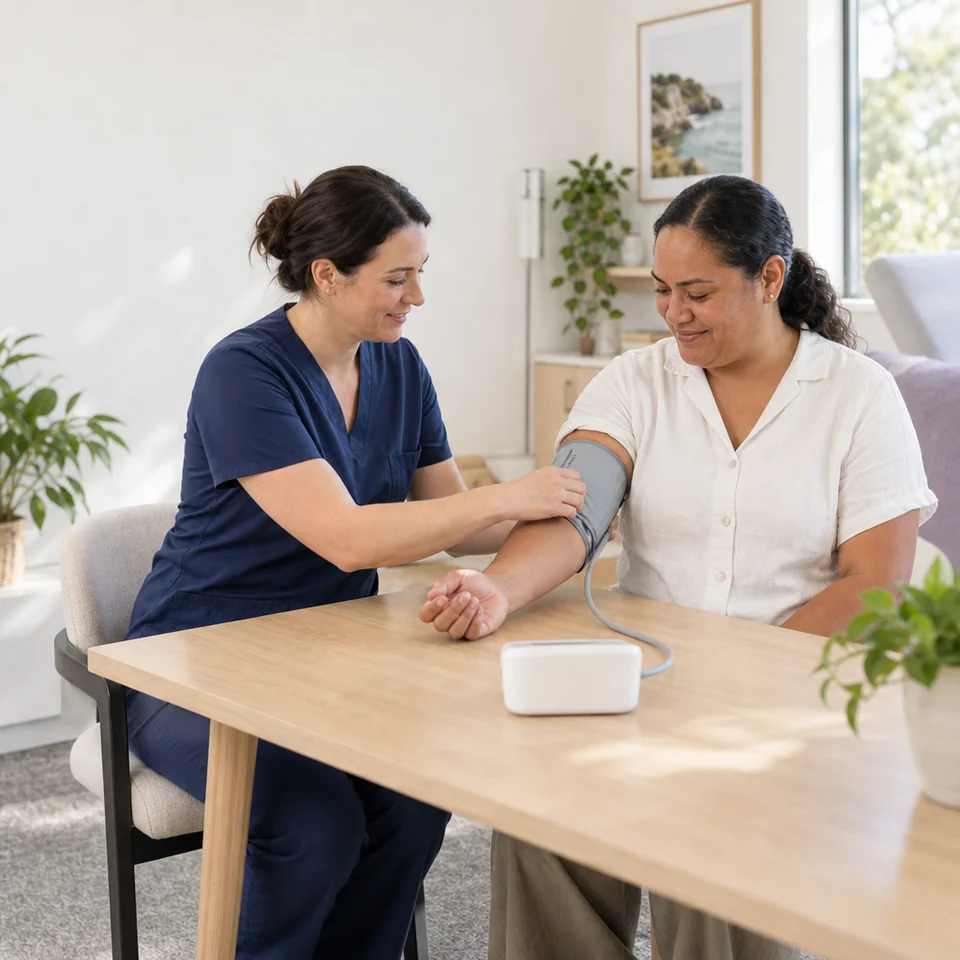
A guided first step
Share your health history and understand what to expect before your pre-operative assessment.


Bring preparation for surgery and recovery at home into one connected perioperative care pathway.
Gather health information before surgery, share clear preparation and recovery guidance, and check in at home, with your surgical team leading each next step.

 The WeGuide perioperative care journey
Preparing your body, understanding your operation and recovering at home each shape your experience of surgery. Bringing them together helps your care team see what needs attention.
WeGuide connects preparation, education and recovery check-ins in one journey, so you can move from the decision to operate to recovering at home with support.
From the decision to operate to recovery at home, keep the next step within reach.
Share your health history and understand what to expect before your pre-operative assessment.
Clear information about your operation, preparation and recovery, in the steps agreed with your care team.

Reminders for the preparation, questionnaires and appointments agreed with your surgical team.
Keep guidance and recovery check-ins together, with support from your care team between appointments.

Bring relevant recovery updates and activity into a clearer conversation at your follow-up.

Bring the parts that matter together, for perioperative care grounded in you and your operation.

Activity, eating well and cutting down on smoking and alcohol, as advised, are part of getting ready for your operation.
Your care team suggests activity that fits your health, with effort rated on a scale such as Borg CR10.
Share your eating, smoking and alcohol habits, and agree on realistic changes before your operation.

Clear information about your operation, consent and instructions helps you arrive prepared, with your questions answered.
Read about your operation, anaesthetic and hospital stay, and note questions for your surgical team.
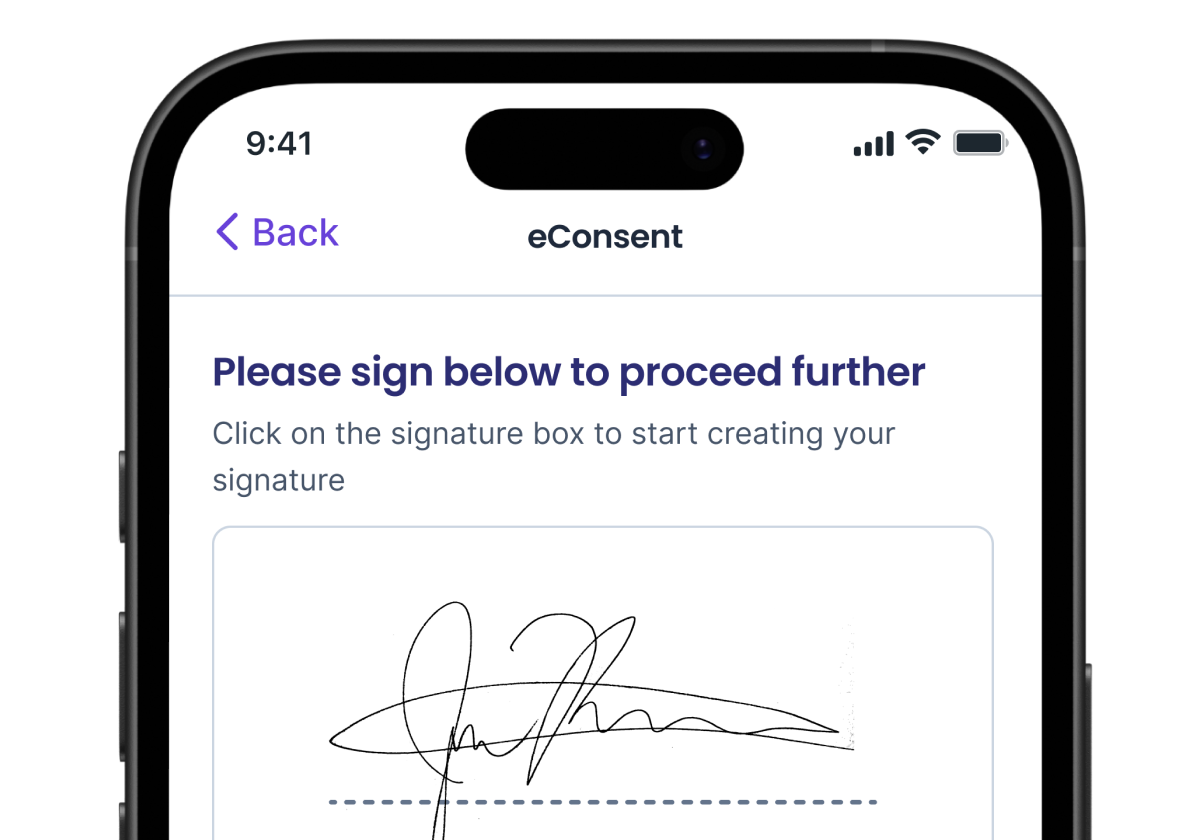
Review consent forms ahead of time and sign digitally, where your hospital uses eConsent.

Symptoms, your wound, pain and activity are all part of recovery. Check in at the times agreed with your care team.
Share symptoms, wound photos and questionnaires such as EQ-5D at the times your care team sets.
Where used, steps from a connected wearable show how your activity builds over time.

Your care team explains the warning signs to look out for and who to contact, so you know what to do.
Keep the warning signs your care team has agreed, and their contact details, within easy reach.
For urgent symptoms, contact local emergency services. WeGuide does not monitor emergencies.
01 / 04
One connected journey, with your surgical team guiding each step.
Information before the day
A care team by your side
Preparation and recovery steps
Connected during your recovery
For clinicians
Bring pre-operative questionnaires, patient education, eConsent and recovery check-ins into one digital journey. Keep perioperative care grounded in your protocols and local guidance.

Answers about perioperative care, prehabilitation, post-operative care and using WeGuide in your service.
Perioperative care is the care a person receives around an operation: preparing for surgery, care during the operation and recovery afterwards. It covers every stage, from the decision to have surgery through to recovery at home. Enhanced recovery approaches such as ERAS apply this thinking to the whole surgical journey.
Perioperative care usually includes information and a point of contact in the care team, a pre-operative assessment, preparation such as prehabilitation, care during the operation, pain relief, and recovery and discharge planning. For major surgery, enhanced recovery programmes combine elements before, during and after the operation. The surgical team decides what each person needs.
A pre-operative assessment reviews health, medical history, medicines and home circumstances. Any tests depend on the operation and the type of anaesthetic. Clinicians may use a validated risk tool to supplement their clinical assessment, then discuss risks and options with the person. Nutritional screening is recommended before intermediate or major surgery.
Prehabilitation aims to improve general health and wellbeing before surgery and is mostly described for people preparing for major surgery. It targets factors such as low activity, smoking, hazardous drinking, poor nutrition and psychological wellbeing. Surgical risk is often higher in people who are older, live with several conditions or are frail. Suitability depends on the operation, timing and local services.
No. Post-operative care is the part of perioperative care that happens after the operation, in hospital and during recovery at home. Perioperative care also includes the preparation before surgery and the care during it. Enhanced recovery programmes link all three phases, so preparation and recovery are planned together.
Parts of perioperative care can be supported remotely, including health questionnaires, patient education, preparation goals and recovery check-ins. Some pre-operative assessments take place by video or telephone. The operation, examinations, blood tests and wound reviews where needed take place in person. If symptoms are urgent, contact local emergency services. The care team decides which steps suit remote care.
Digital follow-up helps a care team collect agreed recovery updates between appointments, such as symptoms, pain scores, wound photos and activity. In a perioperative care pathway, WeGuide brings scheduled questionnaires, reminders, patient education and check-ins into the journey configured by the care team, with step data from connected wearables where used. Clinicians review the updates and decide on care.
Recovery at home usually involves getting active gradually as advised, caring for the wound as instructed, managing pain as agreed and attending follow-up. Exercises from a physiotherapist may be part of it. WeGuide supports this stage with recovery guidance, scheduled check-ins and reminders, and keeps agreed warning signs and contact details within reach. WeGuide does not monitor emergencies.
Contact WeGuide to discuss your perioperative care pathway, surgical population and existing workflow. Together, we can identify the pre-operative questionnaires, patient education, eConsent forms, recovery check-in schedule and any integrations needed to support your service. Your clinical team defines the perioperative protocol and care decisions.
WeGuide pricing depends on the scope of your care pathway, configuration, integrations and support requirements. Contact our team to discuss your service and request a proposal. Surgical, anaesthetic and other clinical fees are determined separately by the care provider.
Request patient access
Not all care teams are using WeGuide yet. If your hospital or surgical service isn't connected, share their details so we can discuss access to the perioperative care pathway with your care team.
Your care team guides your preparation and recovery, and decides which steps are right for you.