A guided first step
Share your skin history, known triggers and questions, and know what to expect before your first review.
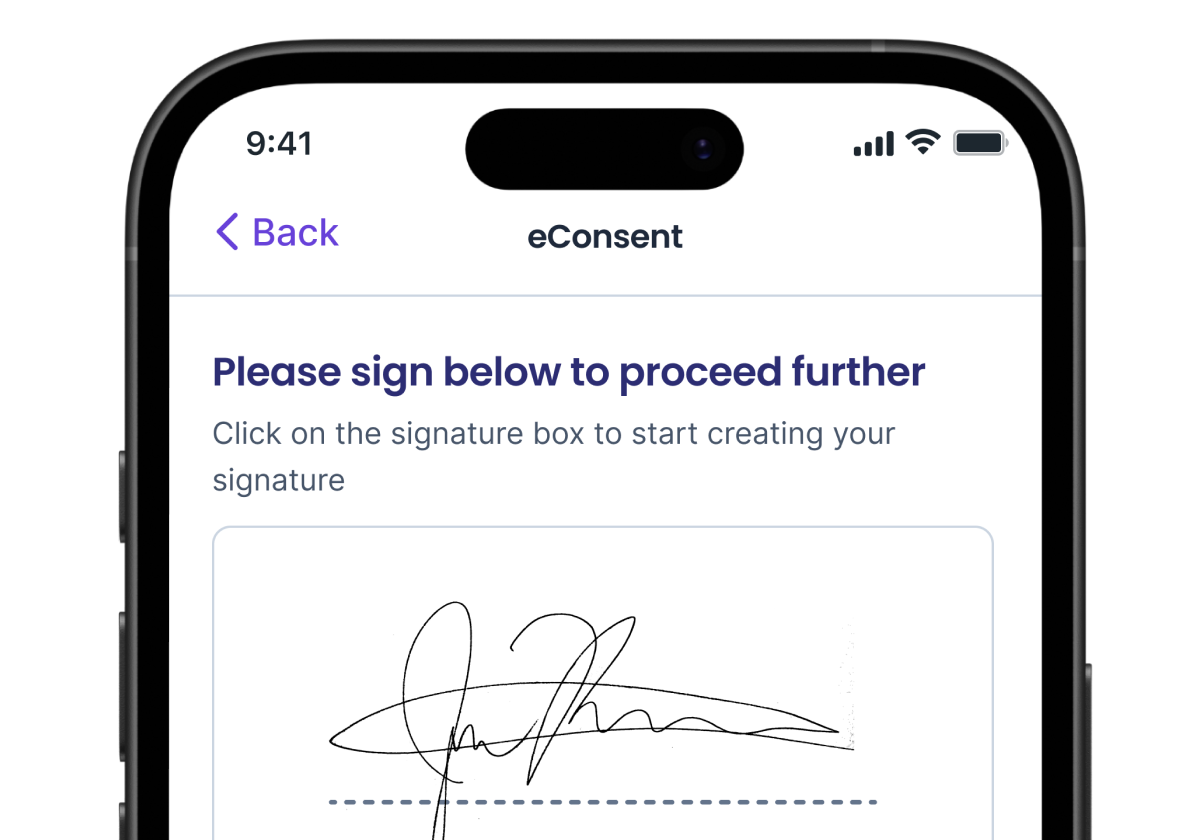


Bring skin photos, itch and sleep check-ins and follow-up into one connected eczema and psoriasis care pathway.
Share how your skin, itch and sleep change between reviews and return to the skin care advice you were given, with your care team leading each step.

 The WeGuide eczema and psoriasis journey
Flares can come and go over weeks. Itch, broken sleep and how your skin looked at its worst can be hard to recall or show by the time of your next review.
WeGuide connects your reviews with clear skin care guidance and regular check-ins, so you can move from describing a flare from memory to showing your care team how your skin has changed.
From your first skin review to everyday care at home, keep each next step within reach.
Share your skin history, known triggers and questions, and know what to expect before your first review.
Clear information on your condition and the skin care routine your care team has advised for you.

Reminders for photos, check-ins and the treatment plan agreed with your care team.
Keep advice, check-ins and messages with your care team in one place between your reviews.

Bring photos, itch ratings and sleep updates into a clearer conversation at each skin review.

Bring the changes that matter together, so your care team sees both your skin and your daily life.
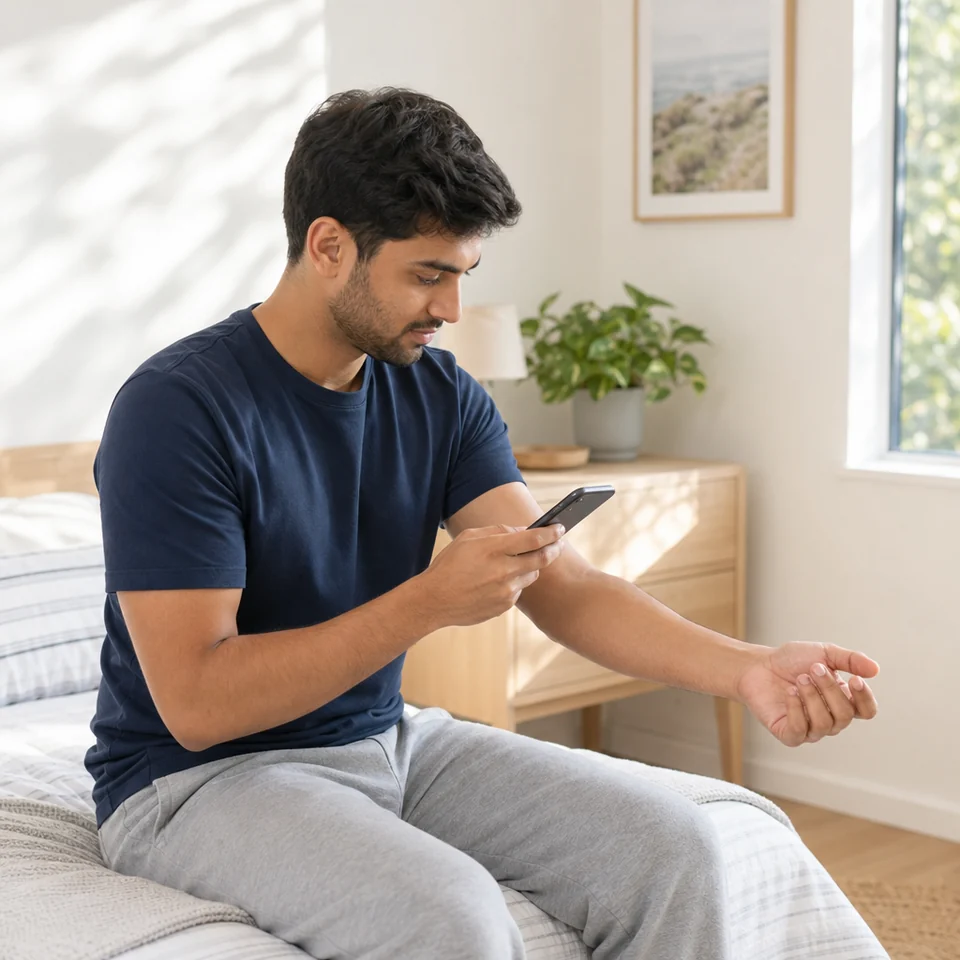
Photos taken at agreed times, through a form question or in-app capture, help your care team compare your skin between reviews.
Your care team decides which areas to photograph, how often, and how the photos are shared.
At reviews, your clinician may rate severity with a clinical score such as EASI or PASI.

Itch can disturb your sleep. Short check-ins on itch and rest help your team understand how a flare affects your nights.
Rate your itch and sleep in a few taps, at the times agreed with your care team.
Where available, sleep data from Apple Health, Health Connect or Garmin adds to the picture.

Eczema and psoriasis can affect work, clothing choices, confidence and mood. Your team can include these in your check-ins.
Your clinician may choose a questionnaire such as the DLQI and decide how often you complete it.
With psoriasis, joint pain or swelling is worth raising with your clinician to check for psoriatic arthritis.

A short diary of flares and possible triggers, next to the skin care routine you were advised, helps you and your team spot patterns.
Note flares and possible triggers, such as stress, heat or a new soap, to discuss with your team.
Revisit the skin care routine and treatment agreed with your care team, with reminders that fit your day.
01 / 04
One connected journey, with your dermatology or primary care team guiding each step.
Photos and check-ins over time
Check-ins your team reviews
Your clinician decides on treatment
Advice you can revisit
For clinicians
Bring skin history intake, scheduled photos, quality-of-life questionnaires, patient education and follow-up into one digital journey. Keep severity scoring and treatment decisions with your team, in line with local guidance.

Answers about eczema and psoriasis care, remote follow-up and using WeGuide in your service.
Eczema and psoriasis management is the long-term care of two common inflammatory skin conditions that tend to flare up and then settle. Neither can be cured, but treatment can help manage symptoms such as itch, dryness and scaly patches. Care usually combines a daily skin care routine, avoiding known triggers, treatment agreed with a GP or dermatologist, and regular reviews of how the skin and daily life are affected.
Care usually starts with regular moisturising and avoiding things that make symptoms worse. Depending on the type, severity and location, a clinician may add treatments applied to the skin, light therapy or medicines, and may refer to a dermatologist. Education on using treatments and recognising flares is part of care, and mental health support can be offered when living with the condition is hard.
A clinician examines the skin, scalp and nails and asks about history, triggers and how symptoms affect daily life. Dermatology teams may also use clinician-rated scores, such as the Eczema Area and Severity Index (EASI) or the Psoriasis Area and Severity Index (PASI). Questionnaires such as the Dermatology Life Quality Index (DLQI) capture the impact on everyday life. Redness can be harder to see on brown or black skin.
Atopic dermatitis, the most common type of eczema, often starts in babies and young children but can begin at any age, and for some people it continues into adulthood. Psoriasis can also start at any age and is more common in adults than in children. Care often begins with a GP or primary care clinician, with referral to a dermatologist where needed. Referral routes differ by country.
No, although they can look alike, and a clinician can tell them apart. Both are long-term inflammatory conditions that flare and settle, and neither is contagious. Atopic eczema involves changes in the skin barrier and causes very itchy, dry skin, often from childhood. In psoriasis, an overactive immune system makes skin cells build up too quickly, forming raised, scaly patches. Psoriasis can also affect the nails and joints.
Parts of eczema and psoriasis care can be supported remotely, including skin history questionnaires, photos taken at agreed times, quality-of-life questionnaires, education and some consultations by video where appropriate. A diagnosis usually needs an examination of the skin, scalp and nails, while skin samples and clinic-based light therapy take place in person. The care team decides which steps suit remote follow-up.
WeGuide brings photo requests, itch and sleep check-ins, questionnaires such as the DLQI, reminders and education into the journey your care team configures and reviews, with wearable sleep data where available. WeGuide is not for emergencies: signs of infected skin, such as weeping, yellow crusting, fever or clusters of painful blisters, or skin that suddenly becomes red and painful over large areas, need prompt care from your clinician or local emergency services.
After a review, the clinician and patient agree a treatment plan and skin care routine, with clear steps for managing flares. Follow-up looks at how treatment is working and how the condition affects daily life and mood, and psoriasis care includes regular checks for joint symptoms. WeGuide supports this stage with photo check-ins, reminders and patient education, as configured by the care team.
Contact WeGuide to discuss your dermatology or primary care service, patient population and existing workflow. Together, we can identify the skin history forms, photo schedule, quality-of-life questionnaires, patient education and any integrations needed to support your team. Your clinical team defines the monitoring protocol, severity assessment and all care decisions.
WeGuide pricing depends on the scope of your care pathway, configuration, integrations and support requirements, including optional modules such as telehealth. Contact our team to discuss your service and request a proposal. Consultation, treatment and other clinical fees are determined separately by the care provider.
Request patient access
Not all dermatology and primary care teams are using WeGuide yet. If yours isn't connected, share their practice details so we can discuss access to the eczema and psoriasis pathway with your care team.
Requesting access does not book an appointment. Your dermatology or primary care team decides which photos, check-ins and next steps are right for you.