


Pain Self-Efficacy Questionnaire (PSEQ): Assessment Tool
The PSEQ measures how confident patients feel doing daily tasks while in pain. This self-report tool helps clinicians plan chronic pain treatments and track recovery progress.

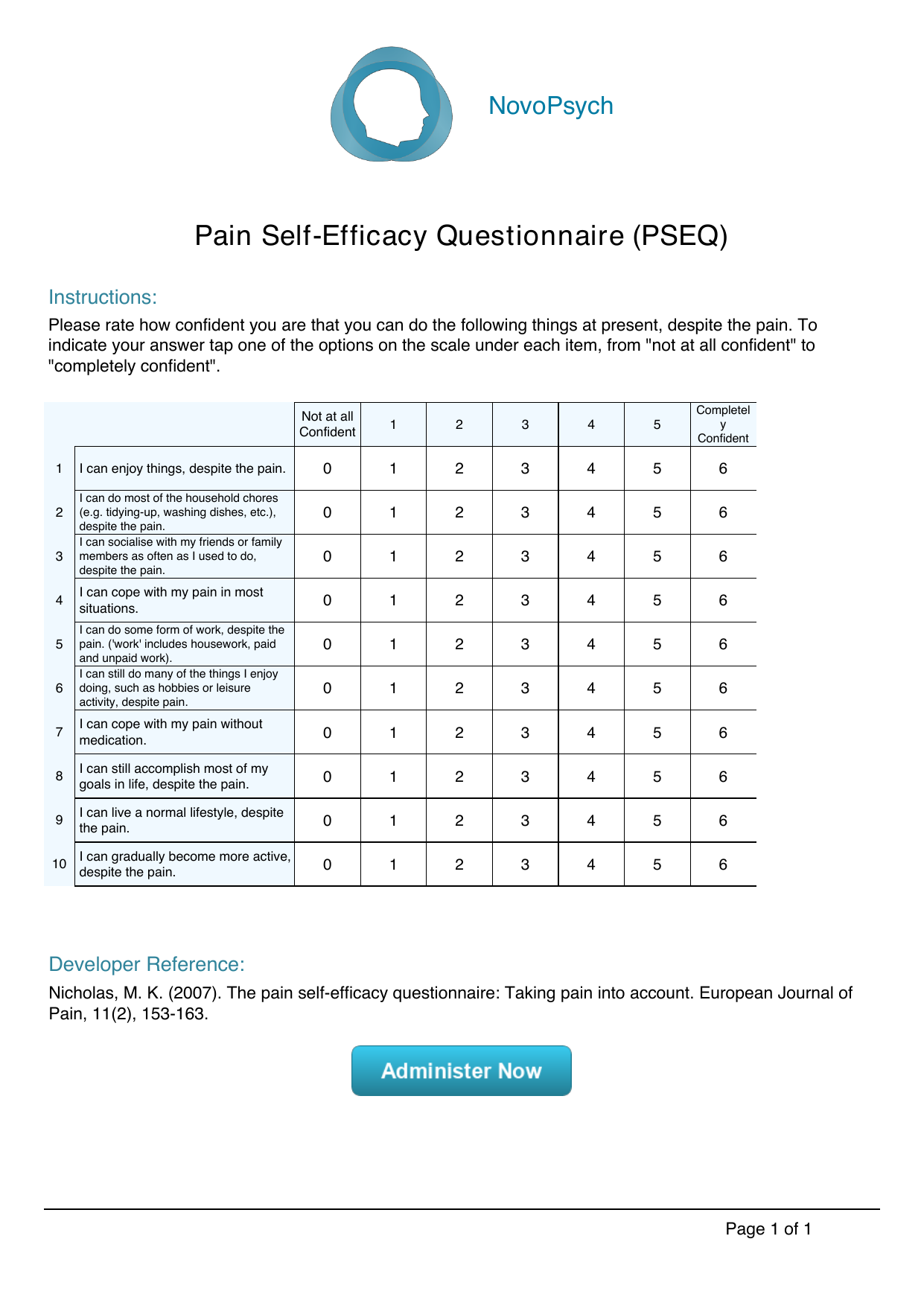
Pain Self-Efficacy Questionnaire (PSEQ)
The Pain Self-Efficacy Questionnaire (PSEQ) is a 10-item tool assessing a patient's confidence in performing activities despite pain. It helps clinicians understand coping beliefs, which are key to managing chronic conditions. High scores suggest better functional recovery and pain management.
Category
Disease
Source
What is Pain Self-Efficacy Questionnaire (PSEQ)

The Pain Self-Efficacy Questionnaire (PSEQ) is a trusted tool for measuring how confident patients feel doing daily tasks while living with pain. This ten-item scale looks at a person's belief in their ability to function despite ongoing discomfort. It focuses on general daily activities rather than specific movements. Patients rate their confidence on a seven-point scale ranging from zero to six. A zero means they are not confident at all, while a six shows complete confidence. Total scores go up to sixty, and higher numbers suggest stronger coping skills and resilience. Clinicians use this tool to predict treatment outcomes and track progress over time. It is quick to complete and helps identify patients who might need more support managing their condition. Understanding these beliefs allows therapists to plan better rehabilitation programs for long-term relief.
The Pain Self-Efficacy Questionnaire can be scored using one main approach: simply adding up the item responses. Participants rate ten specific activities on a scale from 0 (not at all confident) to 6 (completely confident). To get the total, just add these numbers together for a final score ranging from 0 to 60. Higher numbers mean the patient feels more capable of handling daily life despite their pain. Generally, a total under 17 suggests low confidence, while anything over 40 indicates strong coping skills. It is a straightforward way to track progress during rehab.

Advantages

Develops personalised strategies based on assessment data.
.svg)
Measures healthcare intervention results systematically.
.svg)
Streamlines research data gathering process.
.svg)
Provides consistent measurements for clinical research.
.png)

Related Instruments

Digital counterpart
Digital biomarkers that measure the same thing with sensors rather than a questionnaire.
Streamline Pain Self-Efficacy Questionnaire data collection with WeGuide
.jpg)

Support Your patient in no time - all under your own brand
Our platform combines the knowledge of 100+ digital health solutions built, letting you easily build your patient engagement app for research or clinical use. Collect PROMs, support patients on waiting lists, or gather vital signs data. This is how:
Learn More.png)
Program Builder
.png)
.png)
Whitelabelling
.svg)
.svg)
.png)
Turn on components, dependent on your usecase
.svg)
.png)
Support The Full Journey
.png)
.png)
%20(1).png)
.png)
It’s your turn
Every WeGuide project, saves researchers and clinicians - 9 months and $450,000 - creating impactful digital health solutions.
