


Örebro Musculoskeletal Pain Screening Questionnaire (ÖMPSQ)
The ÖMPSQ helps clinicians identify patients at risk of long-term disability from musculoskeletal pain. It highlights risk factors to guide early treatment and support recovery.


Örebro Musculoskeletal Pain Screening Questionnaire (ÖMPSQ)
The Örebro Musculoskeletal Pain Screening Questionnaire helps clinicians identify patients at risk of long-term disability. By assessing psychosocial 'yellow flags', this predictive tool guides early treatment to prevent chronic issues and work absence. It's a practical resource for managing musculoskeletal injuries.
Category
Disease
Source
What is Örebro Musculoskeletal Pain Screening Questionnaire (ÖMPSQ)

The Örebro Musculoskeletal Pain Screening Questionnaire (ÖMPSQ) is a reliable instrument for spotting patients at risk of long-term pain and work disability. It helps clinicians identify "yellow flags" early in the process. This predictive survey looks beyond simple physical symptoms to understand how pain truly impacts a patient's daily life. The form covers essential areas like pain intensity, anxiety, depression, and fear-avoidance beliefs. Patients rate their ability to work and perform routine tasks, giving a clear picture of psychosocial factors that might delay recovery or cause ongoing issues. It is quick to administer and simple to score, making it a smart choice for busy clinics. Since high scores point to a need for specific treatment to stop chronic problems, using this tool lets healthcare teams intervene sooner and support better long-term outcomes for injured workers.
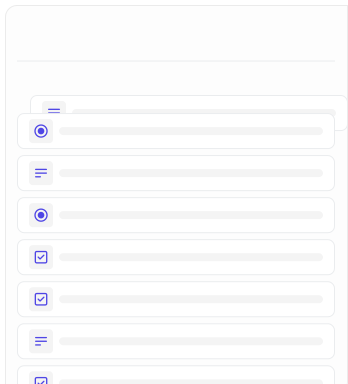
The Örebro Musculoskeletal Pain Screening Questionnaire can be scored using two main approaches: total summation and risk grouping. 1. Total Sum Calculation: Most items are rated 0 to 10, but you must reverse score questions about coping and work ability. Sum the 21 scored items for a total between 0 and 210. 2. Risk Stratification: Higher tallies point to a greater chance of long term disability. Clinicians use cut off points to sort patients into low, moderate, or high risk groups, which helps target early treatment for those likely to struggle with chronic pain and absenteeism.
Advantages

Develops personalised strategies based on assessment data.
.svg)
Streamlines research data gathering process.
.svg)
Serves diverse clinical needs effectively.
.png)

Related Instruments

Digital counterpart
Digital biomarkers that measure the same thing with sensors rather than a questionnaire.
Collect ÖMPSQ data with WeGuide, the all in one patient engagement platform
.jpg)

Support Your patient in no time - all under your own brand
Our platform combines the knowledge of 100+ digital health solutions built, letting you easily build your patient engagement app for research or clinical use. Collect PROMs, support patients on waiting lists, or gather vital signs data. This is how:
Learn More.png)
Program Builder
.png)
.png)
Whitelabelling
.svg)
.svg)
.png)
Turn on components, dependent on your usecase
.svg)
.png)
Support The Full Journey
.png)
.png)
%20(1).png)
.png)
It’s your turn
Every WeGuide project, saves researchers and clinicians - 9 months and $450,000 - creating impactful digital health solutions.
