


Numeric Pain Rating Scale (NPRS): Measuring Pain Intensity
The Numeric Pain Rating Scale helps patients rate pain intensity from zero to ten. This simple self-report tool allows doctors to track changes and adjust treatments for better care.

Numeric Pain Rating Scale (NPRS)
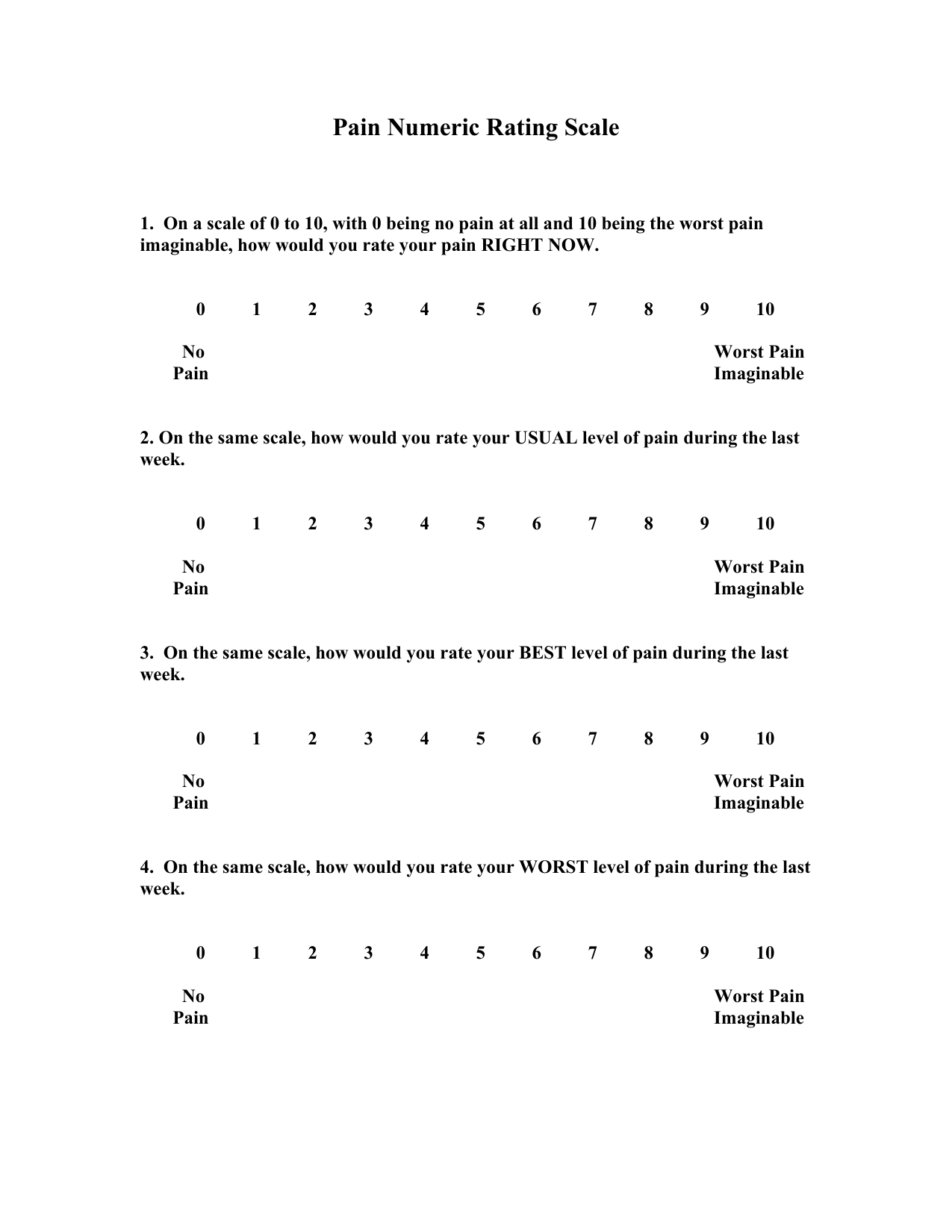
The Numeric Pain Rating Scale (NPRS) is a common tool for assessing pain intensity. Patients rate their discomfort from 0 to 10, where 10 represents the worst possible pain. This simple scale helps clinicians track symptom changes and check treatment effectiveness across different healthcare settings.
Category
Disease
Source
What is Numeric Pain Rating Scale (NPRS)

The Numeric Pain Rating Scale (NPRS) is a trusted tool for measuring pain intensity. It helps clinicians quickly understand how much a patient hurts. This straightforward scale uses a simple horizontal line or a verbal prompt involving numbers. It targets a single aspect of the patient's experience without needing tricky equipment. Spanning from 0 to 10, the ratings offer clear choices where 0 represents 'no pain' and 10 indicates 'the worst pain imaginable'. This 11-point range gives patients the flexibility to rate discomfort accurately, making it easier to spot shifts in their condition. You can administer the test verbally or on paper in under a minute, fitting perfectly into busy workflows. It's effective for assessing acute or chronic issues like back pain. Recording scores regularly lets healthcare providers adjust treatment plans to ensure better recovery outcomes.
The Numeric Pain Rating Scale can be scored using two main approaches: single point assessment and composite averaging. 1. Single Point Assessment: Patients select a whole number ranging from 0, meaning no pain, to 10, representing the worst pain imaginable. This gives a quick snapshot of intensity right now. 2. Composite Averaging: You calculate the mean of three specific ratings representing current, best, and worst pain over the last 24 hours. This method offers a much clearer look at pain fluctuations. Generally, higher scores indicate more severe pain, which helps clinicians track how well a treatment plan works over time.
Advantages
.svg)
Measures healthcare intervention results systematically.
.svg)
Simple to understand and complete for patients.
.svg)
Serves diverse clinical needs effectively.
.svg)
Promotes active participation in healthcare assessment.
.png)

Related Instruments

Digital counterpart
Digital biomarkers that measure the same thing with sensors rather than a questionnaire.
Collect Numeric Pain Rating Scale data with WeGuide, the all in one platform
.jpg)

Support Your patient in no time - all under your own brand
Our platform combines the knowledge of 100+ digital health solutions built, letting you easily build your patient engagement app for research or clinical use. Collect PROMs, support patients on waiting lists, or gather vital signs data. This is how:
Learn More.png)
Program Builder
.png)
.png)
Whitelabelling
.svg)
.svg)
.png)
Turn on components, dependent on your usecase
.svg)
.png)
Support The Full Journey
.png)
.png)
%20(1).png)
.png)
It’s your turn
Every WeGuide project, saves researchers and clinicians - 9 months and $450,000 - creating impactful digital health solutions.
