


Graded Chronic Pain Scale (GCPS): Severity Assessment
The Graded Chronic Pain Scale measures pain intensity and how it affects daily life. This tool helps clinicians assess chronic pain severity to guide effective treatment plans.

Graded Chronic Pain Scale (GCPS)
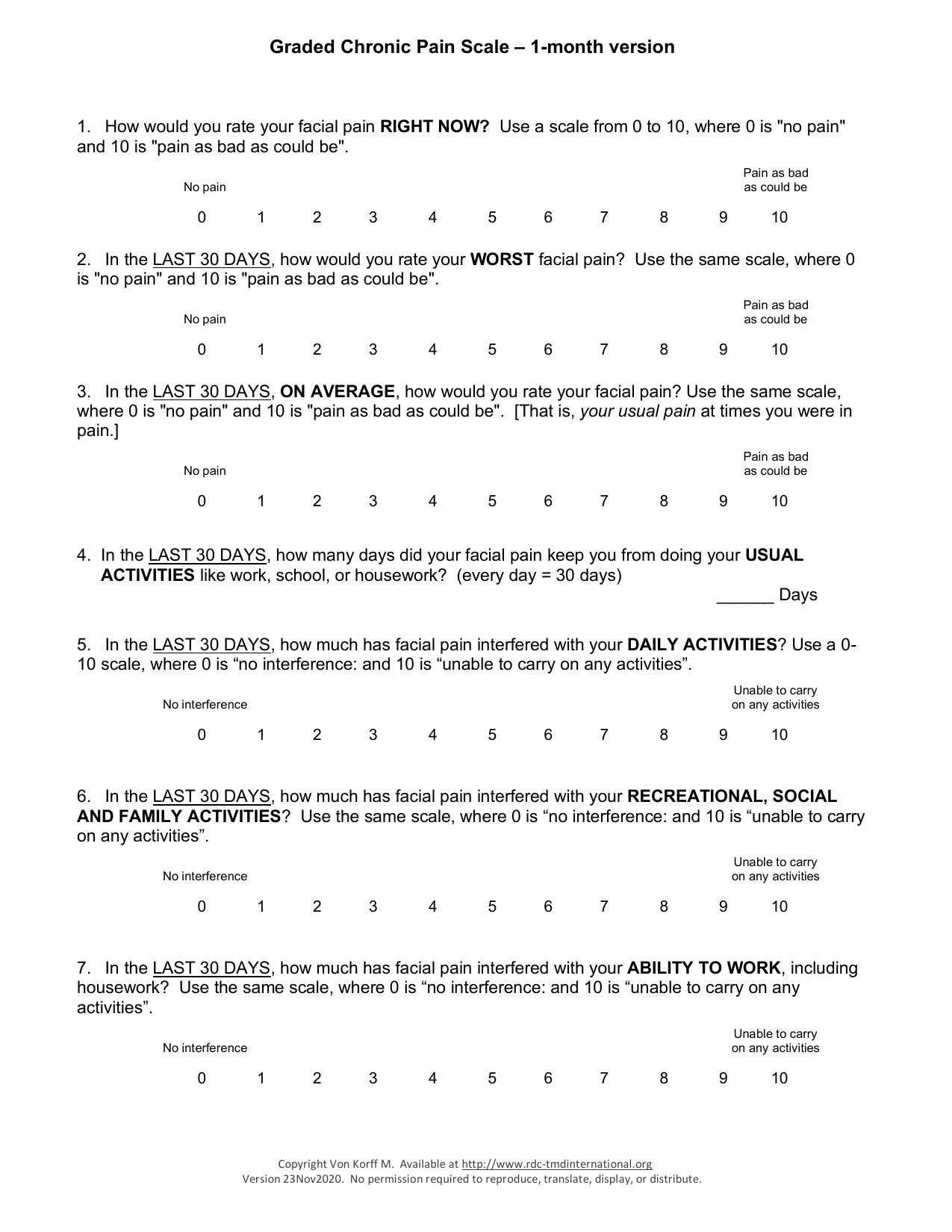
The Graded Chronic Pain Scale (GCPS) evaluates pain intensity and associated disability. By grading chronic pain levels, this questionnaire helps clinicians understand the impact on a patient's daily activities. It's a key tool for guiding treatment decisions based on severity.
Category
Disease
Source
What is Graded Chronic Pain Scale (GCPS)

The Graded Chronic Pain Scale (GCPS) is a reliable tool for assessing pain severity. It helps clinicians see exactly how pain impacts daily life. This multidimensional measure evaluates two main factors. It looks at current pain intensity and how much that pain stops a person from doing their usual activities. Patients answer seven questions using a simple zero to ten rating system. The scores are then combined to place individuals into one of four hierarchical grades. These grades range from low intensity with no disability to high limiting pain. It is quick to use in primary care settings and takes under five minutes to finish. Doctors find it handy for tracking changes over time or planning treatments. Since it is self-administered, it fits easily into busy clinics. This makes it a top choice for managing long-term conditions effectively.
The Graded Chronic Pain Scale can be scored using a two step process that measures pain intensity and disability. 1. Characteristic Pain Intensity: Calculate the mean of current, worst and average pain ratings, then multiply by 10 for a 0 to 100 score. 2. Disability Score: Average the interference ratings for daily activities, social life and work, also scaled to 100. Combine these with disability days to assign a Grade from I, meaning low intensity, to IV, indicating high disability. This helps clinicians track patient progress over time.
Advantages

Develops personalised strategies based on assessment data.
.svg)
Measures healthcare intervention results systematically.
.svg)
Provides consistent measurements for clinical research.
.svg)
Streamlines research data gathering process.
.png)

Related Instruments

Digital counterpart
Digital biomarkers that measure the same thing with sensors rather than a questionnaire.
Collect Graded Chronic Pain Scale data with WeGuide, the all in one patient engagement platform
.jpg)

Support Your patient in no time - all under your own brand
Our platform combines the knowledge of 100+ digital health solutions built, letting you easily build your patient engagement app for research or clinical use. Collect PROMs, support patients on waiting lists, or gather vital signs data. This is how:
Learn More.png)
Program Builder
.png)
.png)
Whitelabelling
.svg)
.svg)
.png)
Turn on components, dependent on your usecase
.svg)
.png)
Support The Full Journey
.png)
.png)
%20(1).png)
.png)
It’s your turn
Every WeGuide project, saves researchers and clinicians - 9 months and $450,000 - creating impactful digital health solutions.
