


Hamilton Depression Rating Scale (HAM-D): Measuring Severity
This interview-based tool helps clinicians rate the severity of a patient's depression. It provides a clear way to track symptom changes and measure how well treatments are working.

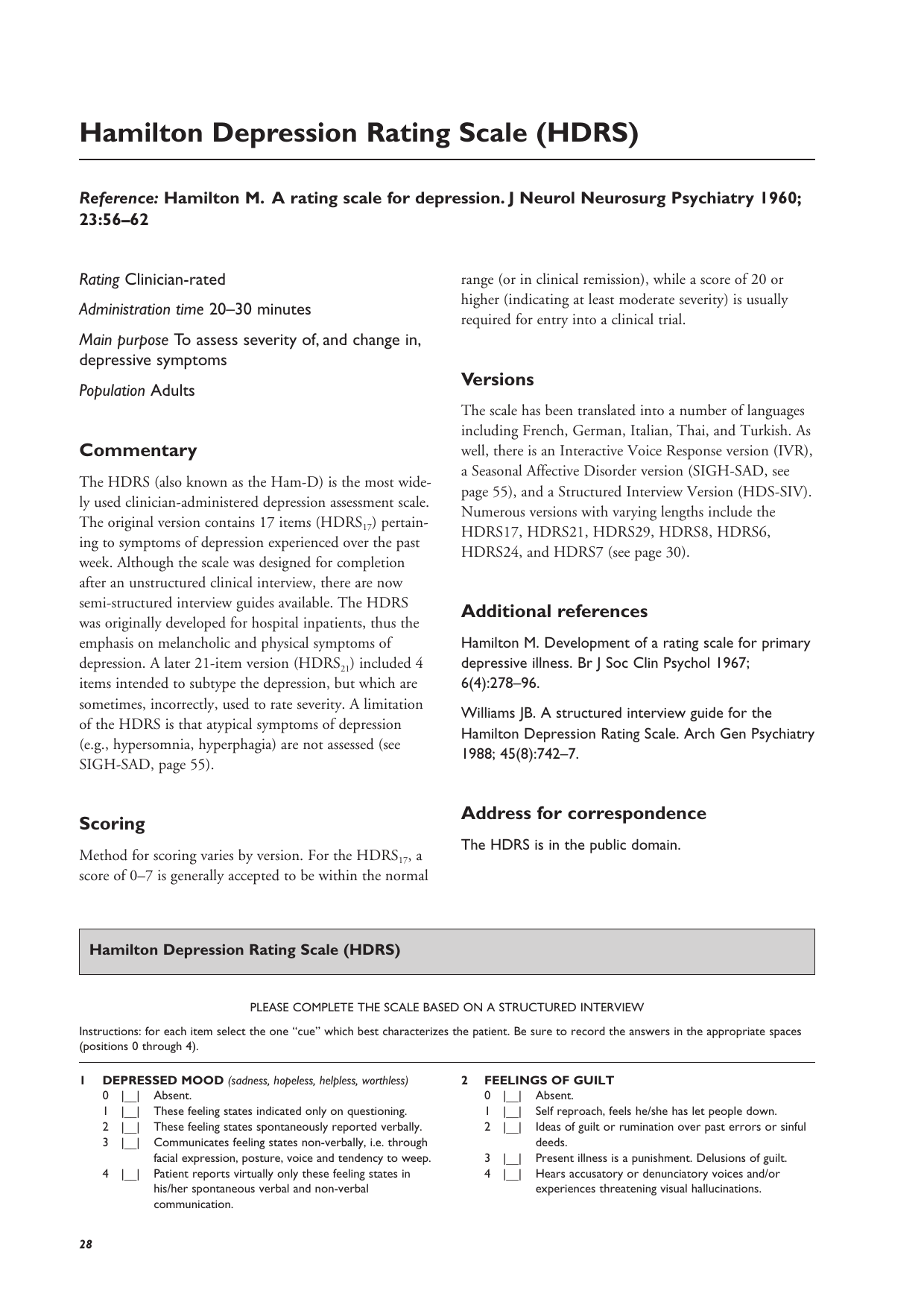
Hamilton Depression Rating Scale (HAM-D)
The Hamilton Depression Rating Scale (HAM-D) is a standard tool for measuring depression severity. It helps clinicians assess symptoms like mood, insomnia, and anxiety to track a patient's progress. This questionnaire is key for evaluating how well specific treatments work in clinical practice.
Category
Disease
Source
What is Hamilton Depression Rating Scale (HAM-D)

The Hamilton Depression Rating Scale (HAM-D) is a trusted tool for measuring how severe depression symptoms are in research and clinical settings. This clinician-rated scale focuses heavily on somatic and physical signs. It typically uses 17 items to track changes in a patient's condition over time, giving a clear picture of their progress. It covers key areas like low mood, feelings of guilt, sleep issues, and anxiety. Most items are scored on a simple 3 or 5 point scale, where higher numbers point to more severe symptoms. It’s really handy for spotting specific symptom patterns that might otherwise be missed. Doctors and researchers frequently use it to see if medications are working effectively. The interview takes about 15 to 20 minutes, making it easy to fit into busy schedules. It helps professionals make smart choices about treatment plans and supports better recovery outcomes for patients.
The Hamilton Depression Rating Scale can be scored using one main approach: summing item ratings. You'll simply add up the ratings for the first 17 items to get a total score ranging from 0 to 52. Each item gets rated 0 to 2 or 0 to 4 depending on symptom intensity. Generally, a score of 0 to 7 is considered normal, while 8 to 13 points to mild depression. If the total hits over 23, it indicates very severe depression. It is a handy method for clinicians to track a patient's progress during treatment.
Advantages
.svg)
Measures healthcare intervention results systematically.
.svg)
Meets international clinical assessment requirements.
.svg)
Strengthens evidence through systematic measurement approaches.

Develops personalised strategies based on assessment data.
.png)

Related Instruments

Digital counterpart
Digital biomarkers that measure the same thing with sensors rather than a questionnaire.
Digitise your Hamilton Depression Rating Scale assessments with WeGuide
.jpg)

Support Your patient in no time - all under your own brand
Our platform combines the knowledge of 100+ digital health solutions built, letting you easily build your patient engagement app for research or clinical use. Collect PROMs, support patients on waiting lists, or gather vital signs data. This is how:
Learn More.png)
Program Builder
.png)
.png)
Whitelabelling
.svg)
.svg)
.png)
Turn on components, dependent on your usecase
.svg)
.png)
Support The Full Journey
.png)
.png)
%20(1).png)
.png)
It’s your turn
Every WeGuide project, saves researchers and clinicians - 9 months and $450,000 - creating impactful digital health solutions.
