


Zung Self-Rating Depression Scale (SDS): Measuring Severity
The Zung SDS is a short survey that helps patients measure the severity of their depression. It tracks feelings and physical symptoms to give doctors a clear picture of mental health.


Zung Self-Rating Depression Scale (SDS)
The Zung Self-Rating Depression Scale (SDS) is a 20-item questionnaire designed to measure the severity of depressive symptoms. This short self-report survey covers psychological and physical signs, helping clinicians track a patient's status. It's a reliable method for screening depression levels effectively.
Category
Disease
Source
What is Zung Self-Rating Depression Scale (SDS)

The Zung Self-Rating Depression Scale (SDS) is a classic tool for measuring depression levels. It helps clinicians track symptom severity effectively. This twenty-item questionnaire balances ten positive and ten negative statements to reduce response bias. It covers feelings plus physical signs of low mood quite clearly. Patients rate items on a simple one-to-four scale based on frequency. The questions look at key issues like sleep trouble, appetite changes, and irritability. This helps paint a full picture of how someone is coping with the ups and downs of daily life. Scoring is straightforward since raw totals convert to an index for easy interpretation. It is great for initial screening or checking progress over time in therapy. Doctors find it handy because it is quick to finish and gives reliable data for planning the next practical steps in patient care.
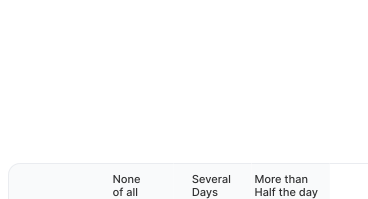
The Zung Self-Rating Depression Scale can be scored using a straightforward calculation method based on twenty items. 1. Raw Score: You sum the values from 1 to 4 for each item. Watch out for the ten positive statements like "I feel hopeful" because they need reverse scoring first. The total ranges from 20 to 80. 2. SDS Index: To get a clearer picture, convert the raw score by dividing it by 80 and multiplying by 100. A result below 50 is usually normal, while scores over 70 suggest severe depression. This index helps clinicians track changes over time easily.
Advantages

Enables precise identification of patient health status.
.svg)
Measures healthcare intervention results systematically.
.svg)
Streamlines research data gathering process.
.svg)
Strengthens evidence through systematic measurement approaches.
.png)

Related Instruments

Digital counterpart
Digital biomarkers that measure the same thing with sensors rather than a questionnaire.
Collect Zung SDS data with WeGuide, the all in one patient engagement platform
.jpg)

Support Your patient in no time - all under your own brand
Our platform combines the knowledge of 100+ digital health solutions built, letting you easily build your patient engagement app for research or clinical use. Collect PROMs, support patients on waiting lists, or gather vital signs data. This is how:
Learn More.png)
Program Builder
.png)
.png)
Whitelabelling
.svg)
.svg)
.png)
Turn on components, dependent on your usecase
.svg)
.png)
Support The Full Journey
.png)
.png)
%20(1).png)
.png)
It’s your turn
Every WeGuide project, saves researchers and clinicians - 9 months and $450,000 - creating impactful digital health solutions.
