


Geriatric Depression Scale (GDS): Evaluating Mood
The Geriatric Depression Scale helps healthcare professionals screen older adults for depression. This simple self-report tool uses yes or no questions to easily identify mood changes.

Geriatric Depression Scale (GDS)
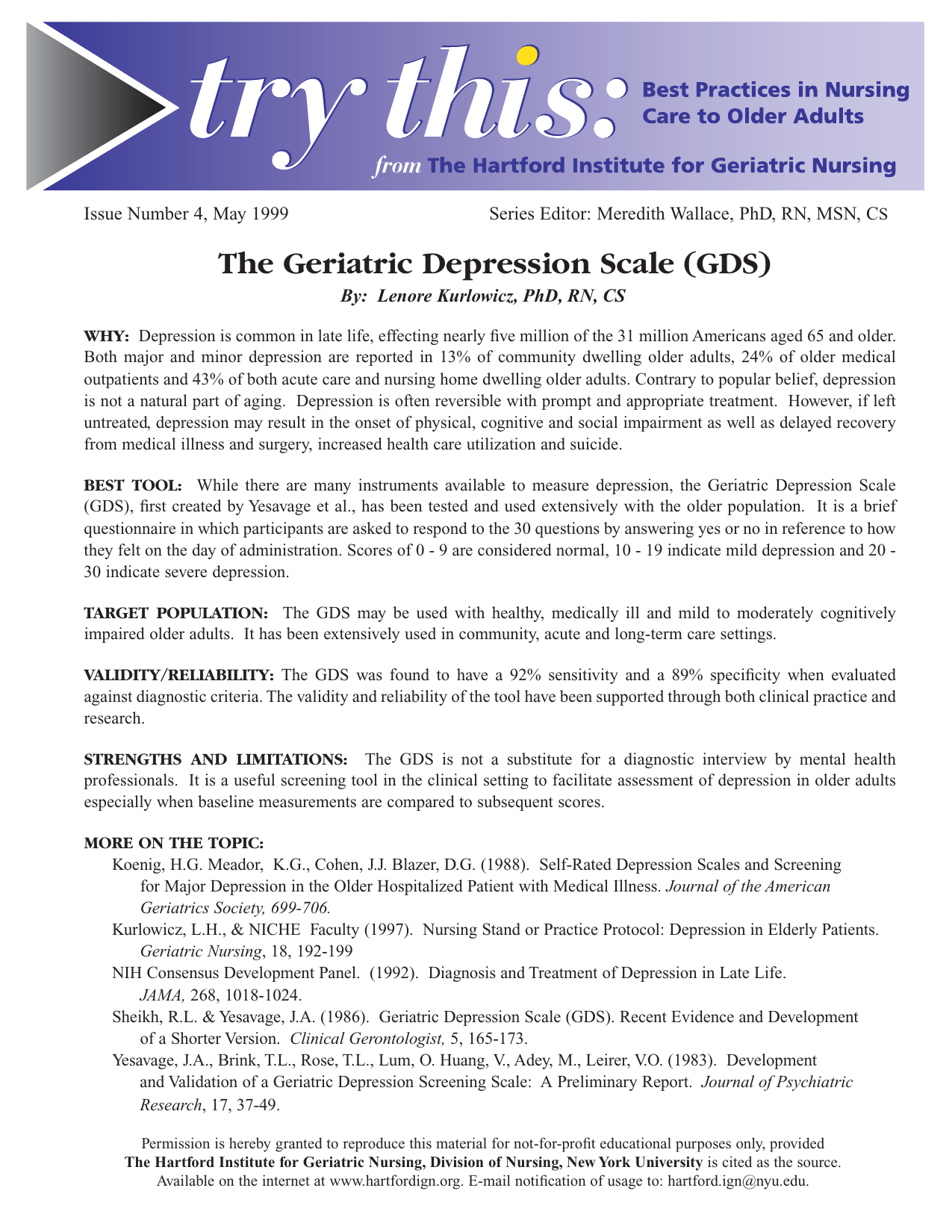
The Geriatric Depression Scale (GDS) is a screening tool designed to identify depression in older adults. Using a simple yes/no format, it excludes physical symptoms common in ageing to focus purely on mood. It’s an effective way for clinicians to assess mental health in the elderly.
Category
Disease
Source
What is Geriatric Depression Scale (GDS)

The Geriatric Depression Scale (GDS) is a trusted screening tool used to identify depression in older adults. It helps clinicians spot mood changes early. Unlike other tests, this scale removes physical symptoms that are common in ageing. Instead, it focuses purely on how a person feels about their life and daily satisfaction. The tool uses a simple yes or no format which makes it easy for seniors to answer. It asks questions about energy levels, feelings of emptiness, and overall happiness. This binary approach reduces confusion for those who might struggle with complex choices. You can use the full thirty-item version or the shorter fifteen-item form depending on the specific clinical setting. It takes roughly five to ten minutes to finish and works well in clinics or nursing homes. Doctors use the final scores to decide if further mental health support is truly needed for the patient.
The Geriatric Depression Scale can be scored using a straightforward tally method across its long and short forms.1. Long Form: You simply count one point for every Yes or No answer that matches the depression key. A total score over 10 suggests mild depression, while anything above 20 points to severe issues requiring help.2. Short Form: This quicker version follows the same logic with 15 items. A score above 5 indicates probable depression. It is a handy way to spot mood changes in older adults without tiring them out.
Advantages

Enables precise identification of patient health status.
.svg)
Simple to understand and complete for patients.
.svg)
Streamlines research data gathering process.
.png)

Related Instruments

Digital counterpart
Digital biomarkers that measure the same thing with sensors rather than a questionnaire.
Streamline Geriatric Depression Scale data collection with WeGuide
.jpg)

Support Your patient in no time - all under your own brand
Our platform combines the knowledge of 100+ digital health solutions built, letting you easily build your patient engagement app for research or clinical use. Collect PROMs, support patients on waiting lists, or gather vital signs data. This is how:
Learn More.png)
Program Builder
.png)
.png)
Whitelabelling
.svg)
.svg)
.png)
Turn on components, dependent on your usecase
.svg)
.png)
Support The Full Journey
.png)
.png)
%20(1).png)
.png)
It’s your turn
Every WeGuide project, saves researchers and clinicians - 9 months and $450,000 - creating impactful digital health solutions.
