


Katz ADL: Independence in Activities of Daily Living
The Katz ADL measures how well older adults perform daily tasks like bathing and dressing. Clinicians use this assessment to identify functional needs and plan appropriate support in aged care.

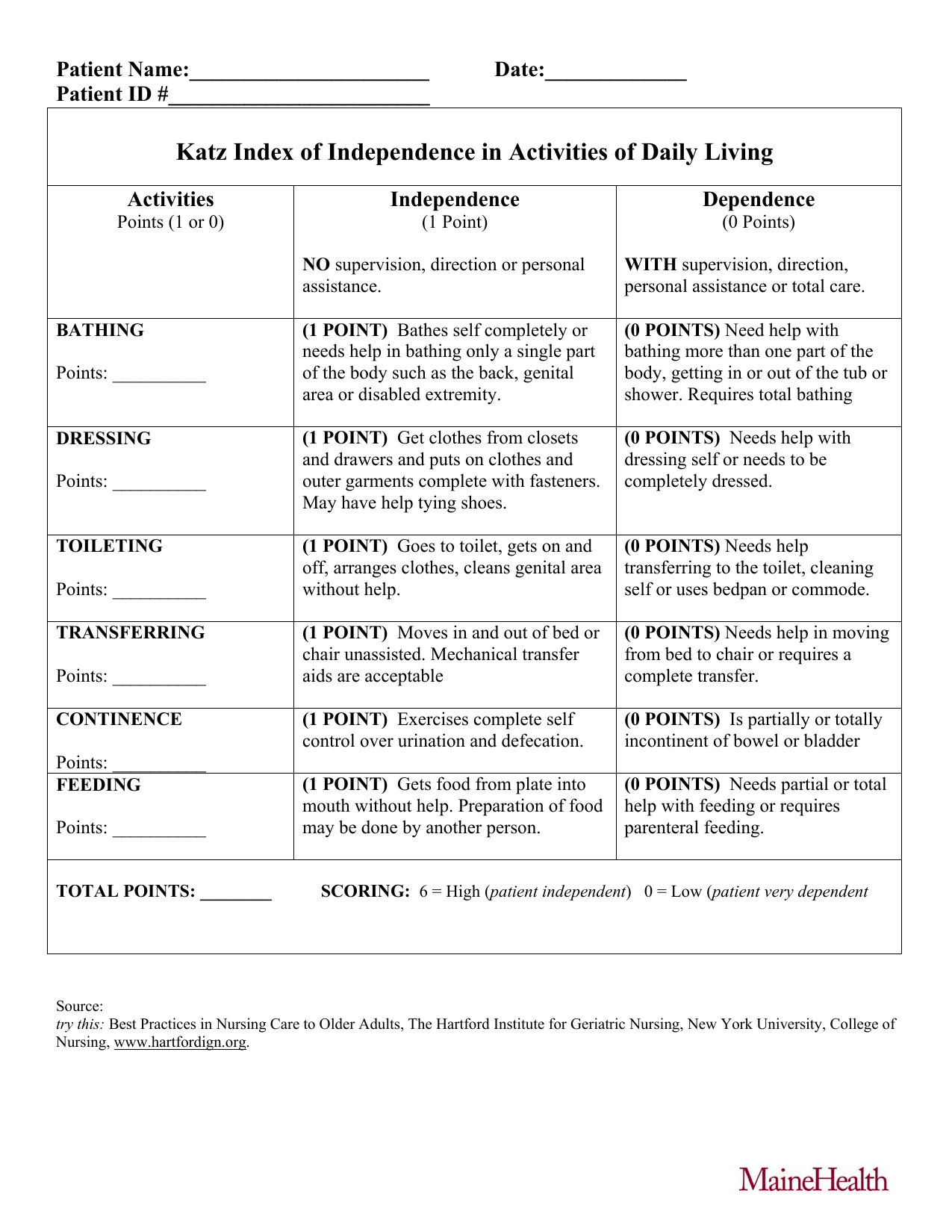
Katz Index of Independence in Activities of Daily Living (Katz ADL)
The Katz ADL is a standard tool used to assess functional status in older adults. It evaluates independence in six basic activities, including bathing, dressing, and feeding. By scoring a patient's ability to perform these tasks, clinicians can better plan care and monitor changes in health over time.
Category
Disease
Source
What is Katz Index of Independence in Activities of Daily Living (Katz ADL)

The Katz Index of Independence in Activities of Daily Living (Katz ADL) is a trusted tool for checking functional status in older adults. This assessment looks at six basic skills needed for everyday life. It helps clinicians spot if a patient can manage alone or needs extra support with their daily routine. The index covers bathing, dressing, toileting, transferring, continence and feeding. Scoring is simple because it uses a binary format. A full score of six shows independence, while lower numbers suggest the person relies on others for care. Nurses and doctors find it easy to use in hospitals or community settings. It tracks changes over time so it is great for planning discharge or long-term therapy. This instrument gives a clear snapshot of a senior's ability to handle self-care tasks effectively, ensuring care plans match actual needs.
The Katz ADL can be scored using a straightforward approach that focuses on independence in six specific daily tasks. Clinicians look at bathing, dressing, toileting, transferring, continence and feeding. For each activity, you give 1 point if the patient performs it without supervision and 0 points if they need help. Add these up for a total ranging from 0 to 6. A score of 6 shows full function, while 4 suggests moderate impairment. A score of 2 or less points to severe functional impairment. This simple tally helps care teams track how well a patient manages on their own.
Advantages

Develops personalised strategies based on assessment data.
.svg)
Tracks patient condition changes systematically.
.svg)
Streamlines research data gathering process.
.png)

Related Instruments

Digital counterpart
Digital biomarkers that measure the same thing with sensors rather than a questionnaire.
Streamline Katz ADL assessments for functional independence with WeGuide
.jpg)

Support Your patient in no time - all under your own brand
Our platform combines the knowledge of 100+ digital health solutions built, letting you easily build your patient engagement app for research or clinical use. Collect PROMs, support patients on waiting lists, or gather vital signs data. This is how:
Learn More.png)
Program Builder
.png)
.png)
Whitelabelling
.svg)
.svg)
.png)
Turn on components, dependent on your usecase
.svg)
.png)
Support The Full Journey
.png)
.png)
%20(1).png)
.png)
It’s your turn
Every WeGuide project, saves researchers and clinicians - 9 months and $450,000 - creating impactful digital health solutions.
