


Clock Drawing Test (CDT): Assessing Cognitive Function
The Clock Drawing Test helps doctors screen for dementia and cognitive decline. Patients draw a clock face to show their memory and spatial skills, providing a quick check of brain function.

Clock Drawing Test (CDT)
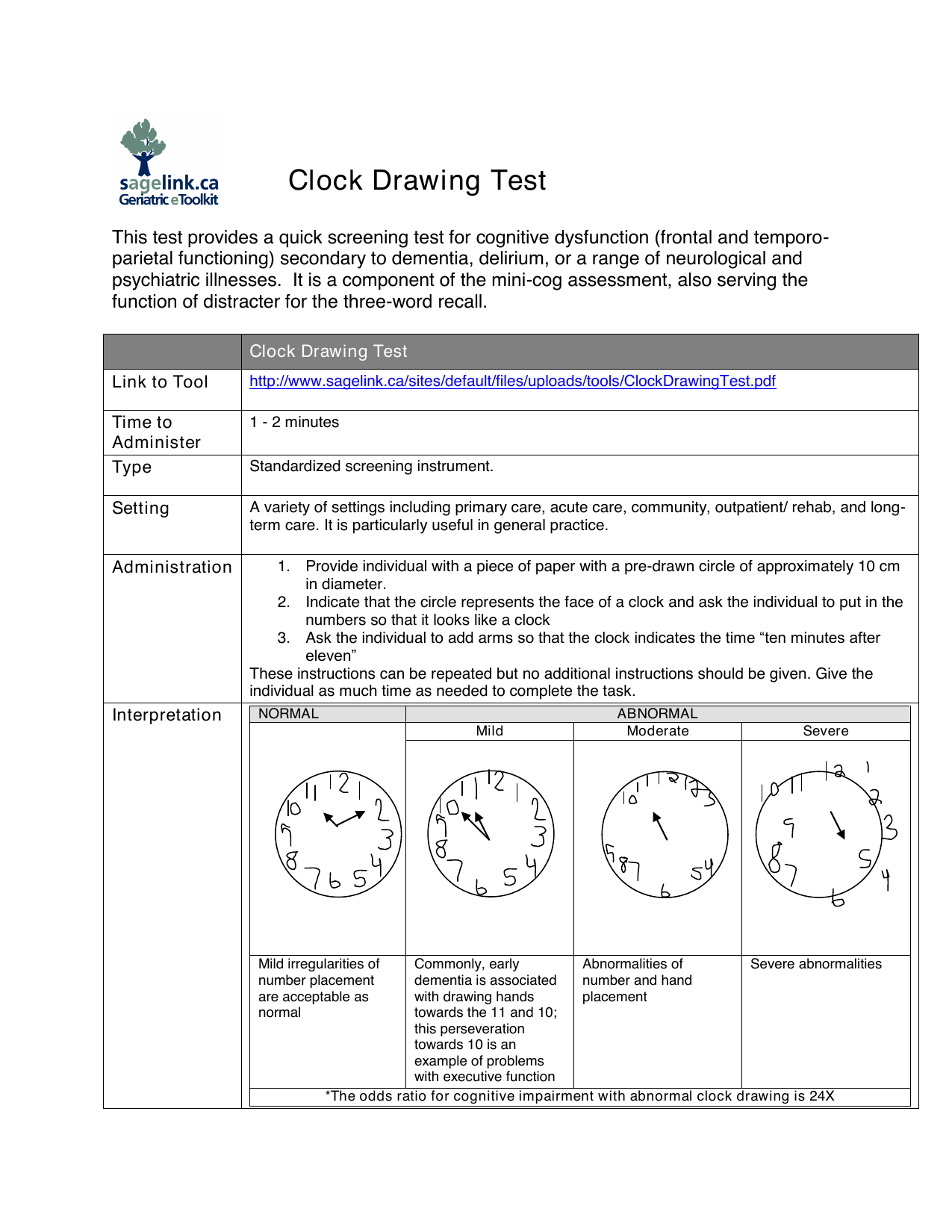
The Clock Drawing Test (CDT) is a simple cognitive screening tool used to assess executive function and spatial skills. Patients draw a clock face and set a specific time, helping clinicians screen for dementia and other neurological conditions. It’s a quick, effective way to evaluate mental status.
Category
Disease
Source
What is Clock Drawing Test (CDT)

The Clock Drawing Test (CDT) is a quick and reliable tool used to screen for cognitive impairment and dementia. It checks brain function easily. This simple paper-and-pencil task asks patients to draw a clock face, arrange the numbers correctly, and set the hands to a specific time, often ten past eleven or eight twenty. Clinicians look at errors in spacing, number sequence, and hand placement to spot issues. While scoring methods vary, they all focus on visuospatial skills, memory recall, and the executive planning required for maintaining independent daily life. It’s widely used because it’s fast and cost-effective. GPs use it to track changes over time in older adults and help identify Alzheimer's disease early on. The test is non-threatening and easy to give in a clinic or bedside setting, making it a smart and practical choice for busy healthcare professionals.
The Clock Drawing Test can be scored using various validated systems, though most follow a similar logic. 1. Quantitative methods, like the Sunderland scale, assign points for the circle contour, number sequence, and hand placement. Scores often range from 1 to 10, where higher numbers show better cognitive function. 2. Qualitative analysis looks for specific errors such as missing numbers or incorrect time setting. This approach helps clinicians spot executive dysfunction. It is a handy tool for checking brain health in older adults during routine visits.
Advantages
.svg)
Quick completion with minimal burden.
.svg)
Simple to understand and complete for patients.
.svg)
Serves diverse clinical needs effectively.
.png)

Related Instruments

Digital counterpart
Digital biomarkers that measure the same thing with sensors rather than a questionnaire.
Collect Clock Drawing Test data with WeGuide, the all in one patient engagement platform
.jpg)

Support Your patient in no time - all under your own brand
Our platform combines the knowledge of 100+ digital health solutions built, letting you easily build your patient engagement app for research or clinical use. Collect PROMs, support patients on waiting lists, or gather vital signs data. This is how:
Learn More.png)
Program Builder
.png)
.png)
Whitelabelling
.svg)
.svg)
.png)
Turn on components, dependent on your usecase
.svg)
.png)
Support The Full Journey
.png)
.png)
%20(1).png)
.png)
It’s your turn
Every WeGuide project, saves researchers and clinicians - 9 months and $450,000 - creating impactful digital health solutions.
