


PAINAD Scale: Assessing Pain in Advanced Dementia
The PAINAD Scale helps caregivers assess pain in people with advanced dementia who cannot speak. It relies on observing behaviours to ensure patients receive appropriate care and relief.

PAINAD Scale
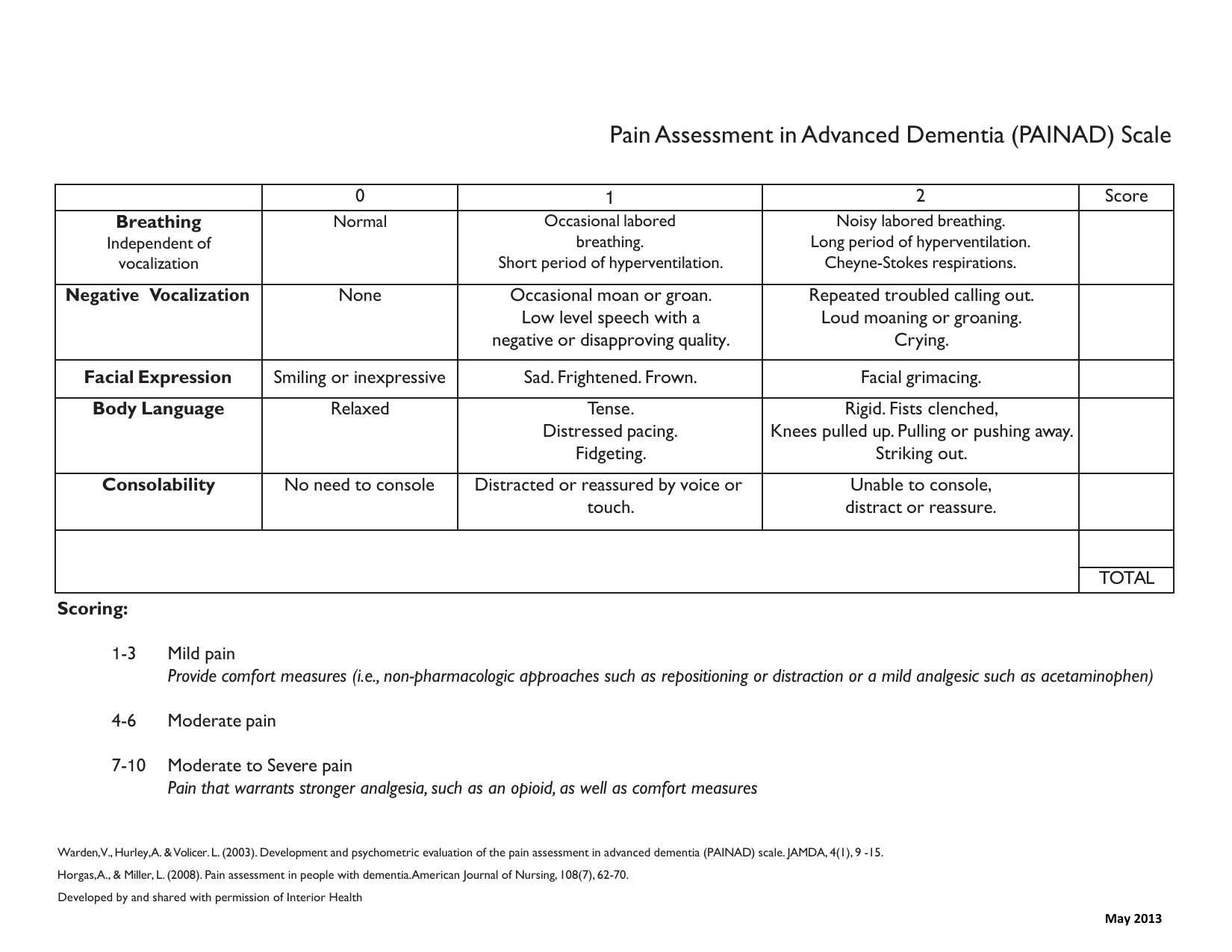
The Pain Assessment in Advanced Dementia (PAINAD) Scale helps carers evaluate pain in patients unable to communicate verbally. By observing breathing, facial expressions, and body language, this tool ensures accurate pain management for those with severe dementia, identifying otherwise hidden discomfort.
Category
Disease
Source
What is PAINAD Scale

The Pain Assessment in Advanced Dementia (PAINAD) Scale is a trusted tool for spotting pain in people who can't speak due to severe cognitive decline. It focuses on five specific behaviours to accurately judge discomfort levels. Since these patients can't say they hurt, this observational method fills the communication gap effectively. Clinicians rate breathing, negative vocalisation, facial expression, body language, and consolability. Each item gets a score from 0 to 2, creating a total between 0 and 10. Higher numbers suggest more intense pain is likely present and needs attention. It's quick to use in nursing homes or hospitals, usually taking less than five minutes to complete. This makes it easy for nurses to track changes over time. By catching subtle signs early, care teams can manage symptoms better and really improve daily comfort for vulnerable aged care residents.
The PAINAD Scale can be scored using a straightforward observational method that sums five specific behaviours. You assess five key indicators: breathing, negative vocalisation, facial expression, body language, and consolability. For each category, you assign a rating from 0 to 2 based on intensity. A 0 indicates normal behaviour, while a 2 points to severe distress. Simply add these numbers to get a total score ranging from 0 to 10. Higher totals mean the patient is likely in more pain. This helps nurses track comfort levels in dementia care when patients cannot speak up.
Advantages

Enables precise identification of patient health status.
.svg)
Ensures consistent treatment across patient populations.
.svg)
Simple to understand and complete for patients.
.svg)
Measures healthcare intervention results systematically.
.png)

Related Instruments

Digital counterpart
Digital biomarkers that measure the same thing with sensors rather than a questionnaire.
Collect PAINAD Scale data with WeGuide, the all in one patient engagement platform
.jpg)

Support Your patient in no time - all under your own brand
Our platform combines the knowledge of 100+ digital health solutions built, letting you easily build your patient engagement app for research or clinical use. Collect PROMs, support patients on waiting lists, or gather vital signs data. This is how:
Learn More.png)
Program Builder
.png)
.png)
Whitelabelling
.svg)
.svg)
.png)
Turn on components, dependent on your usecase
.svg)
.png)
Support The Full Journey
.png)
.png)
%20(1).png)
.png)
It’s your turn
Every WeGuide project, saves researchers and clinicians - 9 months and $450,000 - creating impactful digital health solutions.
