


The Fear-Avoidance Beliefs Questionnaire (FABQ)
The FABQ assesses how fear of pain affects physical activity and work. Clinicians use this self-report tool to identify beliefs that may delay recovery in patients with low back pain.


Fear-Avoidance Beliefs Questionnaire (FABQ)
The Fear-Avoidance Beliefs Questionnaire (FABQ) focuses on how a patient's fear of pain impacts their physical activity and work. It helps identify psychological barriers in low back pain management. By measuring these beliefs, clinicians can better predict disability risks and adjust rehabilitation plans.
Category
Disease
Source
What is Fear-Avoidance Beliefs Questionnaire (FABQ)

The Fear-Avoidance Beliefs Questionnaire (FABQ) is a trusted tool for checking how fear impacts back pain recovery. It helps clinicians spot risks early on. This survey focuses on how a patient's thoughts about pain change their behaviour. It checks if they believe moving around will cause further injury or serious harm. The FABQ splits into two main parts covering physical activity and work tasks. Patients rate sixteen items on a scale from zero to six. Higher scores show they are more afraid, which often leads to avoiding activity and staying in pain longer. It is quick to fill out in a busy clinic setting. Doctors and physios use the results to see if someone needs extra help to get moving again. By understanding these specific fears, you can plan better treatments like graded exposure. This helps patients return to their daily lives and jobs much faster.
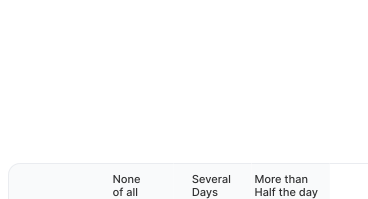
The Fear-Avoidance Beliefs Questionnaire can be scored using two main subscales based on specific items. 1. Physical Activity: You add up items 2 through 5 to measure fears about general movement, with scores ranging from 0 to 24. 2. Work: This part sums seven specific questions about your job to give a total between 0 and 42. Participants rate statements on a 0 to 6 scale. It is important to note that not every item counts towards the final tally. Higher numbers point to stronger beliefs that pain should stop activity, which helps clinicians spot barriers to rehab.
Advantages

Develops personalised strategies based on assessment data.
.svg)
Measures healthcare intervention results systematically.
.svg)
Streamlines research data gathering process.
.png)

Related Instruments

Digital counterpart
Digital biomarkers that measure the same thing with sensors rather than a questionnaire.
Collect FABQ data with WeGuide, the all in one patient engagement platform
.jpg)

Support Your patient in no time - all under your own brand
Our platform combines the knowledge of 100+ digital health solutions built, letting you easily build your patient engagement app for research or clinical use. Collect PROMs, support patients on waiting lists, or gather vital signs data. This is how:
Learn More.png)
Program Builder
.png)
.png)
Whitelabelling
.svg)
.svg)
.png)
Turn on components, dependent on your usecase
.svg)
.png)
Support The Full Journey
.png)
.png)
%20(1).png)
.png)
It’s your turn
Every WeGuide project, saves researchers and clinicians - 9 months and $450,000 - creating impactful digital health solutions.
