


Knee Society Score (KSS): Assessing Knee Function
Doctors use the Knee Society Score to assess pain and stability after knee replacement surgery. It separates joint function from general ability to help track patient recovery.

Knee Society Score (KSS)
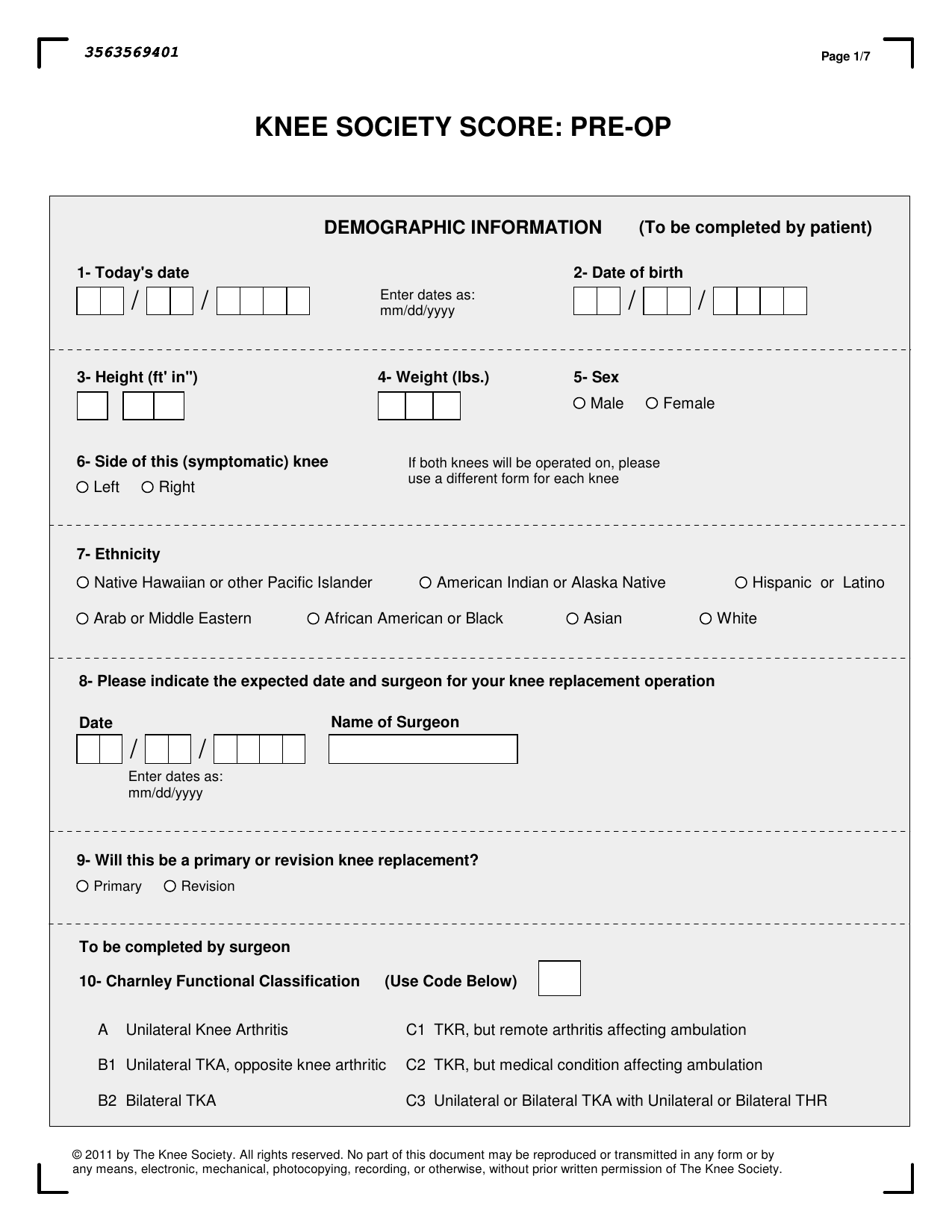
Used widely in orthopaedics, the Knee Society Score (KSS) evaluates outcomes following total knee arthroplasty. It separates the knee's physical condition from the patient's functional ability, like walking or climbing stairs. This rating system helps surgeons track recovery and implant success effectively.
Category
Disease
Source
What is Knee Society Score (KSS)

The Knee Society Score (KSS) is a trusted tool for tracking outcomes after knee replacement surgery. It helps doctors understand patient recovery well. This system splits the assessment into distinct sections to give a clear picture of the joint itself and the patient's actual ability to move around during daily life. Clinicians look at pain intensity, range of motion, and stability while also checking functional tasks like walking distance or climbing stairs. It separates the physical knee condition from general health factors to ensure the collected data remains specific. It is commonly used for total knee arthroplasty patients. The dual scoring method stops declining health or age from unfairly lowering the knee score. This makes it easier to compare results over time. Using the KSS helps medical teams spot issues early and plan better rehab for long-term success.

The Knee Society Score can be scored using two separate 100 point subscales: the Knee Score and the Function Score. 1. Knee Score: This part rates pain intensity, stability, and range of motion. You tally points based on clinical findings, with deductions for flexion contracture or poor alignment. 2. Function Score: This section measures walking distance and stair climbing ability. It starts at 100, but you lose points for using walking sticks or frames. Both totals are kept separate to distinguish the joint condition from general patient health.

Advantages
.svg)
Measures treatment effectiveness through standardised tools.
.svg)
Meets international clinical assessment requirements.
.svg)
Strengthens evidence through systematic measurement approaches.
.svg)
Measures healthcare intervention results systematically.
.png)

Related Instruments

Digital counterpart
Digital biomarkers that measure the same thing with sensors rather than a questionnaire.
Collect Knee Society Score data with WeGuide, the all in one patient engagement platform
.jpg)

Support Your patient in no time - all under your own brand
Our platform combines the knowledge of 100+ digital health solutions built, letting you easily build your patient engagement app for research or clinical use. Collect PROMs, support patients on waiting lists, or gather vital signs data. This is how:
Learn More.png)
Program Builder
.png)
.png)
Whitelabelling
.svg)
.svg)
.png)
Turn on components, dependent on your usecase
.svg)
.png)
Support The Full Journey
.png)
.png)
%20(1).png)
.png)
It’s your turn
Every WeGuide project, saves researchers and clinicians - 9 months and $450,000 - creating impactful digital health solutions.
