


Kessler Psychological Distress Scale (K10) Assessment
This self-report survey helps doctors measure anxiety and depression levels. The K10 uses ten simple questions to screen for mental health issues and track patient progress.


Kessler Psychological Distress Scale (K10)
The Kessler Psychological Distress Scale (K10) is a 10-item questionnaire measuring non-specific psychological distress. Ideally suited for primary care, it helps clinicians screen for anxiety and depression. It's a simple tool that tracks symptoms over the past month to guide treatment decisions.
Category
Disease
Source
What is Kessler Psychological Distress Scale (K10)

The Kessler Psychological Distress Scale (K10) is a trusted tool for measuring general psychological distress in both clinical and community settings. This ten-item questionnaire focuses on anxiety and depressive symptoms experienced over the last four weeks, offering a quick snapshot of a person's mental state. Patients answer questions using a five-point scale ranging from "none of the time" to "all of the time". The total score sits between 10 and 50, where higher numbers suggest more severe distress involving feelings of tiredness, nervousness, or hopelessness. GPs frequently use this self-report measure to screen for mental disorders and track progress over time. It is handy for identifying who needs a mental health care plan. Since it is quick to score, clinicians can easily use the results to guide treatment decisions and support better patient outcomes.
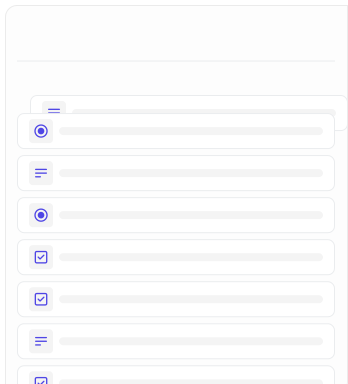
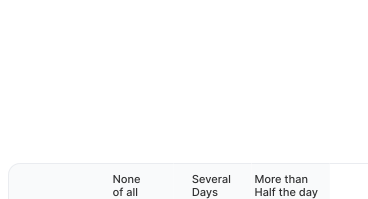
The Kessler Psychological Distress Scale (K10) is scored using a straightforward summation method. You just add up the scores from the ten items, where each answer is rated 1 (none of the time) to 5 (all of the time). This creates a total ranging from 10 to 50, with higher numbers suggesting more severe distress. Clinicians usually group results into bands: low (10 to 15), moderate (16 to 21), high (22 to 29), and very high (30 to 50). It is a handy way for GPs to figure out the best mental health care plan for patients.
Advantages

Enables precise identification of patient health status.
.svg)
Streamlines research data gathering process.
.svg)
Measures healthcare intervention results systematically.
.svg)
Serves diverse clinical needs effectively.
.png)

Related Instruments

Digital counterpart
Digital biomarkers that measure the same thing with sensors rather than a questionnaire.
Collect K10 data with WeGuide, the all in one patient engagement platform
.jpg)

Support Your patient in no time - all under your own brand
Our platform combines the knowledge of 100+ digital health solutions built, letting you easily build your patient engagement app for research or clinical use. Collect PROMs, support patients on waiting lists, or gather vital signs data. This is how:
Learn More.png)
Program Builder
.png)
.png)
Whitelabelling
.svg)
.svg)
.png)
Turn on components, dependent on your usecase
.svg)
.png)
Support The Full Journey
.png)
.png)
%20(1).png)
.png)
It’s your turn
Every WeGuide project, saves researchers and clinicians - 9 months and $450,000 - creating impactful digital health solutions.
