


Interest Checklist: Assessing Leisure Interests
The Interest Checklist helps occupational therapists identify a client's past, present, and future leisure interests. It allows clinicians to plan meaningful activities that support recovery.

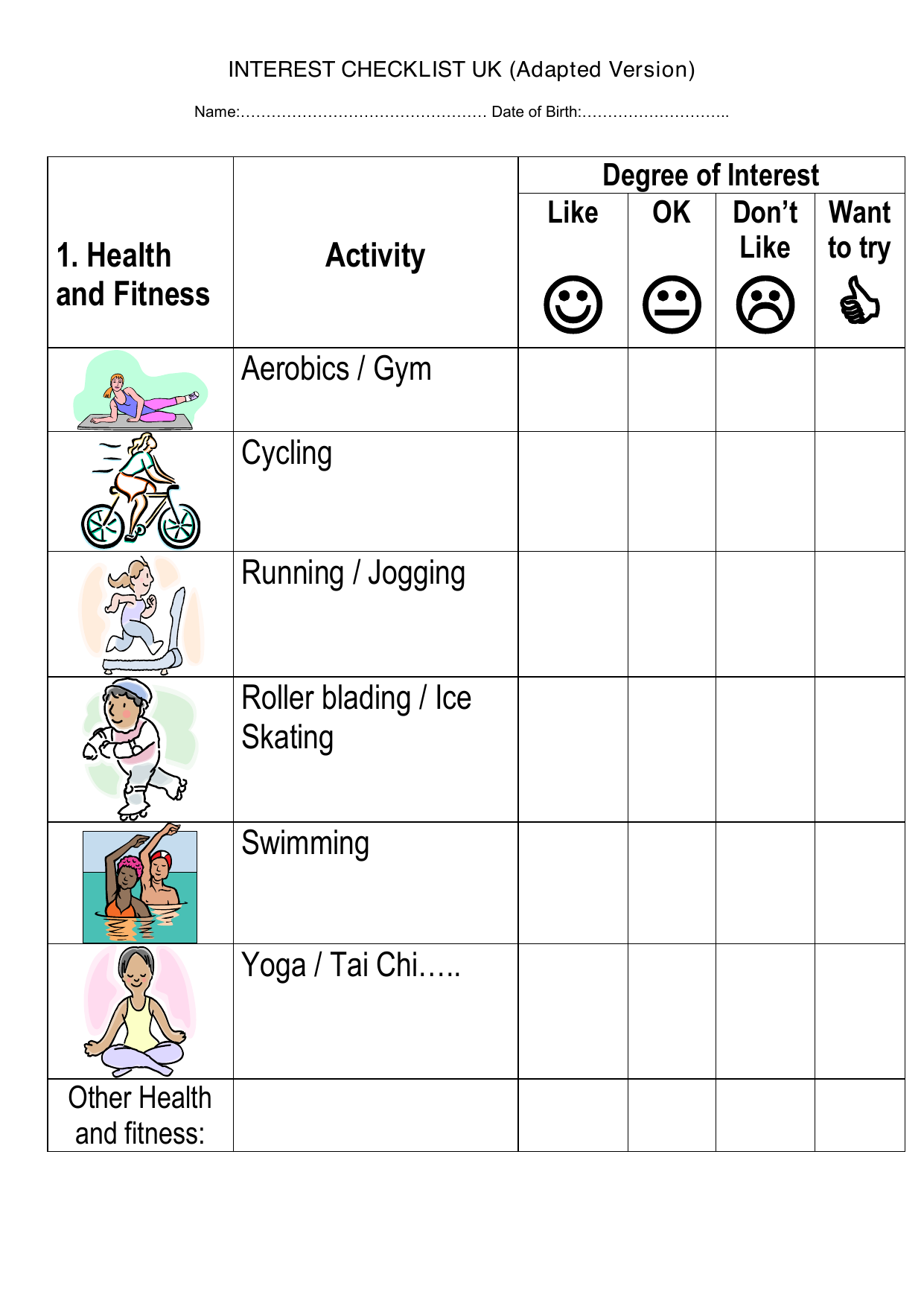
Interest Checklist
Used widely in occupational therapy, the Interest Checklist helps clinicians identify a client's past, present, and future interests. This self-report tool lists various activities to classify the strength of interest, allowing therapists to design personalised rehabilitation programs that truly motivate patients.
Category
Disease
Source
What is Interest Checklist

The Interest Checklist is a classic tool used by occupational therapists to gather data on a client's leisure interests and patterns of play. It features a broad list of common activities ranging from manual skills to social outings, helping clinicians spot gaps in a person's daily routine or lifestyle balance. Clients rate their level of interest for each item across timeframes like the past ten years, current participation, and future desire. They simply tick boxes to show if their interest is strong, casual, or nonexistent for specific hobbies and pastimes. This self-report measure is quick to finish and gives therapists a clear picture of what motivates the individual. It is especially useful for mental health settings or rehab to spark conversation about meaningful goals. The results help build a support plan that truly matters to the client's recovery journey.
The Interest Checklist can be scored using two main approaches focused on qualitative data: 1. Pattern Analysis: Clinicians review the 68 to 80 items to see how interests shift across the past ten years, past year, and current pursuit. You look for gaps or changes in leisure activities to spot potential apathy. 2. Percentage Calculation: You can work out the percentage of items marked as strong, casual, or no interest within specific categories like social or physical tasks. This highlights if a client's motivation is dropping. It helps OTs build a proper treatment plan based on what the person actually likes doing.
Advantages

Develops personalised strategies based on assessment data.
.svg)
Promotes active participation in healthcare assessment.
.svg)
Streamlines research data gathering process.
.svg)
Measures healthcare intervention results systematically.
.png)

Related Instruments

Digital counterpart
Digital biomarkers that measure the same thing with sensors rather than a questionnaire.
Collect Interest Checklist data with WeGuide, the all in one patient engagement platform
.jpg)

Support Your patient in no time - all under your own brand
Our platform combines the knowledge of 100+ digital health solutions built, letting you easily build your patient engagement app for research or clinical use. Collect PROMs, support patients on waiting lists, or gather vital signs data. This is how:
Learn More.png)
Program Builder
.png)
.png)
Whitelabelling
.svg)
.svg)
.png)
Turn on components, dependent on your usecase
.svg)
.png)
Support The Full Journey
.png)
.png)
%20(1).png)
.png)
It’s your turn
Every WeGuide project, saves researchers and clinicians - 9 months and $450,000 - creating impactful digital health solutions.
