


Hammersmith Infant Neurological Examination (HINE)
Clinicians use the HINE to assess neurological development in infants aged 2 to 24 months. This physical examination helps identify early signs of cerebral palsy and tracks motor skills over time.

Hammersmith Infant Neurological Examination (HINE)
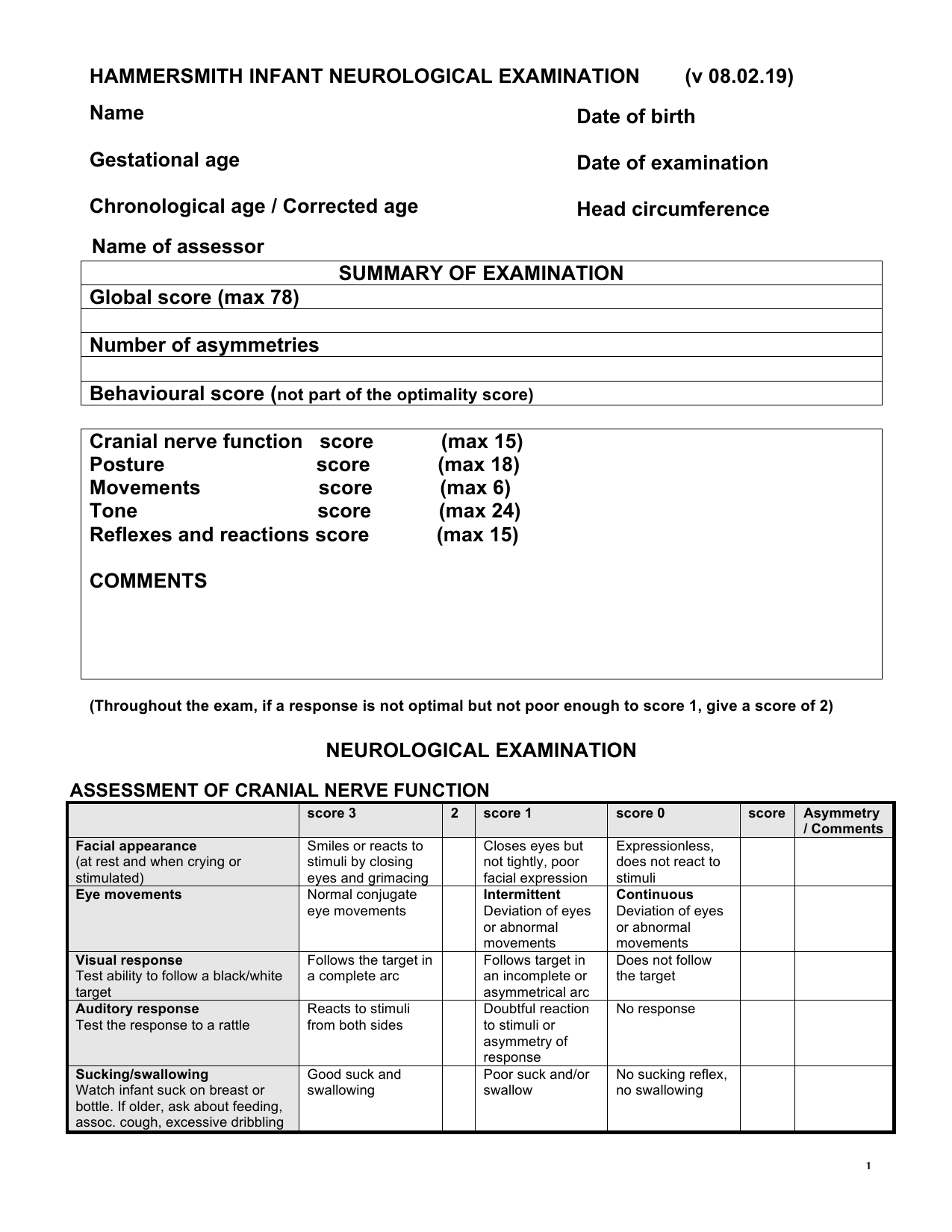
The Hammersmith Infant Neurological Examination (HINE) assesses babies aged 2 to 24 months. By checking cranial nerves, posture, and reflexes, it helps identify risks like cerebral palsy early. This scorable clinical tool allows doctors to track motor development and predict future outcomes with great accuracy.
Category
Disease
Source
What is Hammersmith Infant Neurological Examination (HINE)

The Hammersmith Infant Neurological Examination (HINE) is a trusted tool for checking babies. It helps doctors spot cerebral palsy and other delays early on. This clinical assessment breaks down neurological function into five key sections. It checks cranial nerves and posture as well as movements and muscle tone and reflexes. Clinicians score each item from zero to three based on what the baby does. The total score helps predict if a child might have walking issues or other delays later in life. It offers specific score limits to spot risks for cerebral palsy across different ages. The HINE is quick to do in a clinic and takes about 10 minutes. It is great because it does not need fancy equipment. Doctors use it for babies between two and twenty-four months old. It helps families get support sooner rather than later which makes a big difference for the child's future.

The Hammersmith Infant Neurological Examination can be scored using two main approaches: global scoring and optimality cut offs. 1. Global Scoring: Clinicians assess 26 items across five sections covering cranial nerves, posture, movements, tone, and reflexes. Each item gets a 0, 1, 2, or 3 based on performance. You sum these up for a total between 0 and 78, where higher numbers mean better neurodevelopment. 2. Optimality Scores: This method compares the total against age specific cut offs. For instance, a score below 57 at three months signals a high risk of cerebral palsy. It is a reliable way to predict if a bub will walk independently later on.
Advantages

Enables precise identification of patient health status.

Develops personalised strategies based on assessment data.
.svg)
Simple to understand and complete for patients.
.png)

Related Instruments

Digital counterpart
Digital biomarkers that measure the same thing with sensors rather than a questionnaire.
Digitise your Hammersmith Infant Neurological Examination workflow with WeGuide
.jpg)

Support Your patient in no time - all under your own brand
Our platform combines the knowledge of 100+ digital health solutions built, letting you easily build your patient engagement app for research or clinical use. Collect PROMs, support patients on waiting lists, or gather vital signs data. This is how:
Learn More.png)
Program Builder
.png)
.png)
Whitelabelling
.svg)
.svg)
.png)
Turn on components, dependent on your usecase
.svg)
.png)
Support The Full Journey
.png)
.png)
%20(1).png)
.png)
It’s your turn
Every WeGuide project, saves researchers and clinicians - 9 months and $450,000 - creating impactful digital health solutions.
