


Cancer Behavior Inventory (CBI): Measuring Coping
The Cancer Behavior Inventory assesses coping confidence in people living with cancer. This self-report tool helps clinicians identify specific needs for managing stress and treatment.


Cancer Behavior Inventory (CBI)
The Cancer Behavior Inventory (CBI) measures self-efficacy for coping with cancer. This questionnaire helps clinicians assess a patient's confidence in managing treatment side effects and distress. It's a key tool for planning supportive care and psychological interventions in oncology.
Category
Disease
Source
What is Cancer Behavior Inventory (CBI)

The Cancer Behavior Inventory (CBI) is a reliable tool for measuring coping self-efficacy. It checks a patient's confidence in managing the tough parts of cancer. Built on stress and coping theories, this instrument focuses on specific behaviours. It looks at how patients handle the physical and emotional sides of their illness. The scale covers areas like maintaining activity, seeking social support, and managing stress. Patients rate their confidence on a numbered scale, ranging from not at all confident to totally confident. This breakdown helps clinicians spot specific needs quickly. Available in long and brief versions, the CBI is easy to use in clinics or research settings. It's great for tracking changes over time or seeing if a therapy worked well. Doctors use it to start chats about coping strategies, making sure support plans fit the patient's actual struggles perfectly.
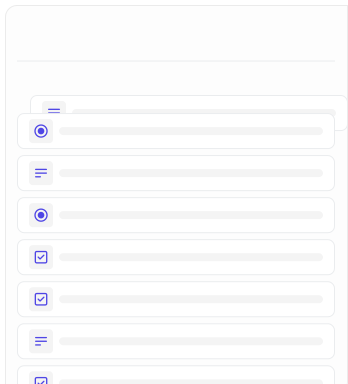
The Cancer Behavior Inventory can be scored using two main approaches: a total sum score or distinct factor scores. 1. Total Score: You simply add up the ratings from all 33 items. Participants rate their confidence on a 1 to 9 scale, where higher numbers mean more confidence in coping. 2. Factor Scores: This breaks things down into seven specific areas like stress management or seeking support. You sum the items in each group to see where a patient feels strong or needs help. It gives a clear picture of coping skills.
Advantages

Develops personalised strategies based on assessment data.
.svg)
Measures healthcare intervention results systematically.
.svg)
Strengthens evidence through systematic measurement approaches.
.svg)
Improves overall healthcare delivery standards.
.png)

Related Instruments

Digital counterpart
Digital biomarkers that measure the same thing with sensors rather than a questionnaire.
Collect Cancer Behavior Inventory data with WeGuide, the all in one patient engagement platform
.jpg)

Support Your patient in no time - all under your own brand
Our platform combines the knowledge of 100+ digital health solutions built, letting you easily build your patient engagement app for research or clinical use. Collect PROMs, support patients on waiting lists, or gather vital signs data. This is how:
Learn More.png)
Program Builder
.png)
.png)
Whitelabelling
.svg)
.svg)
.png)
Turn on components, dependent on your usecase
.svg)
.png)
Support The Full Journey
.png)
.png)
%20(1).png)
.png)
It’s your turn
Every WeGuide project, saves researchers and clinicians - 9 months and $450,000 - creating impactful digital health solutions.
