


The Edmonton Symptom Assessment System (ESAS)
The ESAS helps patients in palliative care rate symptoms like pain and nausea. It allows care teams to track changes in comfort and adjust plans to better support daily needs.

Edmonton Symptom Assessment System (ESAS)
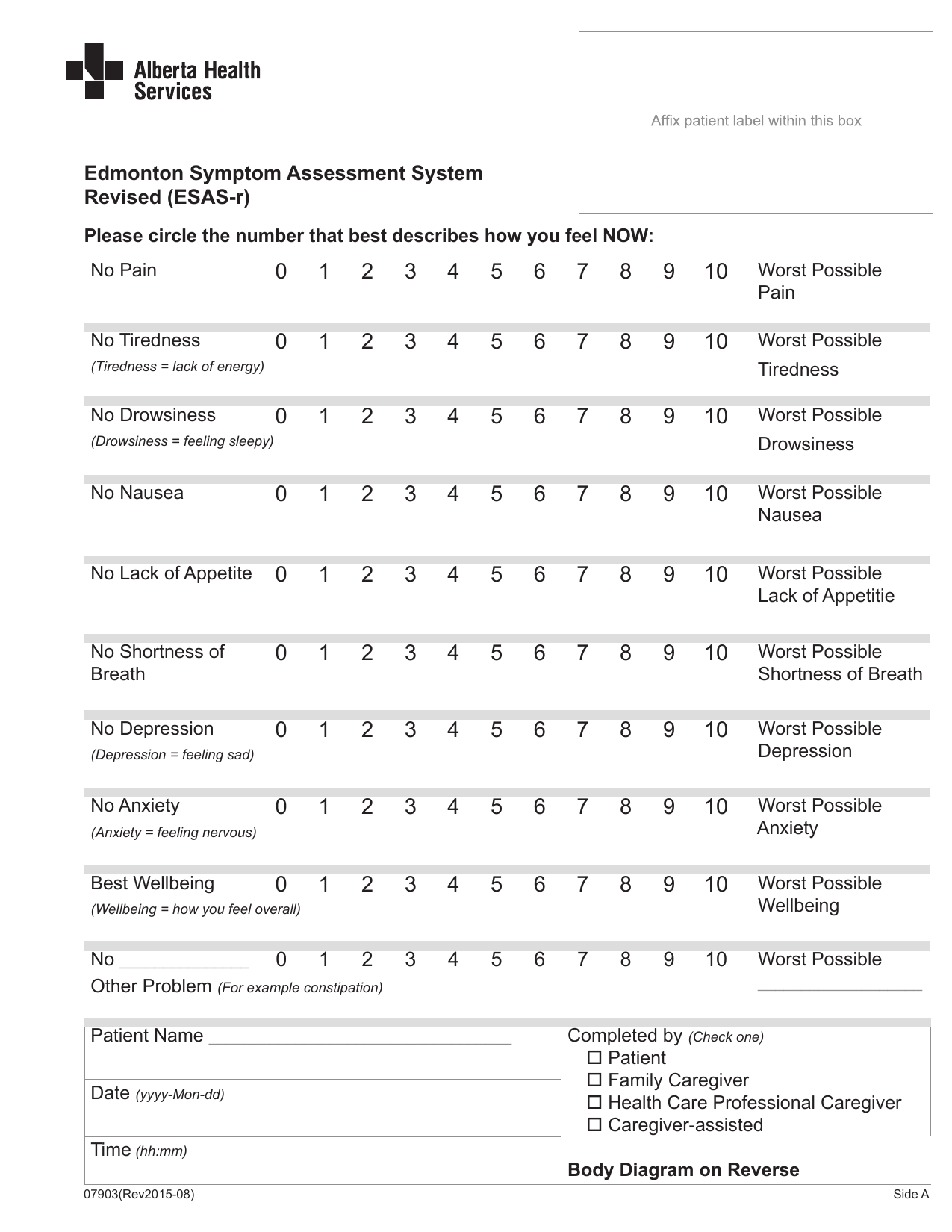
Designed for palliative care, the Edmonton Symptom Assessment System (ESAS) helps clinicians track symptom intensity. Patients rate nine common issues, such as pain and nausea, on a simple 0-10 scale. It's a practical way to monitor wellbeing and adjust care plans, ensuring patients get the right support.
Category
Disease
Source
What is Edmonton Symptom Assessment System (ESAS)

The Edmonton Symptom Assessment System (ESAS) is a trusted tool for tracking symptoms in palliative care. It helps teams monitor patient distress. This valid instrument focuses on nine common physical and emotional symptoms experienced by oncology patients. It gives a clear snapshot of how a person feels at a specific moment. Patients rate issues like pain, tiredness, nausea, depression, anxiety, drowsiness, appetite, wellbeing, and shortness of breath. They use a simple zero to ten scale where zero means no symptom and ten represents the worst possible severity. Clinicians can use the survey daily to spot trends over time. It is straightforward to use and allows for self-reporting or completion by a caregiver if needed. This practical approach supports better symptom management and improves quality of life for patients in advanced care settings.
The Edmonton Symptom Assessment System can be scored using two main approaches: individual item scores and a total sum.1. Individual Item Scores: Patients rate nine symptoms like pain or nausea on a 0 to 10 scale. Here, 0 means the symptom is absent and 10 means it is the worst possible. Clinicians use these numbers to spot specific problems needing help.2. Total Symptom Distress Score: You simply add up the scores for all nine symptoms to get a total between 0 and 90. A higher number shows the patient is in more distress. This helps teams see the overall burden quickly.
Advantages
.svg)
Tracks patient condition changes systematically.
.svg)
Promotes active participation in healthcare assessment.
.svg)
Simple to understand and complete for patients.

Develops personalised strategies based on assessment data.
.png)

Related Instruments

Digital counterpart
Digital biomarkers that measure the same thing with sensors rather than a questionnaire.
Collect ESAS data with WeGuide, the all in one patient engagement platform
.jpg)

Support Your patient in no time - all under your own brand
Our platform combines the knowledge of 100+ digital health solutions built, letting you easily build your patient engagement app for research or clinical use. Collect PROMs, support patients on waiting lists, or gather vital signs data. This is how:
Learn More.png)
Program Builder
.png)
.png)
Whitelabelling
.svg)
.svg)
.png)
Turn on components, dependent on your usecase
.svg)
.png)
Support The Full Journey
.png)
.png)
%20(1).png)
.png)
It’s your turn
Every WeGuide project, saves researchers and clinicians - 9 months and $450,000 - creating impactful digital health solutions.
