


The Return to Work Self-Efficacy Scale (RTW-SE)
The RTW-SE assesses an injured worker's belief in their ability to return to their job. This self-report tool helps professionals predict outcomes and plan support for a successful return.


Return to Work Self-Efficacy Scale (RTW-SE)
The Return to Work Self-Efficacy Scale (RTW-SE) measures a patient's confidence in resuming their job after injury. By assessing beliefs about meeting work demands, this tool helps clinicians predict outcomes and identify who needs extra support. It's a practical way to guide effective rehabilitation planning.
Category
Disease
Source
What is Return to Work Self-Efficacy Scale (RTW-SE)

The Return to Work Self-Efficacy Scale (RTW-SE) helps clinicians assess a worker's belief in their ability to resume job duties after an injury. This self-report questionnaire looks at psychological barriers that might stop someone from getting back to work, focusing on confidence levels regarding specific work demands. Patients rate their confidence on a Likert scale, ranging from 'not at all' to 'totally certain'. Items cover distinct areas like coping with pain, managing fatigue, and handling interactions with supervisors or colleagues during the return process. Used widely in vocational rehabilitation and occupational therapy, the results help predict actual return to work outcomes better than physical exams alone. Clinicians use the scores to spot clients who need extra psychological support or modified duties to ensure a successful reintegration.
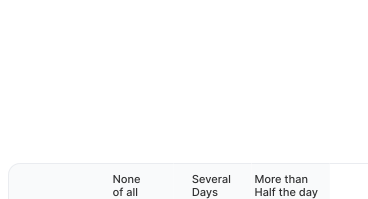
The Return to Work Self-Efficacy Scale can be scored using a straightforward mean calculation method. Participants rate 11 specific statements on a 6 point scale, ranging from "totally disagree" (1) to "totally agree" (6). To get the result, simply sum the item scores and divide by 11. This produces a mean score between 1 and 6. Higher values indicate stronger self belief in meeting job demands and handling fatigue. It is a practical way for health pros to spot who might need extra support getting back on the job.
Advantages

Develops personalised strategies based on assessment data.
.svg)
Measures healthcare intervention results systematically.
.svg)
Provides consistent measurements for clinical research.
.svg)
Streamlines research data gathering process.
.png)

Related Instruments

Digital counterpart
Digital biomarkers that measure the same thing with sensors rather than a questionnaire.
Collect RTW-SE data with WeGuide, the all in one patient engagement platform
.jpg)

Support Your patient in no time - all under your own brand
Our platform combines the knowledge of 100+ digital health solutions built, letting you easily build your patient engagement app for research or clinical use. Collect PROMs, support patients on waiting lists, or gather vital signs data. This is how:
Learn More.png)
Program Builder
.png)
.png)
Whitelabelling
.svg)
.svg)
.png)
Turn on components, dependent on your usecase
.svg)
.png)
Support The Full Journey
.png)
.png)
%20(1).png)
.png)
It’s your turn
Every WeGuide project, saves researchers and clinicians - 9 months and $450,000 - creating impactful digital health solutions.
