


The Beliefs about Medicines Questionnaire (BMQ)
The BMQ evaluates patient views on the necessity of treatment and potential concerns. It helps clinicians understand why patients might stop taking their medication.


Beliefs about Medicines Questionnaire (BMQ)
The Beliefs about Medicines Questionnaire (BMQ) is a psychometric tool that evaluates a patient's specific views on medication. It balances perceived necessity against concerns about potential harm. This insight helps doctors address non-adherence issues effectively, ensuring patients get the most from their prescribed treatment plans.
Category
Disease
Source
What is Beliefs about Medicines Questionnaire (BMQ)

The Beliefs about Medicines Questionnaire (BMQ) is a trusted tool for assessing patient views on treatment. It helps experts spot adherence barriers. This instrument is split into two distinct sections. The BMQ-Specific looks at prescribed drugs, while the BMQ-General checks broader views on medicine use and health. Patients rate statements on a five-point scale ranging from strongly agree to strongly disagree. It measures the perceived necessity of medication against fears of side effects, plus general ideas about doctors overusing pills or medicines being harmful. It is quick to complete and works well in both research and busy clinics. By identifying negative beliefs, healthcare teams can start better conversations to improve compliance. This insight allows for better support strategies that actually fit the patient's personal mindset and daily needs.
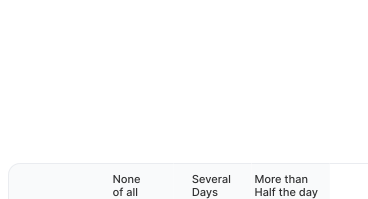
The Beliefs about Medicines Questionnaire can be scored using two main approaches based on its distinct sections. 1. Subscale Summation: You simply sum the 5 point Likert responses for each domain. The BMQ Specific part tracks Necessity and Concerns, while BMQ General covers Overuse and Harm. Higher totals show stronger beliefs. 2. Necessity Concerns Differential: This handy method involves subtracting the Concerns score from the Necessity score. It helps clinicians spot patients who might skip doses because their worry outweighs their perceived need for the treatment.
Advantages

Develops personalised strategies based on assessment data.
.svg)
Promotes active participation in healthcare assessment.
.svg)
Applicable across multiple diseases and conditions.
.svg)
Provides consistent measurements for clinical research.
.png)

Related Instruments

Digital counterpart
Digital biomarkers that measure the same thing with sensors rather than a questionnaire.
Collect BMQ data with WeGuide, the all in one patient engagement platform
.jpg)

Support Your patient in no time - all under your own brand
Our platform combines the knowledge of 100+ digital health solutions built, letting you easily build your patient engagement app for research or clinical use. Collect PROMs, support patients on waiting lists, or gather vital signs data. This is how:
Learn More.png)
Program Builder
.png)
.png)
Whitelabelling
.svg)
.svg)
.png)
Turn on components, dependent on your usecase
.svg)
.png)
Support The Full Journey
.png)
.png)
%20(1).png)
.png)
It’s your turn
Every WeGuide project, saves researchers and clinicians - 9 months and $450,000 - creating impactful digital health solutions.
