


Mini Nutritional Assessment (MNA): Screening for Malnutrition
The Mini Nutritional Assessment helps clinicians measure malnutrition risk in older adults. It is used in hospitals and aged care settings to ensure patients receive proper dietary support.


Mini Nutritional Assessment (MNA)
The Mini Nutritional Assessment (MNA) is a validated screening tool used to identify malnutrition risks in older adults. By evaluating dietary intake and weight loss, it helps clinicians spot issues early in hospitals and aged care. It’s an essential part of geriatric care planning.
Category
Disease
Source
What is Mini Nutritional Assessment (MNA)

The Mini Nutritional Assessment (MNA) is a validated screening tool designed to identify malnutrition risk in elderly patients quickly and accurately. It combines simple body measurements with questions about lifestyle to spot nutritional issues early. This helps clinicians catch unexpected weight loss before it becomes severe. The tool looks at four main areas including body mass index, dietary intake, general health status, and self-perceived well-being. Clinicians record answers to get a score that categorises patients as well-nourished, at risk, or malnourished. You can complete the full form in roughly 15 minutes without needing invasive lab tests. It is perfect for hospitals, nursing homes, and community care settings. By using the MNA, healthcare teams can create better diet plans and support healthy ageing to improve patient outcomes effectively.
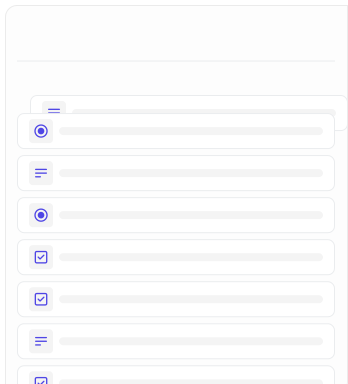
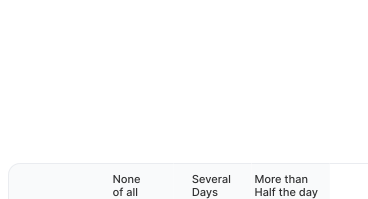
The Mini Nutritional Assessment can be scored using a smart two step process involving screening and full assessment. 1. Screening Score: First, tally the six screening questions for a max of 14 points. If the score is 12 or higher, the patient has normal status and you stop there. 2. Full Assessment: If the screening score is 11 or less, complete the remaining questions. Add the screening and assessment totals for a final score out of 30. A total under 17 means the patient is malnourished, while 17 to 23.5 suggests they are at risk. This helps clinicians spot issues early.
Advantages

Enables precise identification of patient health status.
.svg)
Streamlines research data gathering process.

Develops personalised strategies based on assessment data.
.png)

Related Instruments

Digital counterpart
Digital biomarkers that measure the same thing with sensors rather than a questionnaire.
Collect Mini Nutritional Assessment data with WeGuide, the all in one patient engagement platform
.jpg)

Support Your patient in no time - all under your own brand
Our platform combines the knowledge of 100+ digital health solutions built, letting you easily build your patient engagement app for research or clinical use. Collect PROMs, support patients on waiting lists, or gather vital signs data. This is how:
Learn More.png)
Program Builder
.png)
.png)
Whitelabelling
.svg)
.svg)
.png)
Turn on components, dependent on your usecase
.svg)
.png)
Support The Full Journey
.png)
.png)
%20(1).png)
.png)
It’s your turn
Every WeGuide project, saves researchers and clinicians - 9 months and $450,000 - creating impactful digital health solutions.
