


Rivermead Post-Concussion Symptoms Questionnaire (RPQ)
The RPQ helps patients rate the severity of symptoms like headaches and dizziness after a head injury. Clinicians use this self-report tool to track recovery progress and guide treatment.


Rivermead Post-Concussion Symptoms Questionnaire (RPQ)
The Rivermead Post-Concussion Symptoms Questionnaire (RPQ) is a trusted self-report scale for assessing symptom severity after head injuries. It asks patients to rate 16 specific issues, such as headaches and dizziness, against their pre-injury state. This allows doctors to monitor recovery and manage ongoing care.
Category
Disease
Source
What is Rivermead Post-Concussion Symptoms Questionnaire (RPQ)

The Rivermead Post-Concussion Symptoms Questionnaire (RPQ) is a reliable tool for tracking recovery after head trauma and measuring symptom severity. This self-report survey covers sixteen common issues people face after a brain injury. It looks at physical, cognitive, and emotional changes that impact daily life. Patients rate their current feelings compared to how they felt before the accident. They use a simple scale from zero to four, ranging from not experienced at all to a severe problem. This comparison highlights exactly where the main struggles lie. It is quick to fill out and gives doctors a clear snapshot of a patient's progress over time. By spotting specific trouble spots like headaches or memory gaps, healthcare teams can plan better rehab. It is a practical choice for guiding treatment and ensuring nothing gets missed during recovery.
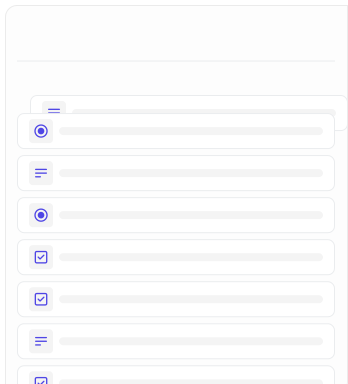
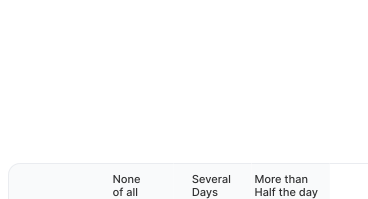
The Rivermead Post Concussion Symptoms Questionnaire can be scored using two main approaches: 1. Total Symptom Score: Patients rate 16 items on a 0 to 4 scale. A crucial rule here is that a score of 1, meaning 'no more of a problem,' is treated as 0. You sum the ratings of 2, 3, and 4 to get a total out of 64. This gives a clear picture of post concussion symptom severity. 2. Two Factor Model: It is handy to split scores into the RPQ 3 for early physical signs like headaches and the RPQ 13 for later cognitive or emotional issues. This helps clinicians track specific recovery patterns in brain injury rehab.
Advantages
.svg)
Measures healthcare intervention results systematically.
.svg)
Provides consistent measurements for clinical research.
.svg)
Streamlines research data gathering process.

Develops personalised strategies based on assessment data.
.png)

Related Instruments

Digital counterpart
Digital biomarkers that measure the same thing with sensors rather than a questionnaire.
Streamline Rivermead Post-Concussion assessments with WeGuide
.jpg)

Support Your patient in no time - all under your own brand
Our platform combines the knowledge of 100+ digital health solutions built, letting you easily build your patient engagement app for research or clinical use. Collect PROMs, support patients on waiting lists, or gather vital signs data. This is how:
Learn More.png)
Program Builder
.png)
.png)
Whitelabelling
.svg)
.svg)
.png)
Turn on components, dependent on your usecase
.svg)
.png)
Support The Full Journey
.png)
.png)
%20(1).png)
.png)
It’s your turn
Every WeGuide project, saves researchers and clinicians - 9 months and $450,000 - creating impactful digital health solutions.
