


Glasgow Coma Scale (GCS): Measuring Consciousness
Doctors and nurses use the Glasgow Coma Scale to check consciousness levels after a brain injury. By scoring eye, verbal, and motor responses, it provides a clear picture of a patient's condition.

Glasgow Coma Scale (GCS)
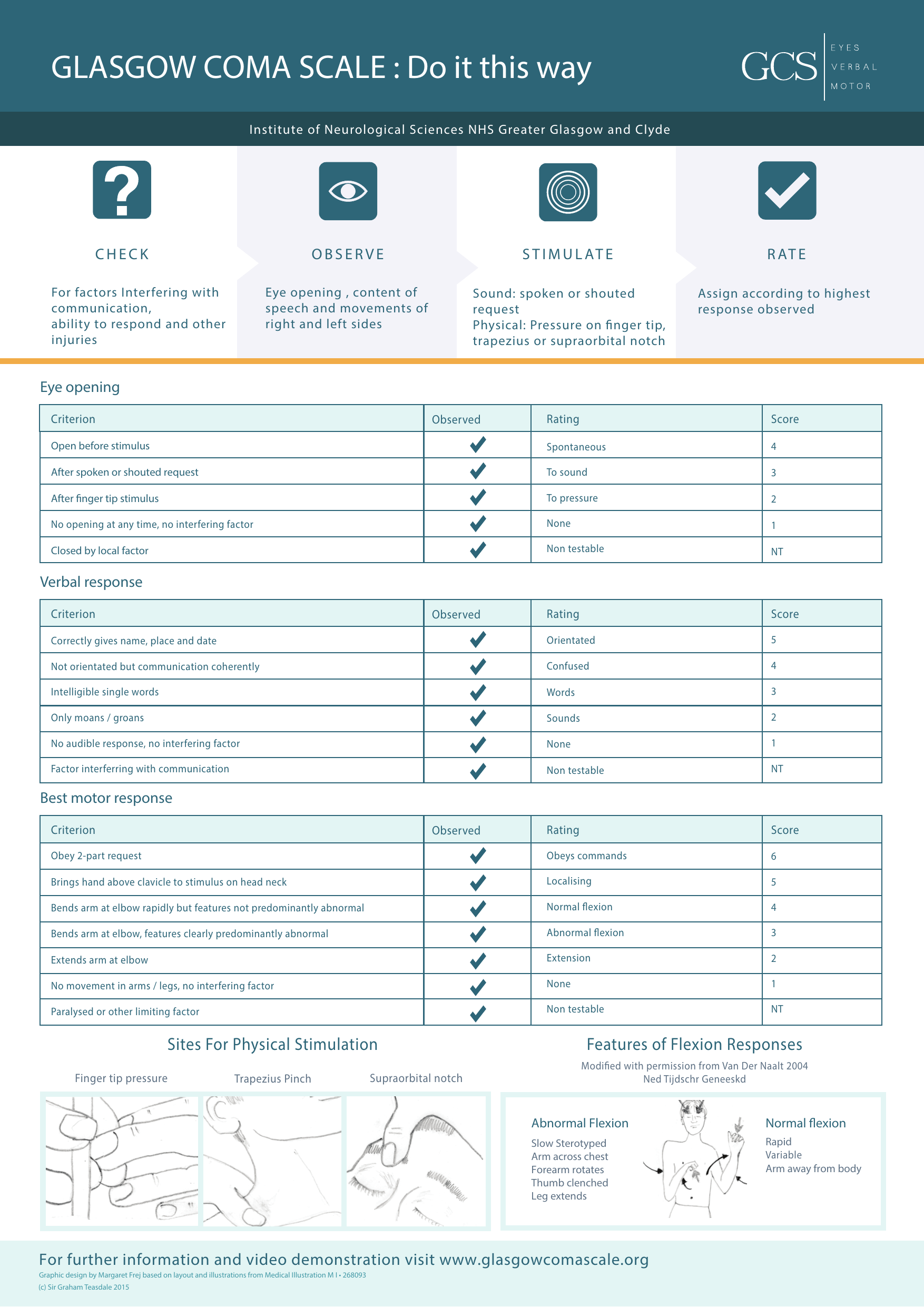
The Glasgow Coma Scale (GCS) is the standard way to assess consciousness after a brain injury. By scoring eye, verbal, and motor responses, it helps doctors quickly identify the severity of trauma. It's an essential tool in emergency care for monitoring a patient's neurological status.
Category
Disease
Source
What is Glasgow Coma Scale (GCS)

The Glasgow Coma Scale (GCS) is the standard tool for checking consciousness in acute trauma settings. It helps clinicians track brain function quickly. This scale looks at three key behaviours to give a reliable score. It neatly breaks down responsiveness into eye opening, verbal performance and physical motor skills. Scores range from 3 to 15, where lower numbers mean deep unconsciousness and higher ones show full alertness. Clinicians rate patients on how they react to voice or physical pressure, checking if they are confused or can obey commands clearly. It is easy to use at the bedside and works really well for nurses and paramedics. The tool allows for consistent communication between staff members about a patient's state. Regular checks help spot changes early, making it easier to decide on treatments like intubation or urgent CT scans right away.
The Glasgow Coma Scale can be scored using a summation of three key behavioural responses: Eye opening, Verbal performance, and Motor skills. Clinicians assign points for the best response in each area: Eyes (1 to 4), Verbal (1 to 5), and Motor (1 to 6). You simply add these up to get a total ranging from 3, indicating deep coma or death, to 15 for a fully awake patient. It is smart to document the specific breakdown, like E4V5M6, rather than just the total sum. This approach gives a clearer picture of brain function and helps the team track changes in consciousness over time.
Advantages
.svg)
Promotes active participation in healthcare assessment.
.svg)
Meets international clinical assessment requirements.
.svg)
Tracks patient condition changes systematically.
.svg)
Measures healthcare intervention results systematically.
.png)

Related Instruments

Digital counterpart
Digital biomarkers that measure the same thing with sensors rather than a questionnaire.
Collect Glasgow Coma Scale data with WeGuide, the all in one patient engagement platform
.jpg)

Support Your patient in no time - all under your own brand
Our platform combines the knowledge of 100+ digital health solutions built, letting you easily build your patient engagement app for research or clinical use. Collect PROMs, support patients on waiting lists, or gather vital signs data. This is how:
Learn More.png)
Program Builder
.png)
.png)
Whitelabelling
.svg)
.svg)
.png)
Turn on components, dependent on your usecase
.svg)
.png)
Support The Full Journey
.png)
.png)
%20(1).png)
.png)
It’s your turn
Every WeGuide project, saves researchers and clinicians - 9 months and $450,000 - creating impactful digital health solutions.
