


PTSD Checklist for DSM-5 (PCL-5): Assessing Symptoms
The PCL-5 is a 20-item self-report measure that assesses the twenty DSM-5 symptoms of PTSD. Clinicians use this tool to screen patients and monitor symptom changes throughout treatment.


PTSD Checklist for DSM-5 (PCL-5)
The PTSD Checklist for DSM-5 (PCL-5) is a 20-item self-report measure assessing post-traumatic stress disorder symptoms. Aligned with DSM-5 criteria, it helps clinicians screen patients and monitor symptom severity over time. It's a reliable tool for tracking treatment progress in mental health care.
Category
Disease
Source
What is PTSD Checklist for DSM-5 (PCL-5)

The PTSD Checklist for DSM-5 (PCL-5) is a standard 20-item assessment tool. It helps experts screen for trauma symptoms and track recovery progress. This instrument aligns directly with DSM-5 criteria. It covers the four main symptom clusters including intrusion, avoidance, negative alterations in cognition, and arousal. Patients rate how much they have been bothered by each problem in the past month. They use a 0-4 scale ranging from "Not at all" to "Extremely" to provide clear data. This scoring method makes it easy to spot patterns and check for a provisional diagnosis. Completing the assessment takes about 5 to 10 minutes so it fits well into busy practices. It is flexible enough for use in primary care or specialist mental health settings. Clinicians can use a total severity score or look at cluster scores to guide treatment planning and measure outcomes.
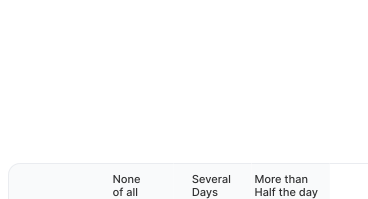
The PCL 5 can be scored using three main approaches to assess severity and diagnosis: 1. Total Symptom Severity Score: Add up all 20 items rated 0 to 4. This gives a total between 0 and 80; a score of 33 or higher suggests probable PTSD. 2. DSM 5 Symptom Cluster Severity Scores: Sum items within the four clusters like intrusion or avoidance to spot specific trouble areas. 3. Provisional Diagnosis: Treat items rated 2 or higher as present. Then check if the DSM 5 rule is met, requiring a specific mix of symptoms from each cluster.
Advantages

Enables precise identification of patient health status.
.svg)
Measures healthcare intervention results systematically.
.svg)
Streamlines research data gathering process.
.png)

Related Instruments

Digital counterpart
Digital biomarkers that measure the same thing with sensors rather than a questionnaire.
Collect PCL-5 data with WeGuide, the all in one patient engagement platform
.jpg)

Support Your patient in no time - all under your own brand
Our platform combines the knowledge of 100+ digital health solutions built, letting you easily build your patient engagement app for research or clinical use. Collect PROMs, support patients on waiting lists, or gather vital signs data. This is how:
Learn More.png)
Program Builder
.png)
.png)
Whitelabelling
.svg)
.svg)
.png)
Turn on components, dependent on your usecase
.svg)
.png)
Support The Full Journey
.png)
.png)
%20(1).png)
.png)
It’s your turn
Every WeGuide project, saves researchers and clinicians - 9 months and $450,000 - creating impactful digital health solutions.
