


Katz ADL Index: Assessing Activities of Daily Living
Clinicians use the Katz ADL Index to measure how well older adults manage daily tasks like bathing and eating. This assessment helps teams understand patient independence levels.

Katz ADL Index
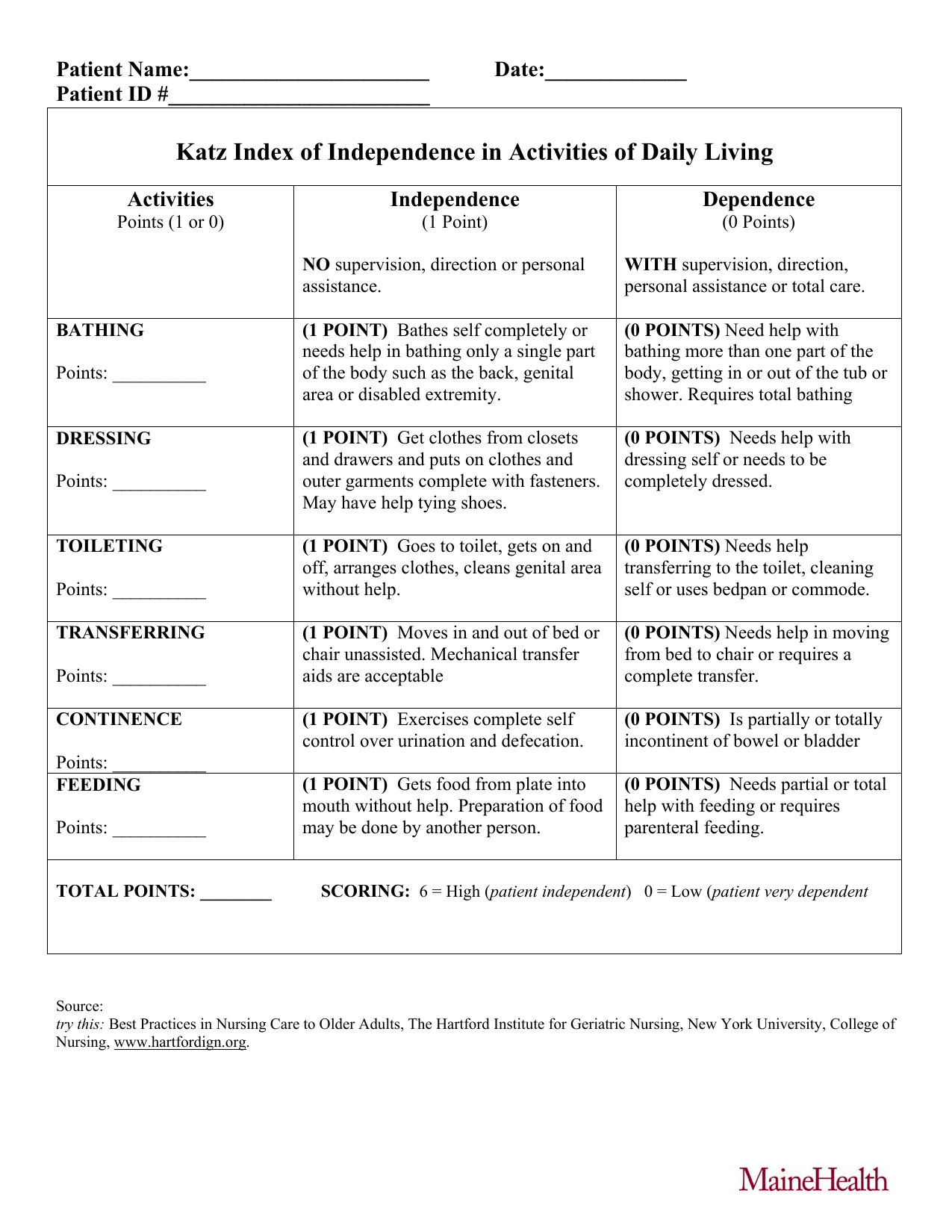
The Katz ADL Index is a standard tool for assessing a patient's ability to perform Activities of Daily Living independently. It's used to evaluate six core functions, like bathing and feeding, helping teams create effective care plans for older adults or those with chronic conditions.
Category
Disease
Source
What is Katz ADL Index

The Katz ADL Index is a trusted method for assessing functional independence in older adults. It helps clinicians plan care pathways effectively. This assessment looks at six basic functions to see how well a person manages daily life. It focuses on essential self-care tasks needed for independent living. Clinicians evaluate areas like bathing, dressing, toileting, transferring, continence, and feeding. Scoring is simple as it uses a binary system where patients are rated as independent or dependent for each activity, producing a total score out of six. This tool is quick to administer in clinical settings or home visits. It helps teams spot changes in health status while guiding decisions about discharge or long-term support. By tracking these basic skills, providers can ensure older patients receive the right level of assistance for their daily needs.
The Katz ADL Index can be scored using two main approaches: a letter grade system or a simple point count. 1. Letter Grades: This original method assigns a grade from A to G based on specific patterns. An A means you are independent in all six functions like bathing and feeding, while G suggests total dependence. 2. Point Count: Most clinicians prefer this easier way. You get 1 point for independence and 0 for dependence in each area. A total of 6 indicates full function, 4 is moderate impairment, and 2 or less shows severe functional impairment. This helps track changes over time.
Advantages

Develops personalised strategies based on assessment data.
.svg)
Tracks patient condition changes systematically.
.svg)
Streamlines research data gathering process.
.png)

Related Instruments

Digital counterpart
Digital biomarkers that measure the same thing with sensors rather than a questionnaire.
Streamline Katz ADL Index assessments for functional independence with WeGuide
.jpg)

Support Your patient in no time - all under your own brand
Our platform combines the knowledge of 100+ digital health solutions built, letting you easily build your patient engagement app for research or clinical use. Collect PROMs, support patients on waiting lists, or gather vital signs data. This is how:
Learn More.png)
Program Builder
.png)
.png)
Whitelabelling
.svg)
.svg)
.png)
Turn on components, dependent on your usecase
.svg)
.png)
Support The Full Journey
.png)
.png)
%20(1).png)
.png)
It’s your turn
Every WeGuide project, saves researchers and clinicians - 9 months and $450,000 - creating impactful digital health solutions.
