


Vanderbilt ADHD Diagnostic Rating Scale: An Overview
This scale lets parents and teachers rate a child's ADHD symptoms and school performance. Doctors use the results to support diagnosis and screen for other behavioural conditions.

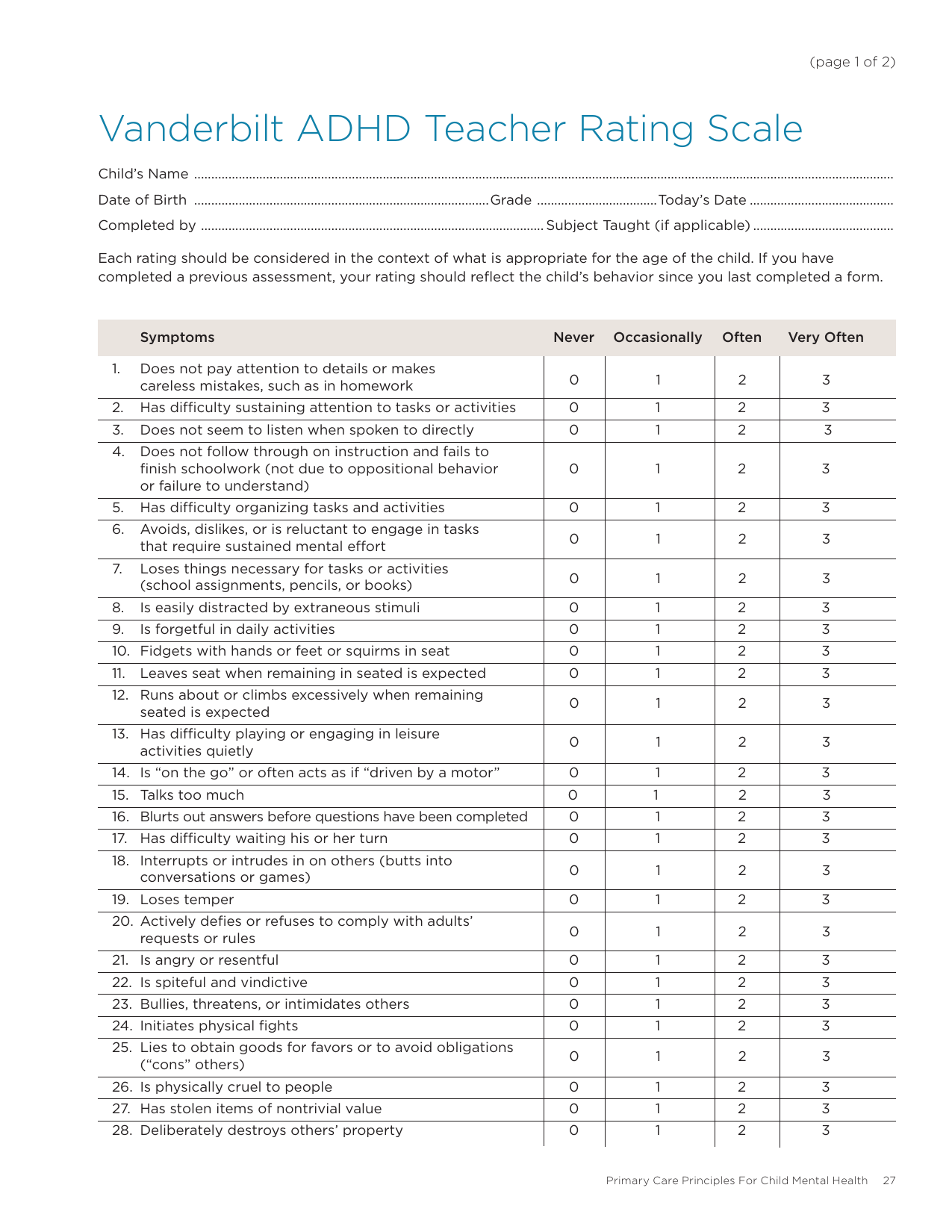
Vanderbilt ADHD Diagnostic Rating Scale
The Vanderbilt ADHD Diagnostic Rating Scale helps clinicians diagnose Attention Deficit Hyperactivity Disorder in children. It gathers feedback from parents and teachers on behaviour to identify core symptoms. It also screens for co-existing conditions like anxiety, ensuring a complete evaluation.
Category
Disease
Source
What is Vanderbilt ADHD Diagnostic Rating Scale

The Vanderbilt ADHD Diagnostic Rating Scale is a key tool for assessing attention deficit hyperactivity disorder in children. It tracks symptoms well. This scale includes separate forms for parents and teachers to complete. It looks at core ADHD signs and screens for co-existing issues like conduct disorder or anxiety. Raters answer questions using a simple frequency scale ranging from never to very often. This setup captures how often behaviours happen, covering inattention and hyperactivity while checking for performance issues in schoolwork or social settings. Clinicians use this instrument to confirm a diagnosis or see if medication is working. It’s quick to administer and accessible, making it a practical choice for busy clinics. By gathering data from home and school, it gives a full picture of a child’s daily life and supports better care plans.
The Vanderbilt ADHD Diagnostic Rating Scale is scored using two main approaches: symptom counts and performance checks. 1. Symptom Assessment: Items 1 to 18 cover inattention and hyperactivity. Raters mark behaviours from 0 for never to 3 for very often. To meet criteria, a child usually needs six scores of 2 or 3 in a subtype. 2. Performance Impairment: This reviews school and social functioning on a 1 to 5 scale. A score of 4 or 5 on just one item suggests functional issues. It helps clinicians see if symptoms cause real trouble.
Advantages

Enables precise identification of patient health status.
.svg)
Applicable across multiple diseases and conditions.
.svg)
Measures healthcare intervention results systematically.
.svg)
Streamlines research data gathering process.
.png)

Related Instruments

Digital counterpart
Digital biomarkers that measure the same thing with sensors rather than a questionnaire.
Streamline Vanderbilt ADHD Diagnostic Rating Scale assessments with WeGuide
.jpg)

Support Your patient in no time - all under your own brand
Our platform combines the knowledge of 100+ digital health solutions built, letting you easily build your patient engagement app for research or clinical use. Collect PROMs, support patients on waiting lists, or gather vital signs data. This is how:
Learn More.png)
Program Builder
.png)
.png)
Whitelabelling
.svg)
.svg)
.png)
Turn on components, dependent on your usecase
.svg)
.png)
Support The Full Journey
.png)
.png)
%20(1).png)
.png)
It’s your turn
Every WeGuide project, saves researchers and clinicians - 9 months and $450,000 - creating impactful digital health solutions.
