


Braden Scale for Predicting Pressure Sore Risk
The Braden Scale helps nurses identify patients at risk of developing pressure sores. It assesses mobility and skin condition to guide prevention strategies in hospitals and aged care.

Braden Scale for Predicting Pressure Sore Risk
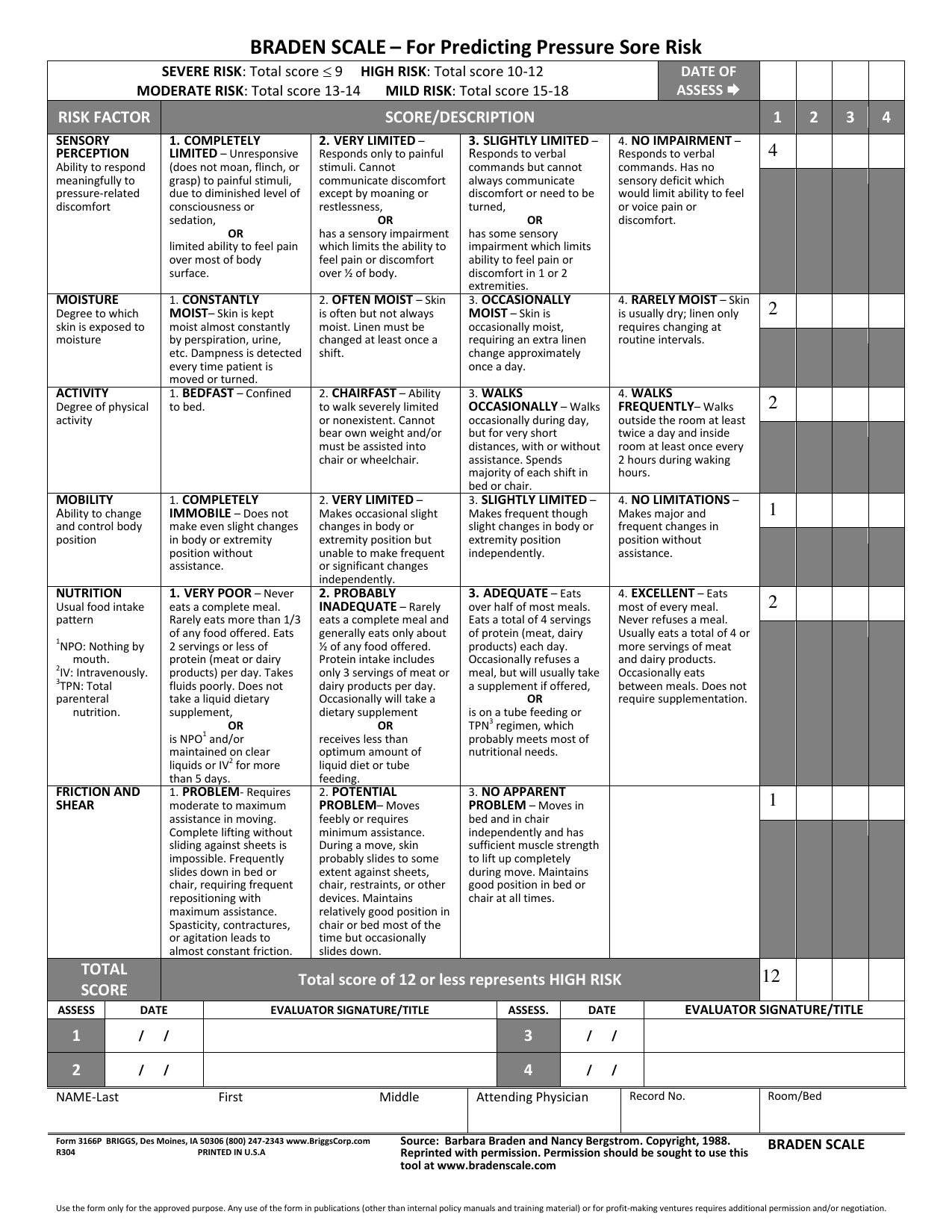
The Braden Scale is a trusted clinical tool used to assess a patient's risk of developing pressure ulcers. By evaluating factors like moisture, mobility, and nutrition, it helps nurses plan preventative care. It's an essential part of daily nursing practice to keep patients safe from skin breakdown.
Category
Disease
Source
What is Braden Scale for Predicting Pressure Sore Risk

The Braden Scale for Predicting Pressure Sore Risk is a trusted tool for nurses. It helps spot patients likely to develop painful skin injuries early on. This reliable assessment looks closely at six specific risk factors. It breaks down a patient's physical condition plus external elements that might damage skin health. Nurses rate items like sensory perception, moisture, activity, mobility, nutrition, and friction issues. Scores range from 6 to 23, where a lower number means higher danger. This clear scoring method makes it easy to flag high-risk cases quickly. Widely used in hospitals and aged care, this scale guides staff on when to start prevention plans. It helps teams decide on turning schedules or special mattresses. Regular checks ensure patient safety remains a top priority, stopping nasty ulcers before they even start causing real trouble.
The Braden Scale for Predicting Pressure Sore Risk can be scored using one main approach: a cumulative summation method. Clinicians rate five subscales like moisture and mobility from 1 to 4, while the friction and shear category is rated 1 to 3. You tally these for a total between 6 and 23. It is worth noting that a lower number here means higher risk. A score of 18 or less usually indicates the patient is vulnerable to developing pressure injuries, which helps nursing staff decide exactly when to start preventative care plans to protect skin integrity.
Advantages

Develops personalised strategies based on assessment data.
.svg)
Improves overall healthcare delivery standards.
.png)

Related Instruments

Digital counterpart
Digital biomarkers that measure the same thing with sensors rather than a questionnaire.
Collect Braden Scale data with WeGuide, the all in one patient engagement platform
.jpg)

Support Your patient in no time - all under your own brand
Our platform combines the knowledge of 100+ digital health solutions built, letting you easily build your patient engagement app for research or clinical use. Collect PROMs, support patients on waiting lists, or gather vital signs data. This is how:
Learn More.png)
Program Builder
.png)
.png)
Whitelabelling
.svg)
.svg)
.png)
Turn on components, dependent on your usecase
.svg)
.png)
Support The Full Journey
.png)
.png)
%20(1).png)
.png)
It’s your turn
Every WeGuide project, saves researchers and clinicians - 9 months and $450,000 - creating impactful digital health solutions.
