

.svg)
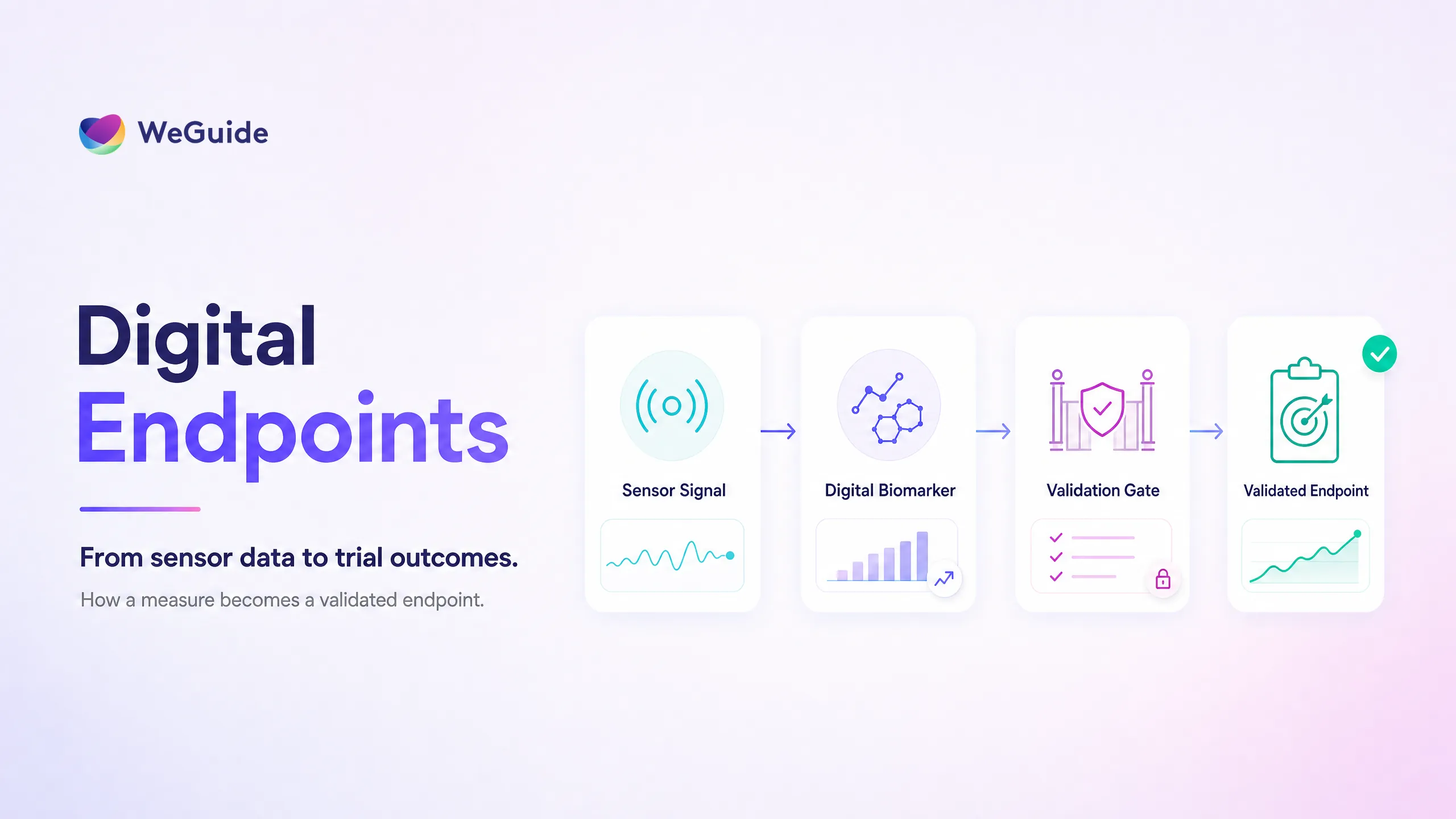


A digital endpoint is a clinical trial outcome, defined in advance in the study protocol, that is measured with a sensor or digital health technology rather than by a clinician at a site visit. In any trial, the endpoint is the result the study is built to detect, the thing that tells you whether a treatment worked. A digital endpoint is that same result, captured continuously and remotely from a wearable, a phone, or another connected device.
The word endpoint causes confusion, because in software it means an API address and in security it means a laptop or phone on a network. This article is only about the clinical trial sense: the prespecified measure of benefit or harm a trial uses to judge a treatment. We will cover what a digital endpoint is, how it differs from a digital biomarker, how a raw measure becomes a validated endpoint, how the FDA views them, real examples across therapeutic areas, and what they mean for trial design.
Key Takeaways
- A digital endpoint is a prespecified trial outcome. It is the result a study is designed to detect, measured by a sensor or app instead of a clinician at a visit.
- The endpoint is not the biomarker. A digital biomarker is the measure. The endpoint is the predefined outcome built on that measure and written into the protocol.
- Validation comes before the protocol. A measure earns endpoint status through the DiMe V3 framework: verification, analytical validation, and clinical validation.
- Regulators accept digital endpoints within a framework. The FDA's 2023 DHT guidance sets out how sponsors select, validate, and document a digital measure for a regulated trial.
- Digital endpoints can change trial design. A more sensitive, more frequent measure can sharpen the signal and, when it holds up, affect sample size.
What Is a Digital Endpoint?
A digital endpoint is a predefined clinical trial outcome that is collected through a digital health technology, such as a wearable, a smartphone, or a connected sensor, and used to decide whether a treatment is working. It sits in the protocol like any other endpoint, with three parts spelled out before the first participant enrols: what is measured, when and how often it is measured, and how the data is analysed.
Compare it to a classic endpoint. A traditional mobility endpoint might be the distance a participant walks in a six minute test, recorded by a coordinator at a clinic. The digital version of that same construct could be average daily walking speed, captured passively by a worn sensor across weeks of normal life. Both judge mobility. One is a snapshot taken in a clinic, the other is a continuous record taken at home.
That shift matters because it changes what a trial can see. A clinic visit catches a participant on one day, in an unfamiliar setting, often on their best behaviour. A digital endpoint built from sensor data captures how someone actually functions day to day, which can be closer to what patients care about. Most digital endpoints today draw on wearable and device data, the subject of our guide to wearables in clinical trials.
A digital endpoint can be primary, secondary, or exploratory, exactly like any other endpoint. What makes it digital is the source of the data, not its rank in the protocol. The hard part is not the device. It is proving the measure is trustworthy and meaningful before you commit to it, which is where the next sections go.
Digital Endpoint vs Digital Biomarker
The distinction that trips teams up is biomarker versus endpoint, and getting it right keeps a study clear. A digital biomarker is the measure: a quantity derived from sensor data, such as gait speed, resting heart rate, or sleep duration. A digital endpoint is the prespecified outcome a trial uses to judge a treatment, built on top of that measure and written into the protocol with its timing and analysis.
Put simply, the biomarker answers "what does the sensor tell us?" and the endpoint answers "did the treatment work?" The same gait sensor can produce a biomarker, gait speed, that becomes a secondary endpoint once you define it as change in gait speed at 12 weeks and prespecify how you will test it.
| Digital biomarker | Digital endpoint | |
|---|---|---|
| What it is | The measure derived from sensor data | A prespecified outcome based on that measure |
| Example | Gait speed | Change in gait speed at 12 weeks |
| Defined by | The measurement method and algorithm | The study protocol and analysis plan |
| Question it answers | What does the sensor tell us? | Did the treatment work? |
| Covered in depth | The digital biomarkers article | This article |
We keep the deep detail on measure types, derivation, and the science of the measure itself in our guide to digital biomarkers in clinical trials, so this article stays on the endpoint. You can see how WeGuide captures these measures in one participant facing app on the biomarkers capture feature page. The rule of thumb: pick and validate the biomarker first, then decide whether it is ready to carry an endpoint.
How a Measure Becomes a Validated Endpoint
A digital measure becomes an endpoint in two stages. First it has to be shown trustworthy and meaningful. Then it has to be prespecified in the protocol. Skip either stage and you have interesting data, not an endpoint you can defend.
The accepted way to do the first stage is the V3 framework from the Digital Medicine Society, which breaks the work into three questions. Verification asks whether the sensor itself measures what it claims, against a known reference. Analytical validation asks whether the algorithm turns that raw signal into an accurate, reliable measure. Clinical validation asks whether the measure reflects something that matters to how a patient feels, functions, or survives. You can read the framework and supporting resources on the Digital Medicine Society site.
Clearing all three is what makes a measure fit for purpose for a given context of use. A step count good enough for an exploratory activity measure may not be good enough for a primary endpoint, so the bar rises with the role the endpoint plays.
The second stage is prespecification. The measure becomes an endpoint only when the protocol fixes what is measured, the collection window and frequency, the handling of missing data, and the statistical analysis, including what size of change counts as meaningful. Decide this before you see the data, not after, or the endpoint loses its credibility.
Underneath both stages sits data quality. A validated measure still fails if participants do not wear the device or the data arrives full of gaps, which is why capture and monitoring matter as much as the algorithm. We cover those controls in our guide to wearable data quality in clinical trials. This is why experienced teams settle the endpoint and its evidence first, then choose the device, rather than the other way round.
Capture endpoint quality data from day one
WeGuide brings wearable, sensor, and app data into one participant facing platform, so the measure behind your digital endpoint lands clean and ready to validate alongside your existing systems.
Regulatory Acceptance of Digital Endpoints (FDA)
Regulators have moved from caution to clear expectations. The central reference is the FDA's December 2023 guidance on digital health technologies for remote data acquisition in clinical investigations, which explains how sponsors should select a DHT that fits the trial population, verify and validate it for the specific measure, protect data integrity, and document the whole chain from sensor to analysis.
The practical message is that a digital endpoint is acceptable when the sponsor does the homework. Choose a technology suited to the participants, validate the measure using a framework like V3, prespecify the endpoint, and keep a clear record of how data was captured and handled. The agency cares less about the brand of device and more about whether the measure is fit for the role you give it.
Novel digital endpoints, measures with no clinic based equivalent, get extra scrutiny. Because there is no established outcome to anchor them, the sponsor carries more of the burden to show the measure is meaningful and to justify the change that counts as a treatment effect. Early engagement with the regulator helps here, and several digital measures have moved through formal qualification routes. In Europe, for example, the EMA has issued a qualification opinion supporting one wearable derived mobility measure as a secondary endpoint, which signals that the path exists.
For the wider regulatory picture around the technologies themselves, see our guide to digital health technologies in clinical trials. WeGuide is TGA Class I certified medical device software and supports GCP aligned data capture, though sponsors remain responsible for endpoint validation and regulatory strategy. The framework supports adoption. It does not remove the work.
Examples of Digital Endpoints
Digital endpoints already run across many therapeutic areas, from neurology to respiratory medicine, at different stages of acceptance. The table below shows representative measures, the technology behind them, and roughly where each sits today. Status varies by study and region, so treat it as a guide, not a ruling.
| Digital endpoint | Sensor or technology | Therapeutic area | Typical status |
|---|---|---|---|
| Stride velocity 95th centile | Ankle or wrist worn wearable | Duchenne muscular dystrophy | Qualified by the EMA as a primary endpoint (2023) |
| Daily physical activity and step count | Accelerometer, wrist wearable | COPD, heart failure | Established as a supportive or secondary measure |
| Time in range | Continuous glucose monitor | Diabetes | Established in diabetes trials |
| Total sleep time and sleep efficiency | Actigraphy | Sleep, neurology | Established for activity based sleep measures |
| Tremor and bradykinesia scores | Wearable motion sensors | Parkinson's disease | Emerging and exploratory |
| Nocturnal scratch | Wrist actigraphy | Atopic dermatitis | Emerging and exploratory |
A few patterns stand out. Measures that map onto something patients clearly value, such as how far someone can move or how well they sleep, tend to mature fastest. Measures with a long history in a defined population, like mobility in Duchenne muscular dystrophy, are furthest along. Newer measures in Parkinson's disease and dermatology are promising but still building the validation evidence that supports endpoint status.
For a curated, regularly updated set of measures in active use, the DiMe Library of Digital Endpoints catalogues digital endpoints by therapeutic area and development stage. It is a useful reference when you want to check whether a measure in your field already has precedent, which can shorten the conversation with a regulator.
What Digital Endpoints Mean for Trial Design
A digital endpoint is not a free upgrade. It changes the trial, and the changes cut both ways, so they belong in the design conversation early rather than as a late add on.
The clearest gain is sensitivity. Continuous data from daily life carries more information than a single clinic reading, so a well chosen digital endpoint can detect a treatment effect that a periodic measure would miss. A more sensitive and more frequent endpoint can, in some designs, support a smaller sample size or a shorter study, because each participant contributes far more data points. That is a real saving when the measure holds up.
The frequency also helps with missing data in a different way. When you sample continuously, the loss of any single day matters less than the loss of a single scheduled visit. The flip side is that continuous capture creates its own gaps, from devices left uncharged to participants who stop wearing them, so the analysis plan has to define how those gaps are handled.
There are costs to weigh too. Validating a novel measure takes time and money up front, and the endpoint is only as good as the data behind it, which puts wear time and participant experience at the centre of the design. A digital endpoint supports a clearer read on how a treatment affects daily life. It does not by itself guarantee a cleaner trial, and it is no substitute for sound design.
This is why the participant layer does so much of the work. Reminders, simple syncing, and a single app people already check keep wear time high and gaps low, which is what protects the endpoint at analysis. Get the measure, the validation, and the experience right together, and digital endpoints can give a trial a sharper, more patient relevant view of whether a treatment works.
Frequently Asked Questions
What is a digital endpoint?
A digital endpoint is a clinical trial outcome, defined in advance in the protocol, that is measured with a sensor or digital health technology rather than by a clinician at a site visit. It captures a result such as walking speed or sleep continuously and remotely, then uses it to judge whether a treatment works.
What is the difference between a digital endpoint and a digital biomarker?
A digital biomarker is the measure derived from device data, such as gait speed. A digital endpoint is the prespecified trial outcome built on that measure, such as change in gait speed at 12 weeks. The biomarker is the quantity. The endpoint is the predefined outcome written into the protocol.
What are some examples of digital endpoints?
Examples include stride velocity in Duchenne muscular dystrophy, daily physical activity in COPD and heart failure, time in range from continuous glucose monitors in diabetes, actigraphy based sleep measures, and emerging tremor measures in Parkinson's disease. Each pairs a sensor with a prespecified outcome and a defined analysis.
Does the FDA accept digital endpoints?
Yes, within a clear framework. The FDA's 2023 guidance on digital health technologies explains how sponsors select, verify, and validate a digital measure for remote data collection in regulated trials. A digital endpoint is accepted when the technology fits the population, the measure is validated, and data handling is documented.
What is a novel digital endpoint?
A novel digital endpoint is a digital measure with no established clinic based equivalent, such as a continuous mobility or behaviour score that did not exist before wearables. Because there is no traditional outcome to anchor it, the sponsor must show the measure is meaningful and justify what change counts as a treatment effect.
How is a digital endpoint validated?
Through the DiMe V3 framework, then prespecification. Verification confirms the sensor measures what it claims. Analytical validation confirms the algorithm produces an accurate measure. Clinical validation confirms the measure reflects something patients care about. The validated measure becomes an endpoint once the protocol fixes its timing and analysis.
Conclusion
Digital endpoints turn continuous sensor data into outcomes a trial can act on, which is why sponsors keep adopting them. The value is not the device but the chain behind it: choose a measure, validate it with the V3 framework, prespecify it in the protocol, and capture clean data with high wear time. Get that chain right and a digital endpoint can give a sharper, more patient relevant read on whether a treatment works.
The order matters. Settle the measure and its validation evidence first, align the endpoint with regulatory expectations, then build a participant experience that keeps the data flowing. WeGuide is the patient facing layer that brings devices, eConsent, and ePRO into one branded app, supporting your decentralised or hybrid design alongside your existing systems, so the data behind your digital endpoints arrives ready to use.
Build your digital endpoint on clean data
Walk through how WeGuide captures wearable and sensor data across your trial, from device choice to the validated measure behind your endpoint.
Book a demoNo pressure, just a conversation.

