


Hypoglycemia Fear Survey (HFS): Measuring Fear Levels
The Hypoglycemia Fear Survey helps clinicians measure how much people with diabetes worry about low blood sugar. This self-report tool tracks anxiety and behaviours used to avoid glucose drops.


Hypoglycemia Fear Survey (HFS)
The Hypoglycemia Fear Survey (HFS) assesses anxiety surrounding low blood sugar in people with diabetes. It measures both worry and avoidance behaviours, helping clinicians identify psychological barriers to glucose control. It's an essential tool for improving management and patient well-being.
Category
Disease
Source
What is Hypoglycemia Fear Survey (HFS)

The Hypoglycemia Fear Survey (HFS) is a trusted tool for measuring anxiety about low blood sugar levels. It helps doctors spot hidden fears in diabetes care. This survey splits into two main parts that look at different sides of fear. One part checks behaviours used to avoid lows, while the other looks at specific worries. Patients rate items on a simple scale to show how often they feel scared or change what they do. Questions cover things like keeping blood sugar high on purpose or worrying about passing out in public, giving a clear picture of their daily struggles. It is quick to finish and works well in busy clinics or research studies. By finding these fears early, healthcare teams can offer better support and education. This leads to better blood sugar management and helps people feel much more confident handling their condition over the long run.
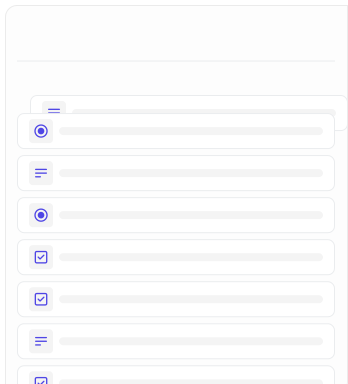
The Hypoglycemia Fear Survey can be scored using two main approaches: total summation and subscale analysis. 1. Total Score: You simply add up responses from all items, rated on a 5 point scale from never to always. A higher total points to greater overall fear. 2. Subscale Scoring: It is often better to look at the two subscales separately. The Behaviour subscale tracks actions taken to avoid lows, while the Worry subscale measures specific anxieties. Summing these distinct parts helps clinicians spot if a patient is overcompensating with snacks or just feeling anxious.
Advantages

Develops personalised strategies based on assessment data.
.svg)
Tracks patient condition changes systematically.
.svg)
Measures healthcare intervention results systematically.
.svg)
Provides consistent measurements for clinical research.
.png)

Related Instruments

Digital counterpart
Digital biomarkers that measure the same thing with sensors rather than a questionnaire.
Collect Hypoglycemia Fear Survey data with WeGuide, the all in one patient engagement platform
.jpg)

Support Your patient in no time - all under your own brand
Our platform combines the knowledge of 100+ digital health solutions built, letting you easily build your patient engagement app for research or clinical use. Collect PROMs, support patients on waiting lists, or gather vital signs data. This is how:
Learn More.png)
Program Builder
.png)
.png)
Whitelabelling
.svg)
.svg)
.png)
Turn on components, dependent on your usecase
.svg)
.png)
Support The Full Journey
.png)
.png)
%20(1).png)
.png)
It’s your turn
Every WeGuide project, saves researchers and clinicians - 9 months and $450,000 - creating impactful digital health solutions.
