


Visual Analogue Scale (VAS): Measuring Pain Intensity
The Visual Analogue Scale lets patients rate pain intensity by marking a point on a continuous line. Doctors use this simple self-report tool to track symptom changes over time.

Visual Analogue Scale (VAS)
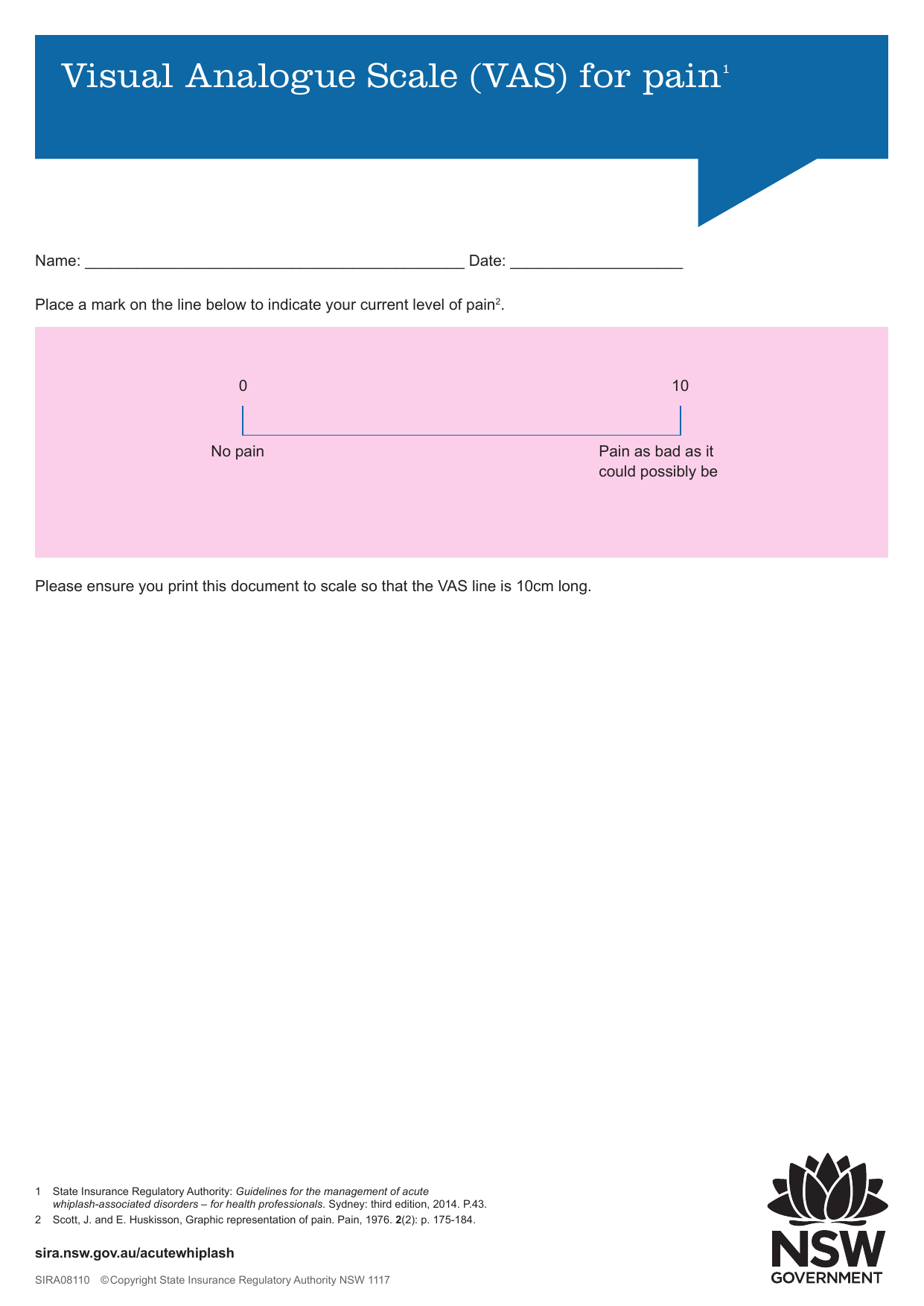
The Visual Analogue Scale (VAS) is a psychometric measuring instrument designed to document subjective characteristics like pain intensity. Typically a 100mm horizontal line, patients mark a point between two extremes to indicate their current state. It's a reliable method for clinicians to track symptom changes and assess treatment efficacy.
Category
Disease
Source
What is Visual Analogue Scale (VAS)

The Visual Analogue Scale (VAS) is a trusted method for measuring subjective feelings like pain intensity. It helps doctors track symptom changes. At its core, the tool uses a 100 millimetre horizontal line. The ends mark extreme limits of a sensation, such as 'no pain' on one side and 'worst pain imaginable' on the other. Patients mark a point on the line that matches their current state. Unlike fixed checklists, this continuous scale captures tiny shifts in how a person feels. It gives a sensitive reading reflecting the true intensity of a symptom without forcing a set choice. Administering the VAS takes less than a minute, so it fits well in busy clinics. It works for pain, mood, or fatigue. Because it relies on visual spacing rather than complex words, it suits diverse groups. This makes it a practical choice for gathering reliable data in busy healthcare settings.
The Visual Analogue Scale can be scored using one straightforward measurement approach based on line distance. You simply grab a ruler and measure the distance from the left start point to the patient's mark in millimetres. Since the line is typically 100 millimetres long, the score ranges from 0 to 100. A higher number means more intense symptoms. For pain, scores under 30 usually suggest mild discomfort, while anything over 70 points to severe distress. It is a quick way to track changes over time without needing complex maths.
Advantages
.svg)
Measures healthcare intervention results systematically.
.svg)
Streamlines research data gathering process.
.svg)
Provides consistent measurements for clinical research.
.svg)
Serves diverse clinical needs effectively.
.png)

Related Instruments

Digital counterpart
Digital biomarkers that measure the same thing with sensors rather than a questionnaire.
Collect Visual Analogue Scale (VAS) data with WeGuide, the all in one patient engagement platform
.jpg)

Support Your patient in no time - all under your own brand
Our platform combines the knowledge of 100+ digital health solutions built, letting you easily build your patient engagement app for research or clinical use. Collect PROMs, support patients on waiting lists, or gather vital signs data. This is how:
Learn More.png)
Program Builder
.png)
.png)
Whitelabelling
.svg)
.svg)
.png)
Turn on components, dependent on your usecase
.svg)
.png)
Support The Full Journey
.png)
.png)
%20(1).png)
.png)
It’s your turn
Every WeGuide project, saves researchers and clinicians - 9 months and $450,000 - creating impactful digital health solutions.
