


Central Sensitization Inventory: Symptom Assessment
The Central Sensitization Inventory helps clinicians screen for central nervous system hypersensitivity. This self-report tool identifies chronic pain symptoms to guide effective treatment plans.

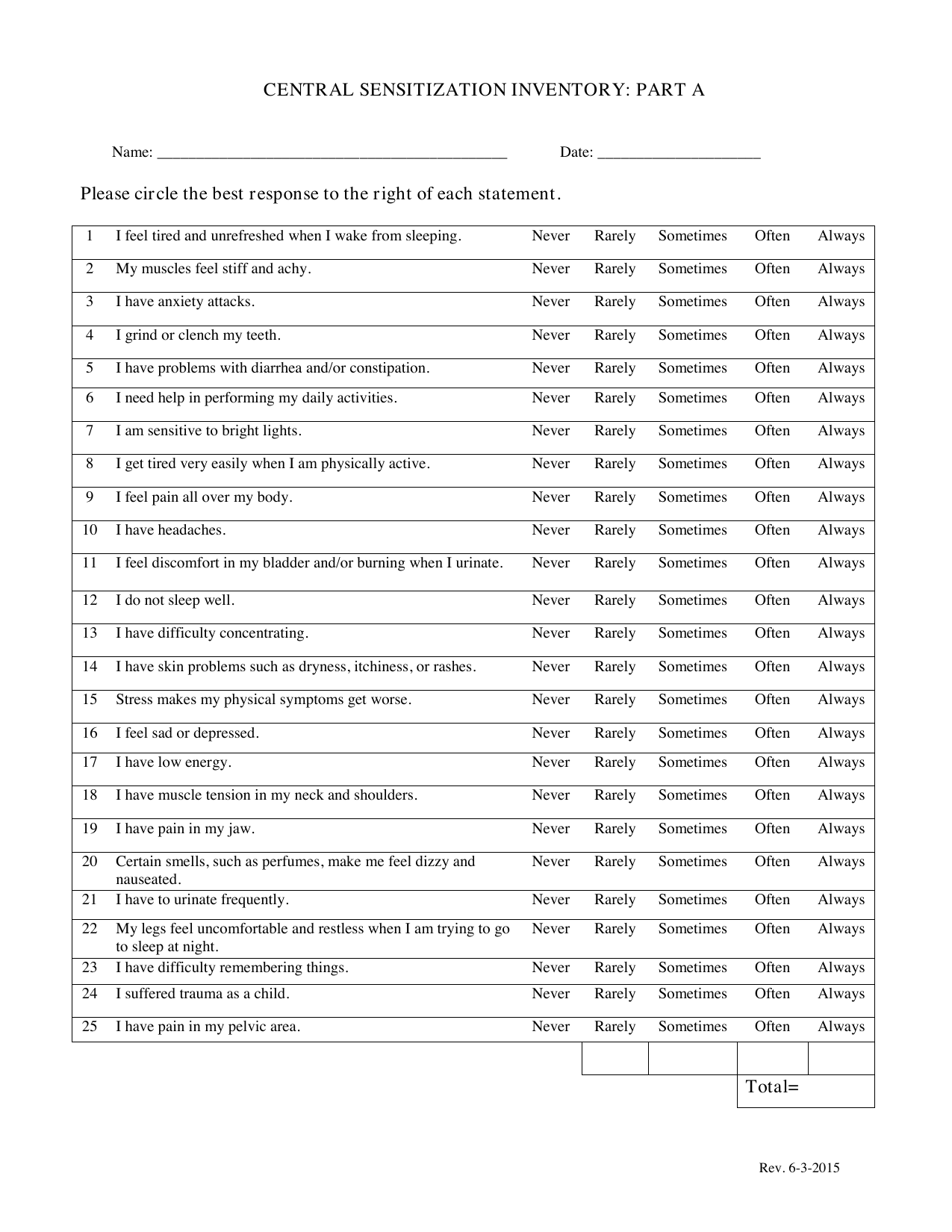
Central Sensitization Inventory
The Central Sensitization Inventory (CSI) is a screening questionnaire that identifies central sensitivity syndromes. It assesses symptoms of nervous system hypersensitivity, helping clinicians distinguish pain sources. This tool is important for managing chronic pain and selecting the right treatment path.
Category
Disease
Source
What is Central Sensitization Inventory

The Central Sensitization Inventory (CSI) is a key screening tool for identifying central sensitivity syndromes. It helps clinicians spot chronic pain. This instrument is split into two distinct sections. Part A covers twenty-five common health symptoms and signs, while Part B asks about specific diagnostic history. Patients rate items on a simple scale from zero to four, ranging from Never to Always. The total score sits between zero and one hundred, giving a clear picture of overall symptom severity. Higher scores suggest a greater likelihood of central sensitisation. It is a self-report measure that is quick to finish in clinical settings. Doctors use it to tell the difference between pain types effectively. It is excellent for guiding treatment plans and tracking progress over time, making it a practical choice for busy clinics dealing with complex pain conditions.
The Central Sensitization Inventory can be scored using two main approaches: the Total Score and Severity Levels. 1. Total Score: You simply add up the responses from the 25 items in Part A. Each question is rated on a scale from 0 to 4, creating a total range of 0 to 100. Higher numbers suggest a greater degree of central sensitisation symptoms. 2. Severity Levels: To make sense of the data, clinicians group the total score into five categories. These range from subclinical to extreme. A score of 40 is generally the cut off point that indicates central sensitisation is present.

Advantages

Enables precise identification of patient health status.

Develops personalised strategies based on assessment data.
.svg)
Applicable across multiple diseases and conditions.
.svg)
Streamlines research data gathering process.
.png)

Related Instruments

Digital counterpart
Digital biomarkers that measure the same thing with sensors rather than a questionnaire.
Streamline Central Sensitization Inventory assessments with WeGuide
.jpg)

Support Your patient in no time - all under your own brand
Our platform combines the knowledge of 100+ digital health solutions built, letting you easily build your patient engagement app for research or clinical use. Collect PROMs, support patients on waiting lists, or gather vital signs data. This is how:
Learn More.png)
Program Builder
.png)
.png)
Whitelabelling
.svg)
.svg)
.png)
Turn on components, dependent on your usecase
.svg)
.png)
Support The Full Journey
.png)
.png)
%20(1).png)
.png)
It’s your turn
Every WeGuide project, saves researchers and clinicians - 9 months and $450,000 - creating impactful digital health solutions.
