


Assessing MS: Expanded Disability Status Scale (EDSS)
The Expanded Disability Status Scale helps neurologists track disability in people with multiple sclerosis. It uses a physical exam to monitor changes and guide ongoing care.

Expanded Disability Status Scale (EDSS)
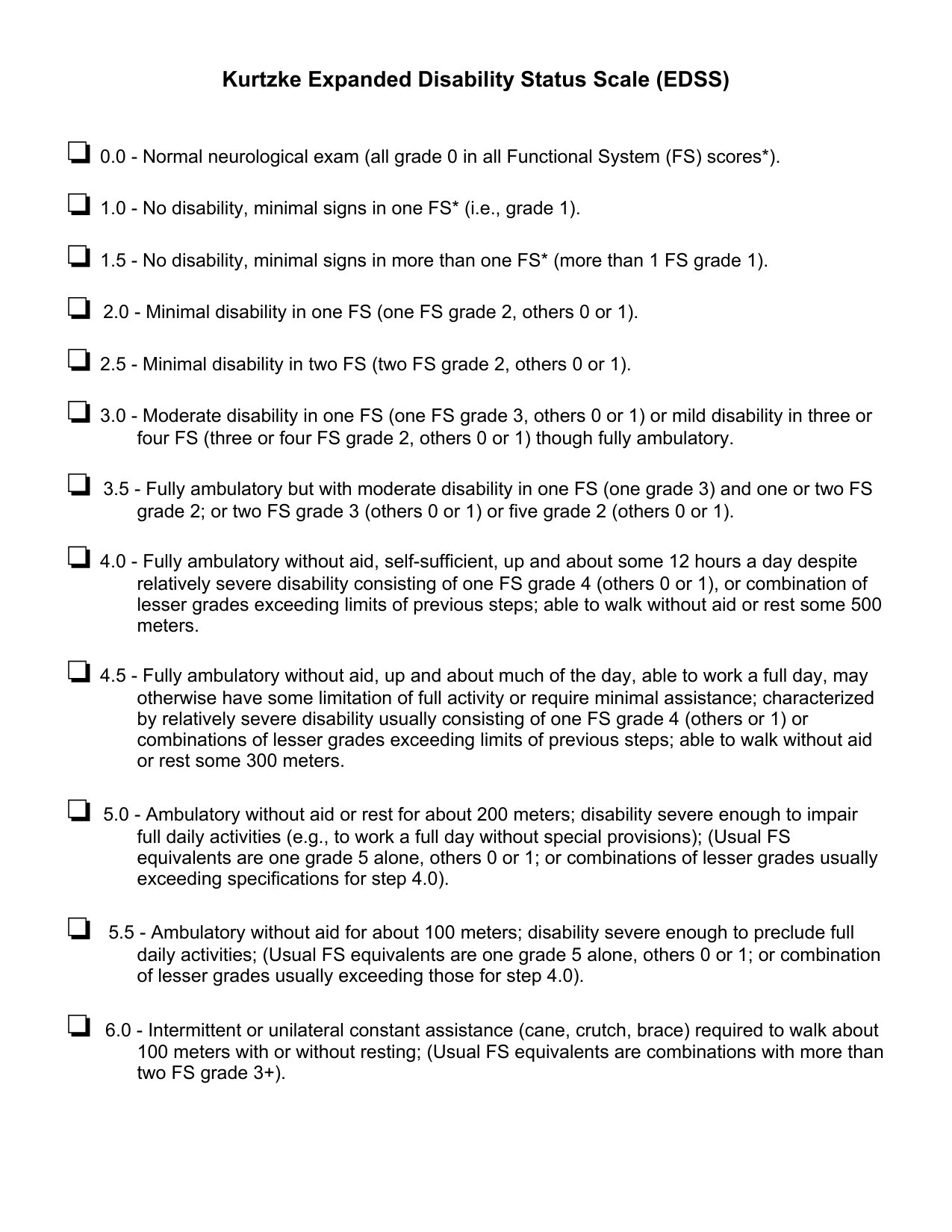
The Expanded Disability Status Scale (EDSS) quantifies disability levels in multiple sclerosis patients. It's used to monitor changes over time based on a standard neurological exam. Ranging from 0 to 10, this scale helps clinicians track progression and guide treatment decisions.
Category
Disease
Source
What is Expanded Disability Status Scale (EDSS)

The Expanded Disability Status Scale (EDSS) is the standard method for quantifying disability in multiple sclerosis and monitoring changes over time. It works by assessing eight specific Functional Systems. These include areas like vision and movement to create a clear picture of a patient's neurological health. Clinicians rate scores from 0 to 10 in half point increments. Lower numbers mean normal function while higher scores indicate greater impairment. The scale focuses heavily on walking ability once the score hits 4.0, making mobility a key factor in the final rating. Neurologists use this tool frequently in clinical trials to track disease progression. It is simple to administer during a routine exam but requires careful observation. By tracking these changes, doctors can adjust treatments effectively and help patients manage their condition better in the long run.
The Expanded Disability Status Scale can be scored using an integrated clinical approach that blends symptom ratings with walking ability. 1. Functional Systems: Doctors rate eight distinct body systems, such as vision and coordination, to assess specific impairments. These scores drive the rating for patients who are fully mobile. 2. Ambulation Focus: Once disability increases above level 4.0, the score relies heavily on how far a patient walks and if they need a stick or wheelchair. The final scale runs from 0 for normal exams up to 10, moving in half point steps to track MS progression.
Advantages
.svg)
Meets international clinical assessment requirements.
.svg)
Measures healthcare intervention results systematically.
.svg)
Strengthens evidence through systematic measurement approaches.
.png)

Related Instruments

Digital counterpart
Digital biomarkers that measure the same thing with sensors rather than a questionnaire.
Collect EDSS data with WeGuide, the all in one patient engagement platform
.jpg)

Support Your patient in no time - all under your own brand
Our platform combines the knowledge of 100+ digital health solutions built, letting you easily build your patient engagement app for research or clinical use. Collect PROMs, support patients on waiting lists, or gather vital signs data. This is how:
Learn More.png)
Program Builder
.png)
.png)
Whitelabelling
.svg)
.svg)
.png)
Turn on components, dependent on your usecase
.svg)
.png)
Support The Full Journey
.png)
.png)
%20(1).png)
.png)
It’s your turn
Every WeGuide project, saves researchers and clinicians - 9 months and $450,000 - creating impactful digital health solutions.
