


Elderly Mobility Scale (EMS): Assessing Functional Mobility
The Elderly Mobility Scale assesses balance and movement in frail older people. Therapists use this physical test to measure functional independence and guide rehabilitation decisions.

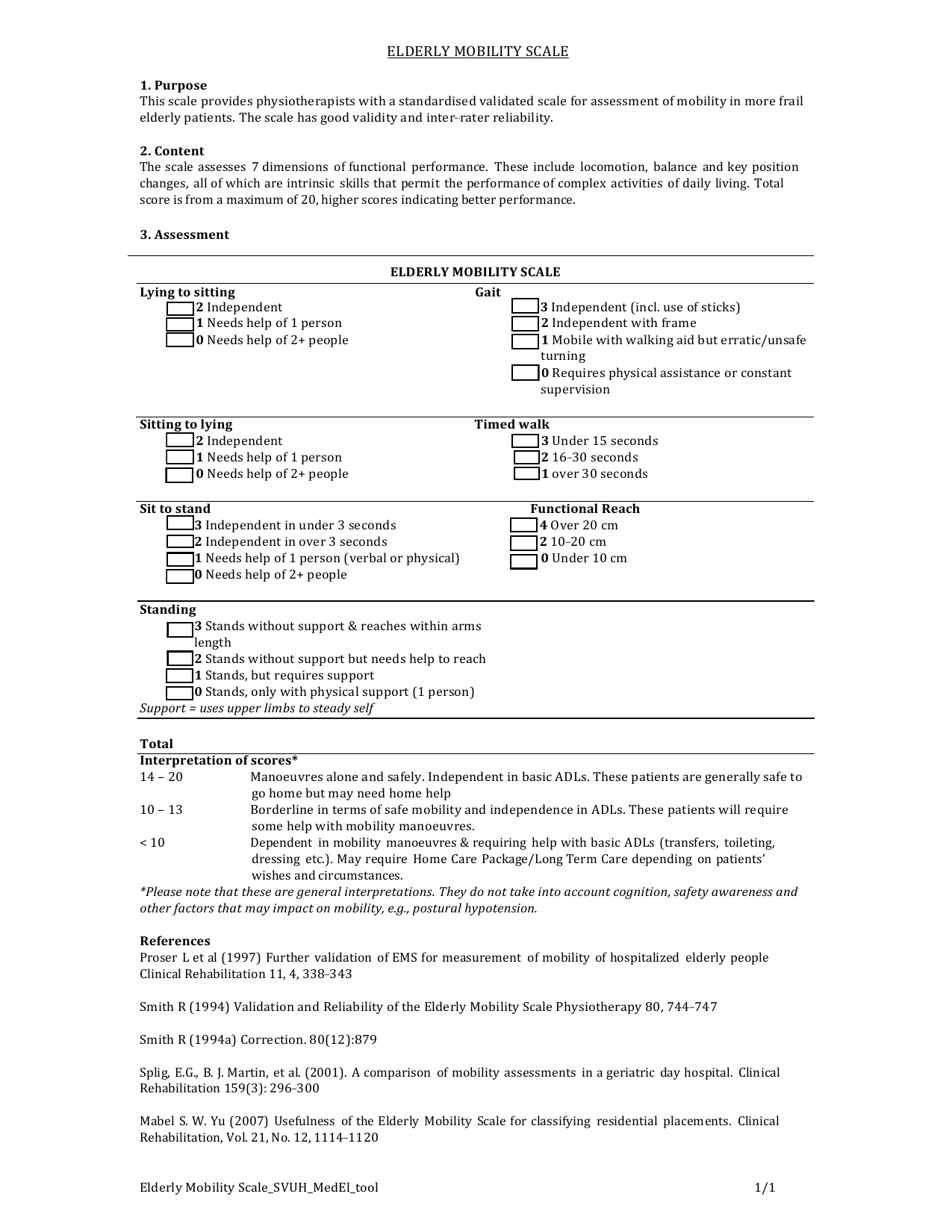
Elderly Mobility Scale (EMS)
The Elderly Mobility Scale (EMS) is a validated assessment tool used to evaluate functional movement in frail older adults. By measuring tasks like standing and walking, it helps physiotherapists determine a patient's independence level and suitability for discharge home or into care.
Category
Disease
Source
What is Elderly Mobility Scale (EMS)

The Elderly Mobility Scale (EMS) is a trusted assessment tool used by physios to check movement in frail older adults. It helps predict discharge needs. This scale looks at seven functional activities essential for daily living. It covers bed mobility, transfers, and walking skills needed for true independence at home. Clinicians score items like sitting to standing, gait, and a timed walk. Scores range from 0 to 20, where higher numbers mean better mobility. A score under 10 suggests a patient needs high levels of help, while over 14 indicates safety indoors. It takes roughly 15 minutes to finish, making it great for busy hospital wards. The EMS is sensitive to change, so it tracks progress well during rehab. It’s handy for deciding if someone can go home or needs more care, making discharge planning much smoother for the treating clinical team.
The Elderly Mobility Scale can be scored using one main approach based on functional performance. You'll assess seven tasks like standing, gait, and reaching. Each item gets varying points based on the level of help needed, summing to a total between 0 and 20. Higher numbers mean better mobility. Generally, a score under 10 suggests a patient is dependent in daily activities, while 14 or more indicates they are likely safe to go home alone. It is a handy way to check if someone needs extra support or placement in care.
Advantages

Develops personalised strategies based on assessment data.
.svg)
Measures healthcare intervention results systematically.
.svg)
Provides consistent measurements for clinical research.
.svg)
Streamlines research data gathering process.
.png)

Related Instruments

Digital counterpart
Digital biomarkers that measure the same thing with sensors rather than a questionnaire.
Collect Elderly Mobility Scale data with WeGuide, the all in one patient engagement platform
.jpg)

Support Your patient in no time - all under your own brand
Our platform combines the knowledge of 100+ digital health solutions built, letting you easily build your patient engagement app for research or clinical use. Collect PROMs, support patients on waiting lists, or gather vital signs data. This is how:
Learn More.png)
Program Builder
.png)
.png)
Whitelabelling
.svg)
.svg)
.png)
Turn on components, dependent on your usecase
.svg)
.png)
Support The Full Journey
.png)
.png)
%20(1).png)
.png)
It’s your turn
Every WeGuide project, saves researchers and clinicians - 9 months and $450,000 - creating impactful digital health solutions.
