


Effort-Reward Imbalance Questionnaire (ERI): Work Stress
The ERI Questionnaire measures work stress by weighing job efforts against rewards. It helps researchers identify health risks in employees through a simple self-report survey.

Effort-Reward Imbalance Questionnaire (ERI)
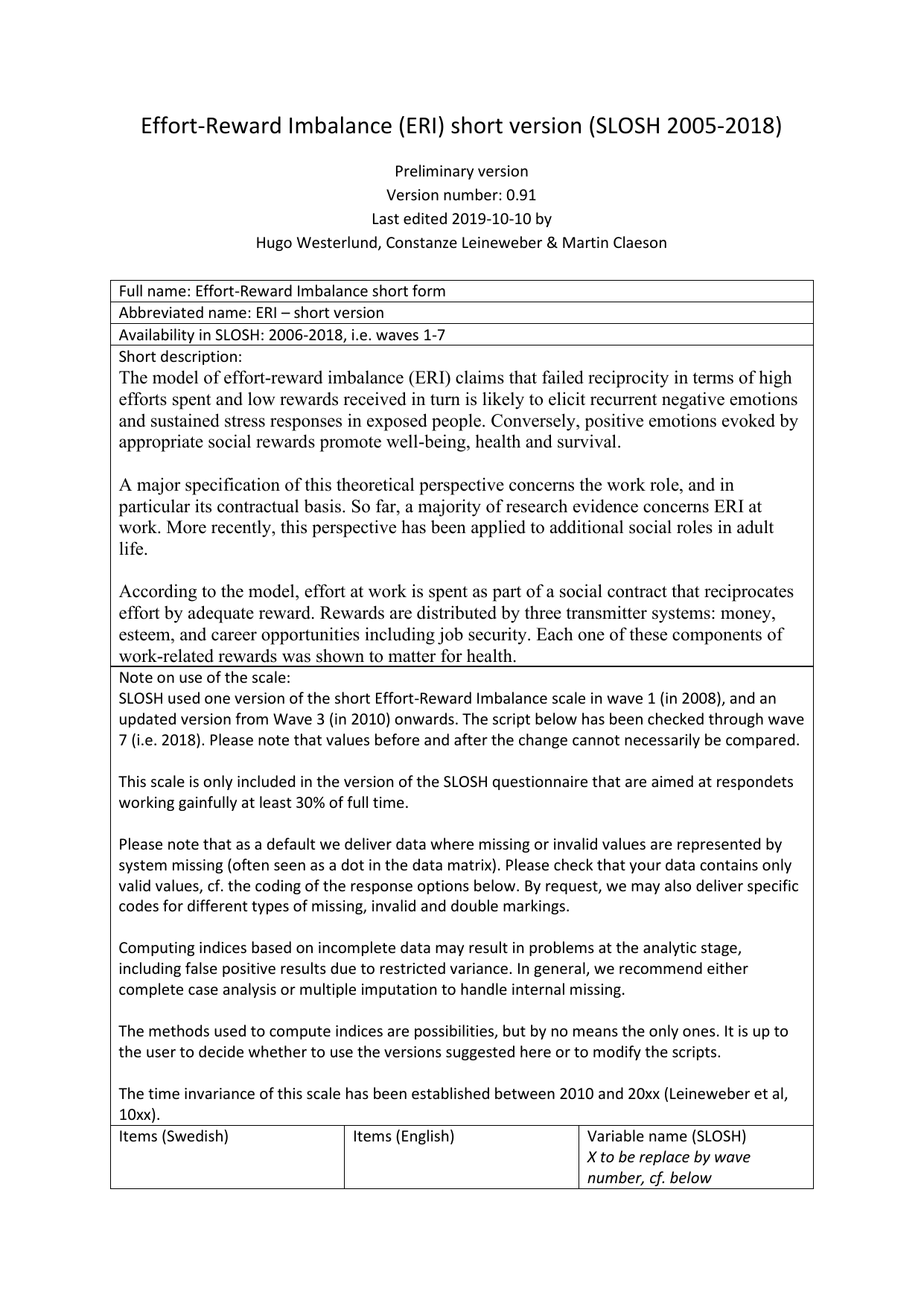
The Effort-Reward Imbalance Questionnaire (ERI) assesses work-related stress by measuring the gap between high effort and low rewards. It’s crucial for identifying health risks like burnout in occupational settings. This tool helps professionals understand how job strain affects employee wellbeing.
Category
Disease
Source
What is Effort-Reward Imbalance Questionnaire (ERI)

The Effort-Reward Imbalance Questionnaire (ERI) is a trusted tool for measuring work stress. It spots health risks caused by unfair job exchanges. This model focuses on the link between high effort and low reward. It also checks for overcommitment, which is a personal pattern of coping with demanding work situations. Users rate items on a scale of four points to show how much distress they feel. The questions cover three main areas: extrinsic effort like workload, intrinsic drive, and rewards such as salary, esteem, and job security to find the specific ratio. The ERI is simple to use in clinics and research labs. It is often used to predict heart issues and depression. Occupational health teams use it to improve workplace conditions. It gives clear data to help workers stay healthy and productive, making it a practical choice for modern staff care.
The Effort Reward Imbalance Questionnaire (ERI) can be scored using two main approaches: scale sums and the ratio. 1. Scale Sums: You simply add up response values for the Effort, Reward, and Overcommitment scales. Higher scores show the intensity of each specific dimension like work pressure. 2. ER Ratio: This is the main metric. Divide the Effort sum by the Reward sum, adjusted by a correction factor to balance item numbers. A ratio over 1 means high cost and low gain, flagging a clear risk for stress related illness.
Advantages
.svg)
Strengthens evidence through systematic measurement approaches.
.svg)
Serves diverse clinical needs effectively.
.svg)
Meets international clinical assessment requirements.
.png)

Related Instruments

Digital counterpart
Digital biomarkers that measure the same thing with sensors rather than a questionnaire.
Collect Effort-Reward Imbalance data with WeGuide, the all in one patient engagement platform
.jpg)

Support Your patient in no time - all under your own brand
Our platform combines the knowledge of 100+ digital health solutions built, letting you easily build your patient engagement app for research or clinical use. Collect PROMs, support patients on waiting lists, or gather vital signs data. This is how:
Learn More.png)
Program Builder
.png)
.png)
Whitelabelling
.svg)
.svg)
.png)
Turn on components, dependent on your usecase
.svg)
.png)
Support The Full Journey
.png)
.png)
%20(1).png)
.png)
It’s your turn
Every WeGuide project, saves researchers and clinicians - 9 months and $450,000 - creating impactful digital health solutions.
