


Dissociative Experiences Scale (DES-II): Measuring Symptoms
The DES-II is a self-report questionnaire that measures dissociative symptoms like amnesia. Clinicians use it to identify patients who need further evaluation for dissociative disorders.

Dissociative Experiences Scale (DES-II)
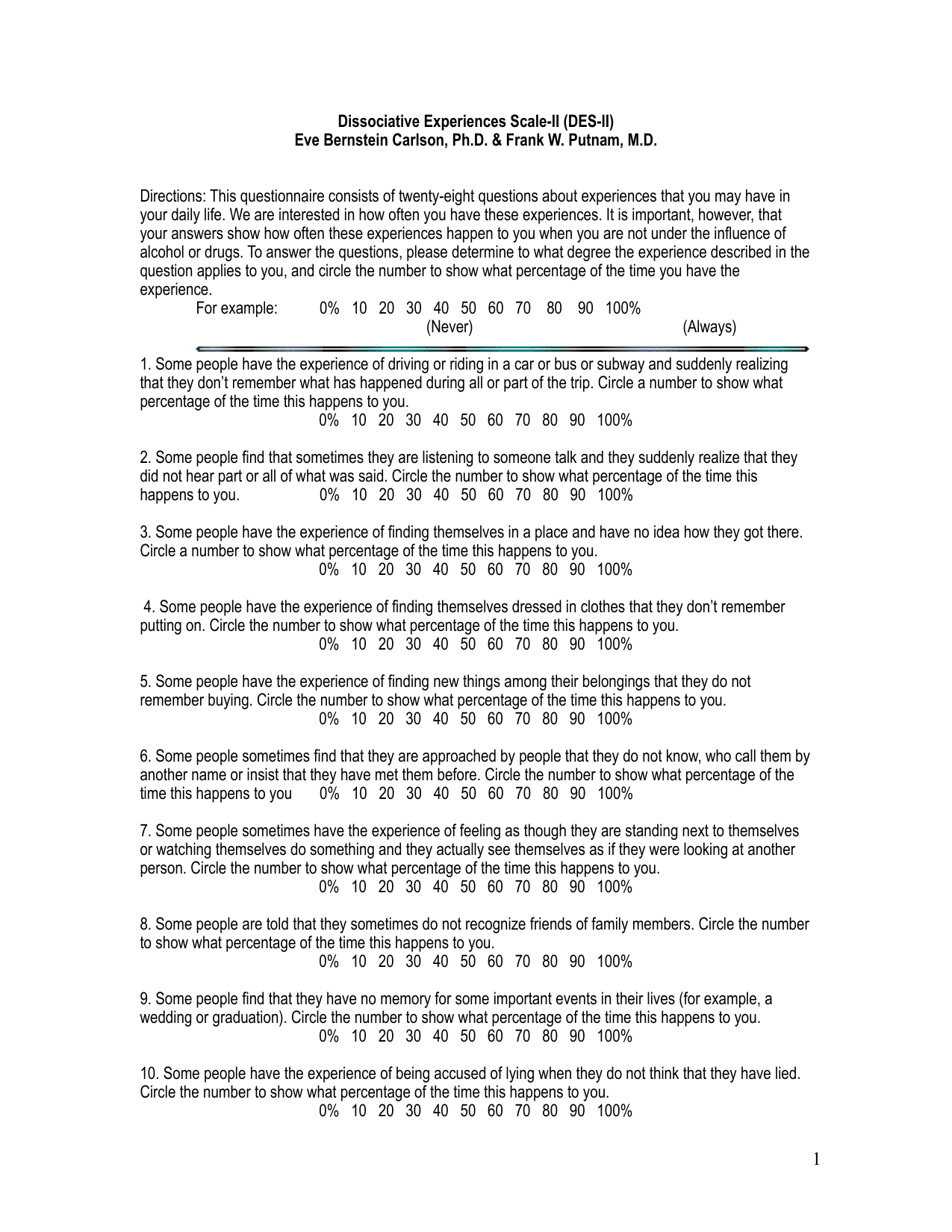
The Dissociative Experiences Scale (DES-II) is a 28-item self-report questionnaire for screening dissociative symptoms. It measures how often patients experience amnesia or depersonalisation. This tool helps clinicians identify individuals who might need further testing for dissociative disorders.
Category
Disease
Source
What is Dissociative Experiences Scale (DES-II)

The Dissociative Experiences Scale (DES-II) is a trusted tool for screening dissociative symptoms. It helps clinicians spot potential disorders early. This 28 item survey covers a wide range of daily experiences. It looks at normal dissociation like daydreaming plus severe clinical signs that require attention. Clients rate how often they have specific experiences using a percentage scale from 0 to 100. The questions explore key areas like amnesia, absorption, and depersonalisation to give a clear picture of symptom frequency and severity for the clinician. While it does not diagnose on its own, the DES-II is excellent for initial screening. It is quick to administer and score, making it handy for busy practices. Mental health pros use it to guide further assessment and treatment planning for complex conditions like Dissociative Identity Disorder.
The Dissociative Experiences Scale (DES-II) can be scored using one main approach: calculating the overall average. For the 28 items, clients circle a percentage from 0% to 100% to show how often they have specific experiences. To get the score, you simply add up all these percentages and divide the total by 28. While there are subscales for amnesia and absorption, the total score matters most. A result over 30 usually suggests a high chance of dissociative identity disorder, helping doctors decide if more clinical testing is required.
Advantages

Enables precise identification of patient health status.
.svg)
Provides consistent measurements for clinical research.
.svg)
Streamlines research data gathering process.
.svg)
Strengthens evidence through systematic measurement approaches.
.png)

Related Instruments

Digital counterpart
Digital biomarkers that measure the same thing with sensors rather than a questionnaire.
Streamline Dissociative Experiences Scale (DES-II) assessments with WeGuide
.jpg)

Support Your patient in no time - all under your own brand
Our platform combines the knowledge of 100+ digital health solutions built, letting you easily build your patient engagement app for research or clinical use. Collect PROMs, support patients on waiting lists, or gather vital signs data. This is how:
Learn More.png)
Program Builder
.png)
.png)
Whitelabelling
.svg)
.svg)
.png)
Turn on components, dependent on your usecase
.svg)
.png)
Support The Full Journey
.png)
.png)
%20(1).png)
.png)
It’s your turn
Every WeGuide project, saves researchers and clinicians - 9 months and $450,000 - creating impactful digital health solutions.
