

.svg)

%20(1).png)

We're excited to announce a new partnership between FindAir and WeGuide. This collaboration brings together FindAir's connected inhaler technology and WeGuide's patient engagement platform to make reliable inhaler data available for respiratory research and clinical care. Researchers and clinicians can now access timestamped records of every inhaler use, giving them clearer insight into how patients manage asthma and COPD in daily life.
Why respiratory research needs better data
Clinicians and researchers often rely on memory, spot checks, and prescription refill rates to judge inhaler use (Dhruve & Jackson, 2022). Those methods miss the daily patterns that matter most. Self-reported data are affected by recall bias (Morgan et al., 2024). Clinic visits give you snapshots, not continuous streams of information.
Existing datasets rarely include precise timestamps or consistent device metadata. That makes it hard to detect subtle changes that come before an exacerbation, and it reduces the statistical power of empirical studies. Connected inhaler data fills this gap by capturing each actuation with reliable time records and device context (Duan et al., 2025). It's a simple shift that opens up new research possibilities and improves how clinicians track patient behaviour.
How the partnership works
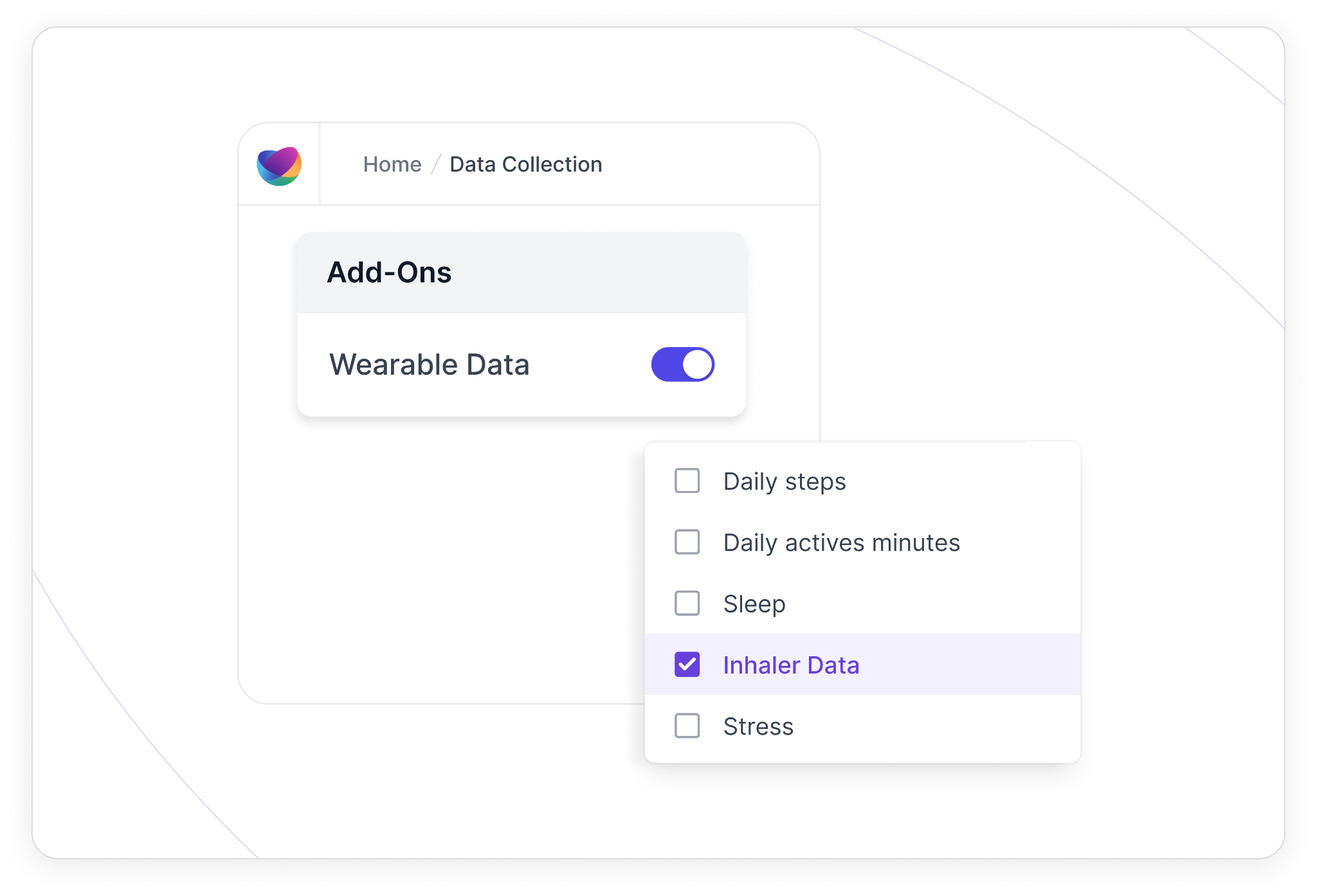
In practice, it works like this: when you're starting a new respiratory program or study on the WeGuide platform, you can turn on Smart Inhaler data collection with just a few clicks during the setup process. Participants will be asked to set up the integration once when they enrol. After that initial setup, it's automatic. Every time they use their inhaler and use the WeGuide app, the data from the device syncs to the participant app, which then sends it to our medical grade database.
From there, you can view all collected data in a dashboard overview that shows population level trends, or you can zoom into an individual patient to see their specific usage patterns over time. WeGuide handles ingestion, schema mapping, deidentification, quality checks, device health monitoring, and researcher facing exports.
What this means for clinical care and research
Live data from an inhaler changes how clinicians and researchers work. Instead of asking patients how often they use their inhaler, clinicians can show them patterns and discuss targeted strategies. When usage patterns change over days or weeks, early warning signs become more visible. That can lead to fewer unscheduled visits and hospital admissions.
Researchers get timestamped endpoints that increase study sensitivity and reduce sample size needs. You can also personalise interventions and treatments based on the data collected. Doctors and researchers can monitor symptoms and inhaler use in real time, then decide to adjust the treatment given. No need to wait three months until the patient comes into the hospital.
Stronger clinical evidence studies
Real World Evidence studies are becoming more powerful. We can now directly see the impact of events like thunderstorm asthma on inhaler use across the population. During events like the Melbourne thunderstorm asthma epidemic in November 2016, researchers can observe how environmental triggers affect inhaler behaviour at scale.
Better drug trials and intervention studies
For new drug trials or intervention studies, accurate measurement of inhaler intake makes a real difference. You can finally measure whether patients are actually taking their medication as prescribed. A trial that uses smart inhaler timestamps can be useful in detecting treatment effects on symptom control more quickly than a trial that just relies on patient diaries (Drummond et al., 2025). These are small shifts that compound into better outcomes and research quality.
Aggregated, deidentified datasets can also inform health system planning and guideline development. There are practical benefits that matter on the ground.
What this means for patients
Patients gain a lot from this integration too. They can finally get insights into their health and inhaler intake without having to log everything manually. That's one less thing to remember and one less thing to get wrong.
The data collected means they can now get personalised respiratory care that's tailored to them. If a patient's rescue inhaler use spikes over two weeks before a scheduled appointment, a clinician can spot that rise and adjust treatment or schedule outreach before the patient ends up in emergency care. It's proactive care instead of reactive care.
Patients also don't need to worry about remembering exactly when they used their inhaler or how many puffs they took. The device tracks it all automatically and syncs it to their app. They can focus on managing their condition, not managing their data.
A practical step towards better respiratory outcomes
Timestamped inhaler data removes guesswork and opens new research possibilities. By aligning FindAir's device and data capabilities with WeGuide's research expertise, this collaboration aims to speed up the translation of everyday inhaler events into clinical insights and scientific evidence. For teams focused on improving respiratory care and advancing asthma research, this is an invitation to test connected data in real settings.
The WeGuide x FindAir integration is now in beta. If you’re interested in participating, please contact us.

