


MMSE Mini-Mental State Examination: Assessing Cognitive Function and Dementia Screening
Assesses cognitive function, evaluating memory, language, and orientation to screen for dementia and monitor cognitive changes in healthcare settings.
MMSE Mini-Mental State Examination
The MMSE assesses cognitive function, evaluating aspects like memory, language, and orientation, to screen for dementia and monitor cognitive changes in various healthcare settings.
Category
Source
What is
MMSE Mini-Mental State Examination

The MMSE Mini-Mental State Examination is a widely used assessment tool that evaluates cognitive function and screens for dementia. It's an important clinical and research instrument that provides a quick and straightforward measure of cognitive impairment. The MMSE assesses several key areas, including arithmetic, memory, and orientation, and is typically administered in a series of questions and tasks that test the individual's ability to perform simple calculations, recall information, and follow instructions. The test is structured into several sections, with a maximum score of 30 points, and scores are generally categorised into different levels of cognitive impairment. Key dimensions assessed include attention, language, and visuospatial skills, with response options ranging from simple yes or no answers to more complex tasks like drawing and writing. Clinicians use the MMSE to monitor cognitive decline over time, inform diagnosis, and develop treatment plans, making it a valuable tool in both clinical and research settings, particularly in populations with a high risk of dementia or cognitive impairment. By providing a standardised measure of cognitive function, the MMSE helps healthcare professionals identify areas for further assessment and intervention.
Collect patient reported data with WeGuide the
The MMSE can be scored using one main approach with variations in interpretation. 1. The total score is calculated by summing the points from 30 questions assessing cognitive function across several domains: orientation, registration, attention and calculation, memory recall, language, and visuospatial skills. Scores range from 0 to 30, with higher scores indicating better cognitive function. Practitioners often use cut-off scores (e.g., 24 or 26) to indicate cognitive impairment, with adjustments for education level and age sometimes considered.
Advantages

Develops personalised strategies based on assessment data.
.svg)
Tracks patient condition changes systematically.
Stats
.png)

Related Instruments
The Incontinence Impact Questionnaire (IIQ) is a crucial assessment tool used to measure the impact of urinary incontinence on a person's quality of life.

MMSE Mini-Mental State Examination

Support Your patient in no time - all under your own brand
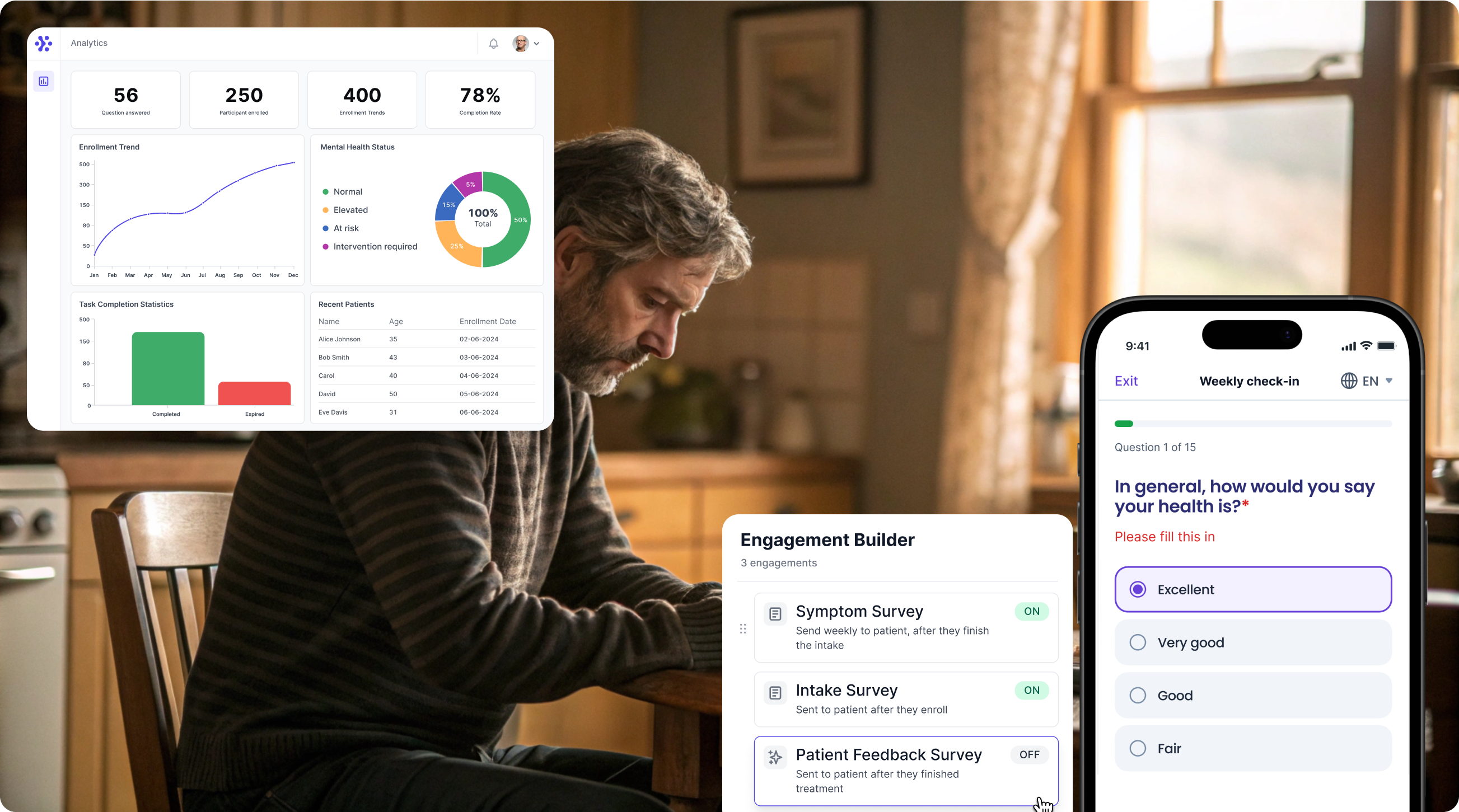
Our platform combines the knowledge of 100+ digital health solutions built, letting you easily build your patient engagement app for research or clinical use. Collect PROMs, support patients on waiting lists, or gather vital signs data. This is how:
Learn More.png)
Program Builder
.png)
Whitelabelling.
.png)
Turn on components, dependent on your usecase.
.png)
Support The Full Journey.
%20(1).png)
.png)
%20(1).png)
.png)
It’s your turn
Every WeGuide project, saves researchers and clinicians - 9 months and $450,000 - creating impactful digital health solutions.
