


Child Occupational Self Assessment (COSA): Evaluating Occupational Competence in Children
Assesses children's perceptions of occupational competence and importance to inform occupational therapy interventions.
Child Occupational Self Assessment
The Child Occupational Self Assessment evaluates children's perceptions of their occupational competence and importance, primarily used in occupational therapy to inform intervention planning.
Category
Source
What is
Child Occupational Self Assessment

The Child Occupational Self Assessment (COSA) is a valuable tool for occupational therapists to evaluate children's perceptions of their occupational competence and importance. The COSA assesses a child's ability to perform daily activities and their satisfaction with these activities. It comprises 21 items, rated on a 4-point scale for competence and importance, providing insight into the child's strengths and challenges. Administration is straightforward, with children rating their competence and importance for each activity. The COSA is used in clinical and research settings to identify areas for intervention, inform treatment planning, and measure outcomes. By understanding a child's occupational self-assessment, therapists can develop targeted interventions to enhance their occupational performance and participation. This tool supports a client-centred approach, enabling therapists to prioritise interventions that are meaningful to the child. The COSA is an important resource for occupational therapists working with children, facilitating a comprehensive understanding of their occupational needs and promoting effective intervention strategies.
Collect patient reported data with WeGuide the
The Child Occupational Self Assessment can be scored using one main approach with two related scoring methods: 1. Competence score: This involves rating 21 activities in terms of how well they're done, using a 4-point scale (1 = "big problem" to 4 = "really good"). 2. Importance score: The same 21 activities are rated for their importance, again using a 4-point scale (1 = "not important at all" to 4 = "most important"). The scores are then used to identify occupational gaps by comparing competence and importance ratings, helping therapists focus on areas that are important to the child but where they're experiencing difficulty.

Advantages

Develops personalised strategies based on assessment data.
.svg)
Promotes active participation in healthcare assessment.
.svg)
Measures healthcare intervention results systematically.
Stats
.png)

Related Instruments
The Incontinence Impact Questionnaire (IIQ) is a crucial assessment tool used to measure the impact of urinary incontinence on a person's quality of life.

Child Occupational Self Assessment
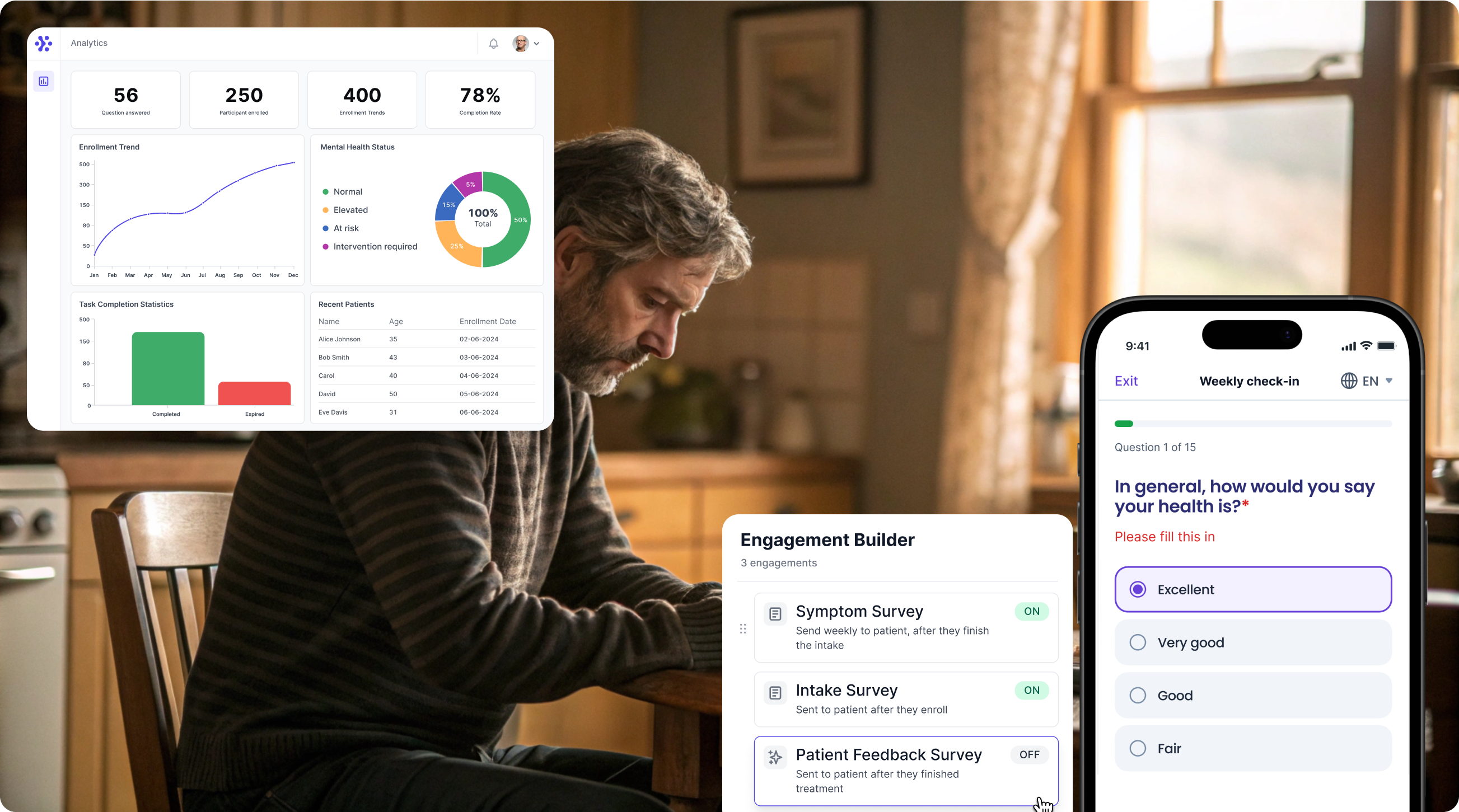

Support Your patient in no time - all under your own brand
Our platform combines the knowledge of 100+ digital health solutions built, letting you easily build your patient engagement app for research or clinical use. Collect PROMs, support patients on waiting lists, or gather vital signs data. This is how:
Learn More.png)
Program Builder
.png)
Whitelabelling.
.png)
Turn on components, dependent on your usecase.
.png)
Support The Full Journey.
%20(1).png)
.png)
%20(1).png)
.png)
It’s your turn
Every WeGuide project, saves researchers and clinicians - 9 months and $450,000 - creating impactful digital health solutions.
