


CRIES Neonatal Pain Assessment Tool: Evaluating Crying, Oxygen Requirements, Vital Signs, Facial Expression, and Sleep Patterns
Assesses neonatal pain and distress through crying, oxygen saturation, vital signs, facial expression, and sleep patterns to guide clinical pain management.
C – Crying; R – Require increased oxygen administration; I – Increased vital signs; E – Expression; S – Sleepness
The CRIES scale assesses neonatal pain and distress by evaluating crying, oxygen saturation, vital signs, facial expression, and sleep patterns. It guides clinical pain management in newborns.
Category
Source
What is
C – Crying; R – Require increased oxygen administration; I – Increased vital signs; E – Expression; S – Sleepness

The CRIES pain assessment scale, standing for C – Crying; R – Require increased oxygen administration; I – Increased vital signs; E – Expression; S – Sleepness, is an important tool for evaluating postoperative pain in neonates and infants. This scale assesses pain through five key dimensions, with each dimension scored from 0 to 2, giving a total score ranging from 0 to 10. The core components include crying, need for oxygen, changes in vital signs, facial expression, and sleep pattern. Clinicians observe these indicators to determine the level of pain, with higher scores indicating greater pain. The CRIES scale is administered by healthcare professionals who are trained to assess these indicators, making it a practical tool in clinical settings for guiding pain management decisions. By using the CRIES scale, healthcare providers can accurately assess pain in non-verbal patients, ensuring they receive appropriate analgesia and care, which is crucial for their recovery and comfort. Effective pain management using this scale can lead to improved patient outcomes.
Collect patient reported data with WeGuide the
The CRIES neonatal pain scale can be scored using one main approach. 1. The total score is calculated by assessing five physiological and behavioural parameters: C - Crying; R - Require increased oxygen administration; I - Increased vital signs; E - Expression; S - Sleeplessness. Each parameter is scored from 0 to 2, resulting in a total score ranging from 0 to 10, with higher scores indicating greater pain. For instance, a newborn exhibiting crying that requires increased oxygen and shows facial expressions of pain might score high on the CRIES scale, guiding healthcare professionals to provide appropriate pain management.
Advantages

Develops personalised strategies based on assessment data.
.svg)
Provides consistent measurements for clinical research.
.svg)
Identifies health issues during initial stages.
Stats
.png)

Related Instruments
The Incontinence Impact Questionnaire (IIQ) is a crucial assessment tool used to measure the impact of urinary incontinence on a person's quality of life.

C – Crying; R – Require increased oxygen administration; I – Increased vital signs; E – Expression; S – Sleepness

Support Your patient in no time - all under your own brand
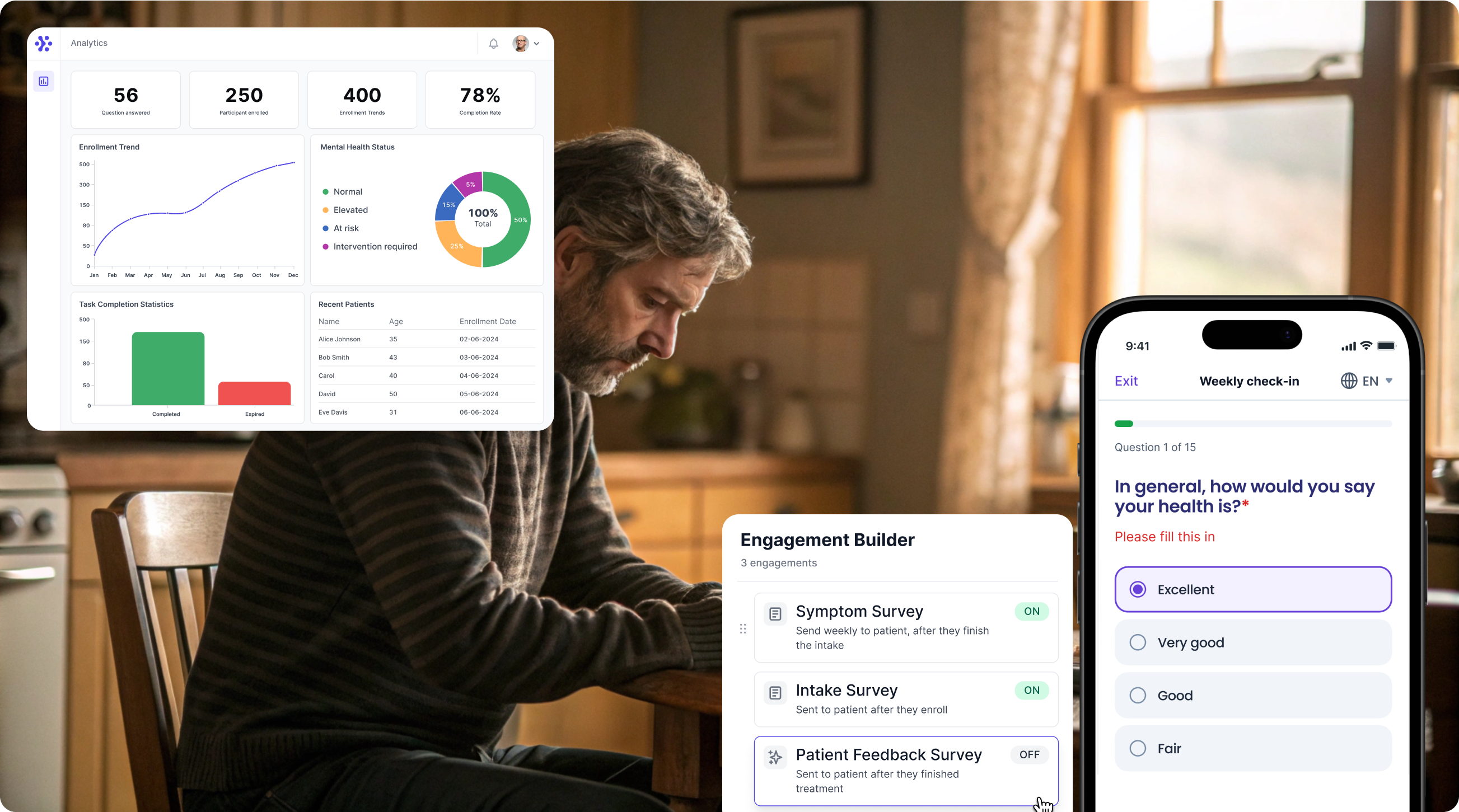
Our platform combines the knowledge of 100+ digital health solutions built, letting you easily build your patient engagement app for research or clinical use. Collect PROMs, support patients on waiting lists, or gather vital signs data. This is how:
Learn More.png)
Program Builder
.png)
Whitelabelling.
.png)
Turn on components, dependent on your usecase.
.png)
Support The Full Journey.
%20(1).png)
.png)
%20(1).png)
.png)
It’s your turn
Every WeGuide project, saves researchers and clinicians - 9 months and $450,000 - creating impactful digital health solutions.
