


Assessment of Motor and Process Skills (AMPS): Evaluating Daily Function
Assesses daily activity performance by evaluating motor and process skills to inform occupational therapy interventions.
Assessment of Motor and Process skills
The Assessment of Motor and Process Skills evaluates an individual's ability to perform daily activities, assessing motor and process skills to inform occupational therapy intervention planning.
Category
Source
What is
Assessment of Motor and Process skills

The Assessment of Motor and Process Skills (AMPS) is a crucial tool for occupational therapists to evaluate an individual's ability to perform daily activities. It assesses both motor and process skills, providing a comprehensive understanding of a person's functional abilities. The AMPS consists of two main components: 16 motor skill items and 20 process skill items, which are observed while the individual performs standardised tasks. Key dimensions assessed include posture, mobility, coordination, and cognitive processes like problem-solving and memory. Response options are scored on a 4-point scale, from competent to markedly deficient. Administration involves training and calibration to ensure reliability, and it's used in various settings, including rehabilitation and research, to inform intervention and measure outcomes. By using the AMPS, occupational therapists can identify areas of strength and weakness, develop targeted interventions, and monitor progress over time, ultimately enhancing the individual's ability to engage in daily activities and participate fully in life. This assessment is an important resource for therapists working to support individuals with a range of conditions and disabilities.
Collect patient reported data with WeGuide the
The Assessment of Motor and Process Skills (AMPS) can be scored using two main approaches: motor and process skills. 1. Motor skills: This involves rating 16 motor skill items, such as reaching, gripping, and lifting, on a 4-point scale from 1 (ineffective) to 4 (competent), reflecting the person's ability to perform actions.2. Process skills: This involves rating 20 process skill items, such as sustaining performance and applying knowledge, on the same 4-point scale, reflecting the person's ability to organise and adapt actions.Both scores are then compared to a criterion-referenced scoring system to determine the person's ability to perform daily tasks effectively.
Advantages

Develops personalised strategies based on assessment data.
.svg)
Measures healthcare intervention results systematically.
.svg)
Maintains uniform healthcare delivery standards.
Stats
.png)

Related Instruments
The Incontinence Impact Questionnaire (IIQ) is a crucial assessment tool used to measure the impact of urinary incontinence on a person's quality of life.

Assessment of Motor and Process skills
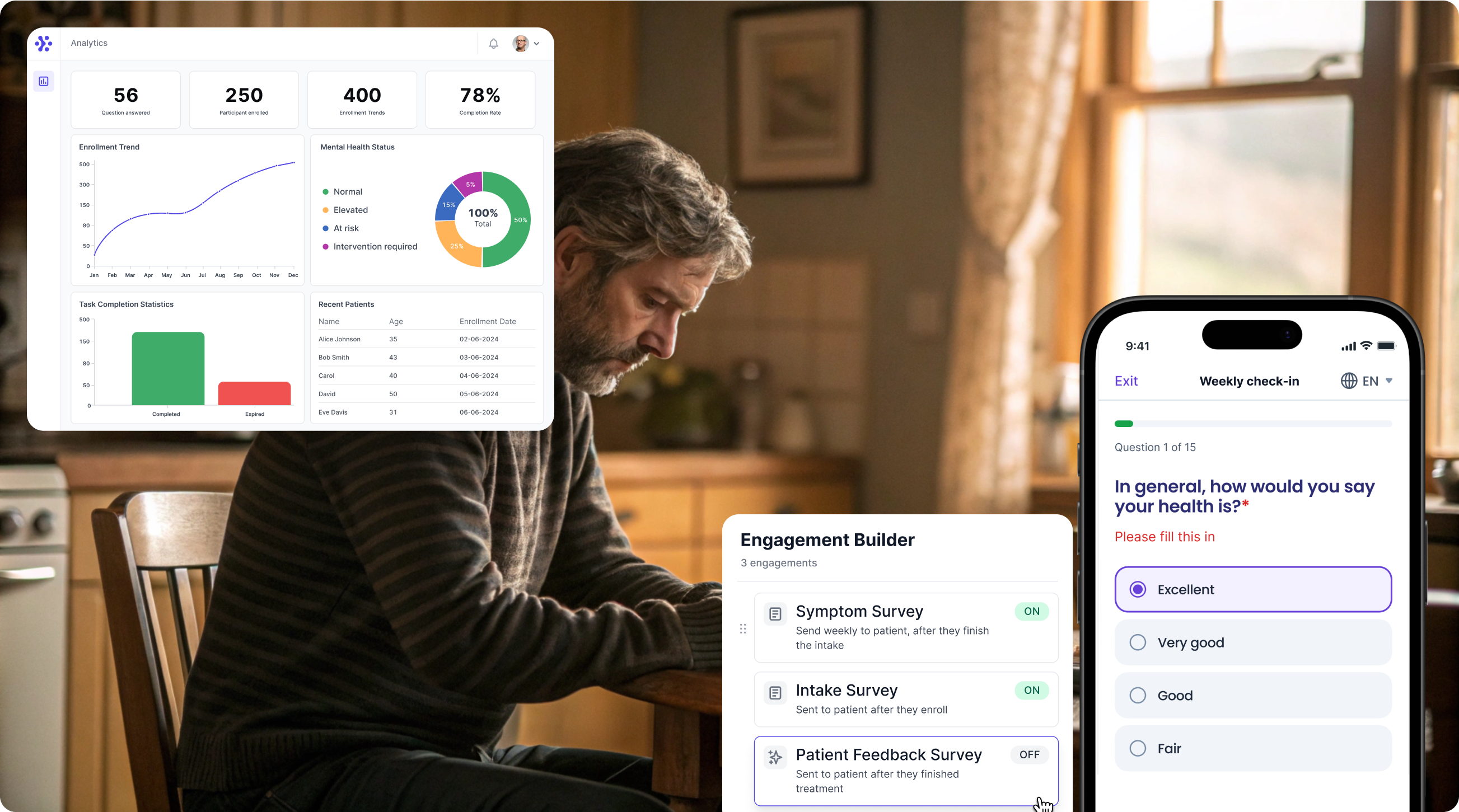

Support Your patient in no time - all under your own brand
Our platform combines the knowledge of 100+ digital health solutions built, letting you easily build your patient engagement app for research or clinical use. Collect PROMs, support patients on waiting lists, or gather vital signs data. This is how:
Learn More.png)
Program Builder
.png)
Whitelabelling.
.png)
Turn on components, dependent on your usecase.
.png)
Support The Full Journey.
%20(1).png)
.png)
%20(1).png)
.png)
It’s your turn
Every WeGuide project, saves researchers and clinicians - 9 months and $450,000 - creating impactful digital health solutions.
