


3-Step Falls Prediction Model: Identifying High-Risk Patients Effectively
Predicts falls risk by assessing individual risk factors, enabling targeted prevention for high-risk patients in clinical settings.
3-Step Falls Prediction Model
The 3-Step Falls Prediction Model assesses an individual's risk factors to predict falls, enabling healthcare professionals to identify high-risk patients and implement preventive measures.
Category
Source
What is
3-Step Falls Prediction Model

The 3-Step Falls Prediction Model is a clinical tool used to identify individuals at risk of falls. This model is important for preventing falls and related injuries in older adults. The model's core components include a series of assessments that evaluate an individual's risk factors, such as history of falls, mobility, and medication use. Key dimensions assessed include the individual's medical history, functional ability, and environmental factors, with response options typically being yes or no, or scored on a scale. Administration involves healthcare professionals using the model to assess patients, usually in a clinical or aged care setting, and it has applications in both research and clinical practice, helping to inform fall prevention strategies and interventions. By using this model, healthcare providers can identify those at high risk and implement targeted interventions to reduce the risk of falls, ultimately improving patient outcomes and quality of life.

Collect patient reported data with WeGuide the
The 3-Step Falls Prediction Model can be scored using one main approach with multiple steps. 1. The model assesses three key factors: history of falls, presence of gait or balance disorders, and use of certain medications (antiepileptics or benzodiazepines). Each factor is considered a risk factor when present, and the total count of these risk factors is used to predict falls risk - zero factors indicate low risk, one factor indicates moderate risk, and two or three factors indicate high risk. This scoring system is applied in clinical settings to identify patients at risk of falls.
Advantages

Develops personalised strategies based on assessment data.
.svg)
Maintains uniform healthcare delivery standards.
Stats
.png)

Related Instruments
The Incontinence Impact Questionnaire (IIQ) is a crucial assessment tool used to measure the impact of urinary incontinence on a person's quality of life.

3-Step Falls Prediction Model
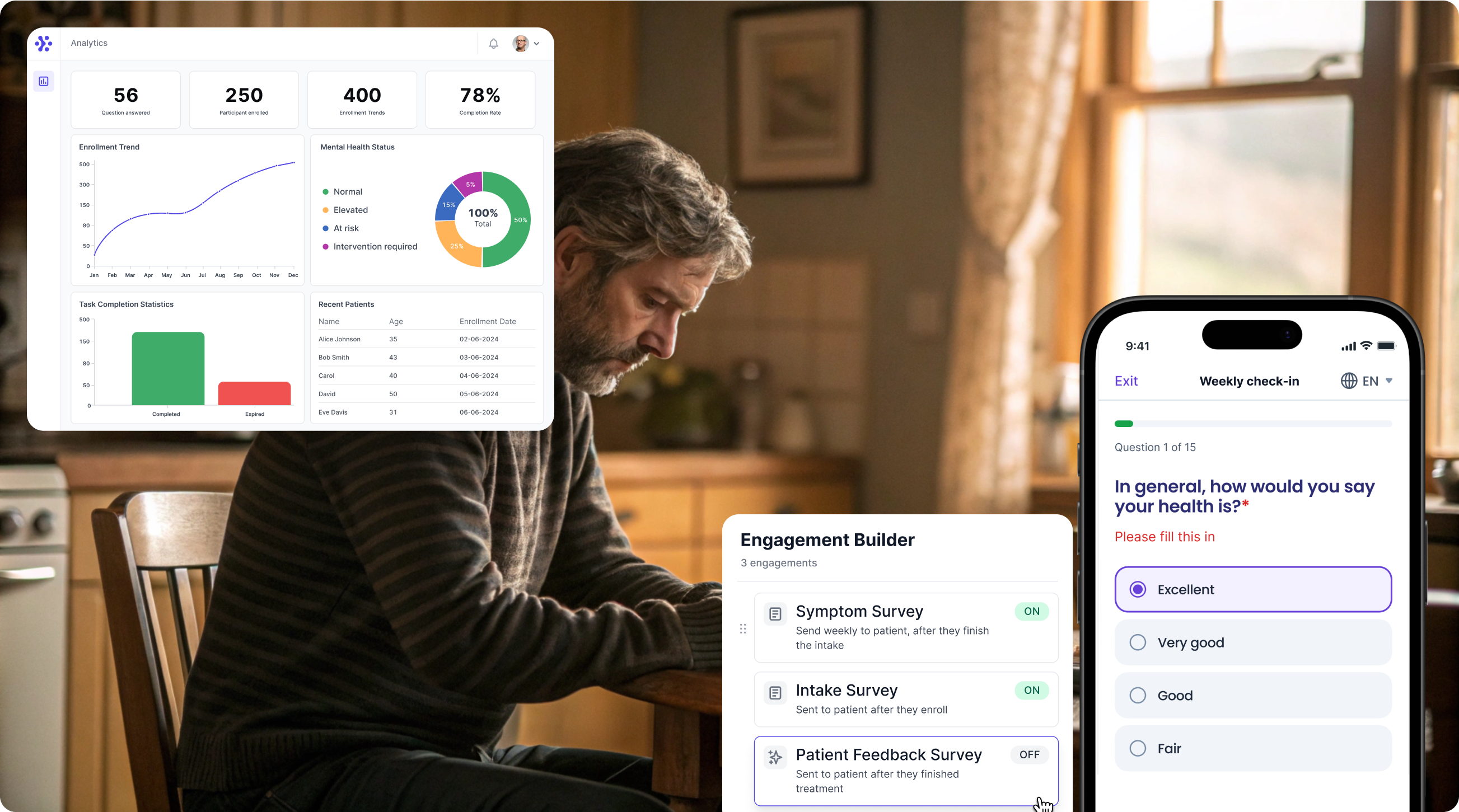

Support Your patient in no time - all under your own brand
Our platform combines the knowledge of 100+ digital health solutions built, letting you easily build your patient engagement app for research or clinical use. Collect PROMs, support patients on waiting lists, or gather vital signs data. This is how:
Learn More.png)
Program Builder
.png)
Whitelabelling.
.png)
Turn on components, dependent on your usecase.
.png)
Support The Full Journey.
%20(1).png)
.png)
%20(1).png)
.png)
It’s your turn
Every WeGuide project, saves researchers and clinicians - 9 months and $450,000 - creating impactful digital health solutions.
